





 4.5/5
4.5/5 大头
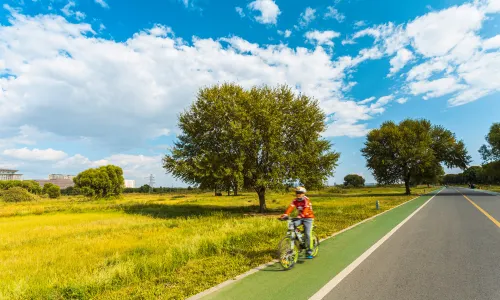
大头Not as good as the scenery of Chunhui Mountain a little farther from the city, but the city is really convenient. Also note that there was a road that people stepped out of, and there was a grassland scenic spot written next to it. I thought I could get to the farthest road. As a result, the grass became deeper and the same as people. The same high, and the original road turned back... (Figure 3, please note)
 4.4/5
4.4/5 吃菠菜的鱼呀
As a parent of a boy, it was worth taking him here. He loved it and looked at everything. There weren't many entertainment facilities inside, just some retired aircraft and cannons.
 4.4/5
4.4/5 有独角兽的名故城
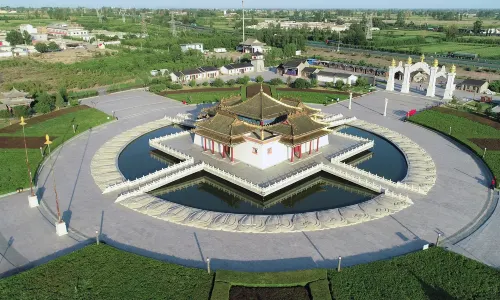
Going to Meidaizhao and then to the Jokhang Temple in Hohhot created a fascinating sense of continuity. We happened to have a chance. Visiting Meidaizhao in the morning and the Jokhang Temple the next day was a truly wonderful experience. A guided tour of Meidaizhao is essential to truly appreciate the historical continuity. If you want to climb the White Pagoda later, you don't need to buy a ticket; you can go there on your own.
 4.6/5
4.6/5 lvs***ao
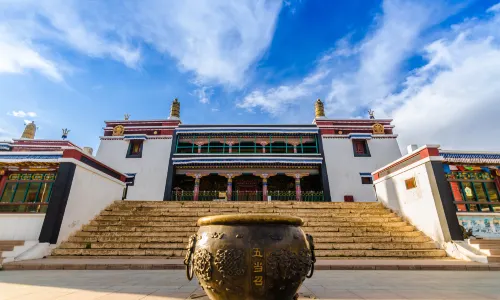
As one of the four famous Tibetan Buddhist temples in China, Wudangzhao Temple is renowned alongside the Potala Palace in Tibet, Kumbum Monastery in Qinghai, and Labrang Monastery in Gansu. It is the largest, most complete, and best-preserved Gelugpa Tibetan Buddhist temple in Inner Mongolia Autonomous Region, and is known as the "First Temple of the Northern Grasslands" and the "Little Potala Palace on the Grasslands." The scenic area is built against the mountainside in a typical Tibetan style. The main buildings consist of six halls (including the Suguqin Hall and Dongkuoer Hall), three Living Buddha residences, and a mausoleum. There is no unified central axis; each building is a self-contained entity.
 4.8/5
4.8/5 M36***99
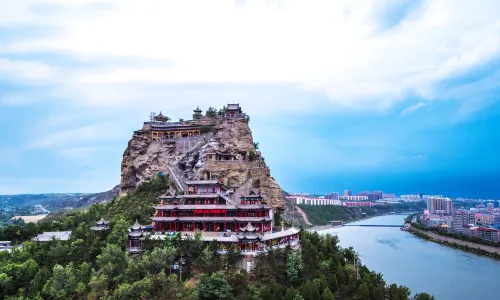
Erlang Mountain in Shenmu, Shaanxi Province: Commonly known as West Mountain, also known as Penholder Mountain and Camelback Mountain, it lies one kilometer west of Shenmu County. The mountain's winding, undulating terrain is majestic and precipitous, with the Kuye and Qin Rivers converging in front and the Great Wall running through behind. Over a hundred temples dot the mountain's ridges. It is a key cultural relic protection site in Shaanxi Province and a national 4A-level tourist attraction, making it a worthwhile visit.
 4.1/5
4.1/5 黎明之前
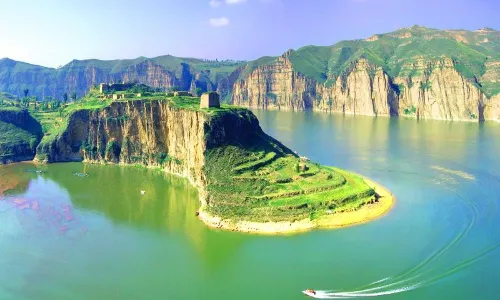
黎明之前It's a very interesting scenic spot where we can feel the magical power of nature. The Yellow River cuts through mountains and plateaus and rushes through, giving us a glimpse into the Yellow River's greatness. It turns into a big bend here, but still doesn't stop its eastward journey, eventually flowing to the sea.
 4.6/5
4.6/5 melocai
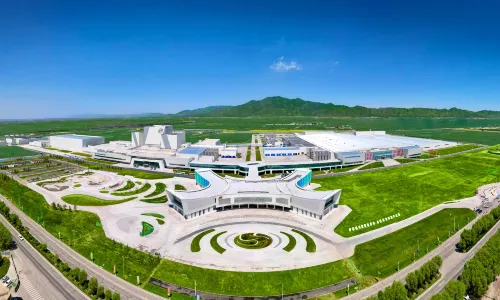
Despite its somewhat remote location, Yili Health Valley boasts a wealth of activities. During the National Day holiday, there were many interactive games and additional guided tours. The scenic area primarily features two areas: powdered milk and liquid milk. Guided tours offer a detailed understanding of the entire powdered milk or milk processing process. The well-designed circulation and affordable admission make it a worthwhile trip.
 4.6/5jyayoi
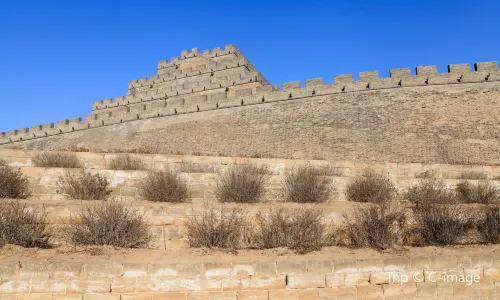
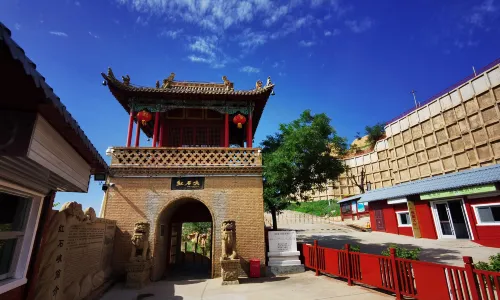
It is worth a visit for history lovers, especially those who love the Great Wall and Ming Dynasty frontier history. The fortress itself is a modern construction, with only a few remaining beacon tunnels and city walls in the far west and east.
 4.5/5M52***83
Hongshi Gorge is located 3 kilometers north of Yulin, Shaanxi Province. It is named after the red rocks on the mountain. The excavation of Hongshi Gorge can be traced back to the Song and Yuan Dynasties. It was once the territory of the Western Xia Kingdom. In the Ming Dynasty, Hongshi Gorge became an important military fortress due to its dangerous geographical location and was closely connected with the Great Wall. In the modern revolutionary struggle in northern Shaanxi, Hongshi Gorge played an important role and became one of the important revolutionary activity sites of the CPC Central Committee in northern Shaanxi. The cliffs on both sides of the river valley are covered with cliff carvings and caves. There are more than 160 stone carvings in total, including regular script, cursive script, official script and seal script, which are called "Forest of Steles on the Frontier".
 4.3/5
4.3/5 影子罗罗
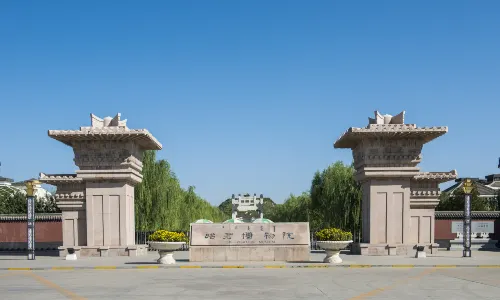
影子罗罗Journey through history and explore the Zhaojun Museum. Entering the Zhaojun Museum is like opening a thick history book, each page filled with stories of the ages. The first thing that catches your eye upon entering the museum is the towering tomb of Wang Zhaojun. Constructed during the Western Han Dynasty, this ancient tomb is over 2,000 years old. Its towering mound, covered in verdant grass, creates a breathtaking scene from afar. A series of exhibition halls are strategically arranged around the tomb, forming this unique museum. The Xiongnu History Museum displays numerous precious artifacts that, spanning millennia, tell the story of the Xiongnu people's rise and fall, their glory and disgrace. From the Xiongnu's rise to their interactions with the Central Plains, their economic and cultural development, and their profound influence on later generations, all are presented here in detail. While the exhibits are limited in number, each one is invaluable, offering a deeper understanding of this ancient people. The Zhaojun Frontier Exhibition Hall focuses on the life and deeds of Wang Zhaojun. Through exquisite oil paintings, lifelike sculptures, intuitive sand table maps, and modern audio-visual technology, it vividly recreates Zhaojun's legendary journey from the secluded boudoir of the Han Palace to her marriage to the distant frontier. Standing before these exhibits, one can almost see this resolute woman who resolutely embarked on the journey to the frontier for the sake of national peace and tranquility. The Ancient Chinese Peaceful Marriage Cultural Hall is another highlight of the museum, systematically showcasing the practice of peaceful marriages in ancient China. From the pre-Qin period to the Yuan, Ming, and Qing dynasties, events related to peaceful marriages are presented here. Through documents, images, and scene reconstructions, one can gain a deeper understanding of the political wisdom behind this unique diplomatic tactic and its important role in promoting ethnic integration and cultural exchange. In addition to its rich exhibits, the museum also boasts a unique architectural style. The main building is a semi-underground, earth-covered structure, with an earthy yellow exterior resembling a hopper-shaped Han tomb. It blends seamlessly with the surrounding environment, exuding a solemn and ancient air. The stone statues flanking the sacred path, though not original, exude the majesty of history, silently guarding this land. The Zhaojun Museum is more than just a tourist attraction; it is a historical monument, a witness to interethnic friendship and cultural exchange. Here, history ceases to be a dry text in books and becomes vivid and tangible. For both history and culture enthusiasts and ordinary tourists, this is a cultural journey not to be missed.

