

Top Things to Do in Hakone: Best Activities & Must-Sees
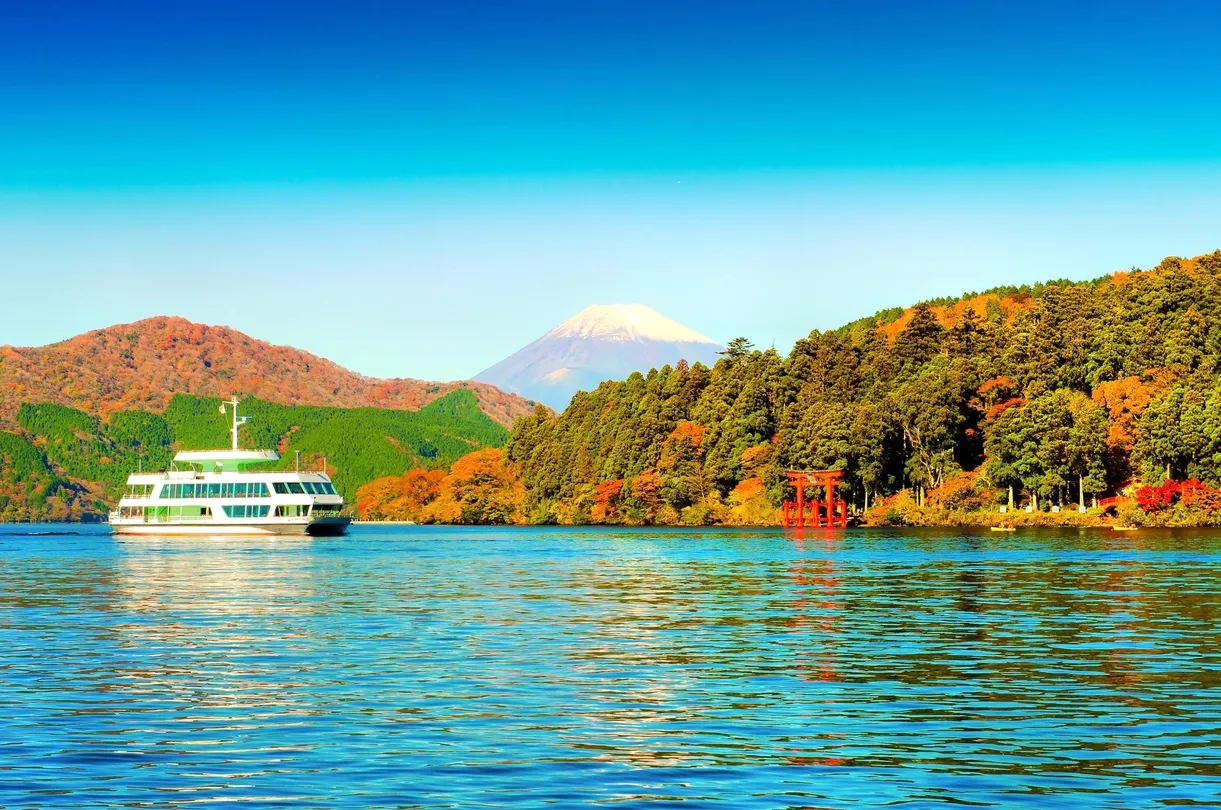
Fancy a nature break less than two hours from Tokyo? Hakone is the dream getaway! From its mountain scenery and proximity to Mount Fuji to cruises on Lake Ashi, hot springs and open-air museums, the region brings together everything travellers come to Japan for: tranquillity, traditions and the art of living!
🏞️ Popular Activities in Hakone and Great-value Prices
- 🌊 Lake Ashi ⛴️ – Shore access is free, cruises from £8 – Volcanic lake with views of Mount Fuji
- 🌋 Owakudani 🥚 – Access included with passes/cable car – Steaming volcanic valley and sulphurous black eggs
- 🚡 Hakone Ropeway 🏔️ – From £9.61 – Panoramic cable car over the mountains and the crater
- 🎨 Hakone Open-Air Museum 🖼️ – Prices vary by season – Open-air sculpture park + Picasso Pavilion
- ♨️ Hakone Kowakien Yunessun 💦 – From £10.09 – Fun hot spring water park with themed baths
📅 How to Visit Hakone in 1 or 2 Days?
Smaller than its neighbouring towns, with only 10,000 residents, Hakone can be explored on a day trip from Tokyo or by spending one or two nights. Ideally, to fully enjoy the onsen (the famous Japanese hot springs) and the relaxed mountain rhythm, it’s best to devote at least two days.
Here are some simple, practical itinerary ideas based on your traveller profile and your preferences:
Length of stay | Couples | Family | Friends | Solo |
1 day | Lake Ashi + cruise + Hakone Ropeway + Owakudani + onsen | Lake Ashi + pirate ship + Hakone Open-Air Museum | Lake Ashi + Owakudani + cable car + Hakone-jinja Shrine | Lake Ashi + Owakudani + cable car + onsen |
2 days | Day 1: Lake Ashi tour + Owakudani + ropeway Day 2: open-air museum + onsen in a ryokan | Day 1: pirate ship + ropeway + Owakudani Day 2: Yunessun hot spring water park + stroll around Hakone-Yumoto | Day 1: Lake Ashi + Owakudani + ropeway Day 2: hike + communal onsen | Day 1: classic loop + open-air museum Day 2: temples, cafés, writing or reading in peace and quiet |
👉 How many days should you spend in Hakone?
- In 1 day, you can easily visit Hakone and take the time to stop at the main sights.
- In two days, you’ll have time to take a breather, go to the museum and enjoy the thermal baths as well: it’s most certainly the best compromise!
🎁 Get 5% off & save up to £2 on your first Hakone Attractions & Tours booking! 👇
Hakone's Top Attractions and Tours
See all attractions
 7363 booked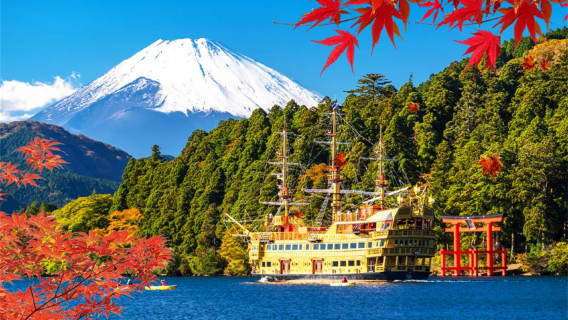
🔥 Top 5 Activities and Landmarks in Hakone
You’ll realise it once you’re there: Hakone is still a very small town. Even so, we’ve handpicked a few must-see sights and unmissable activities to do so you can fully enjoy your day or stay.
Lake Ashi: a postcard-perfect view of Mount Fuji
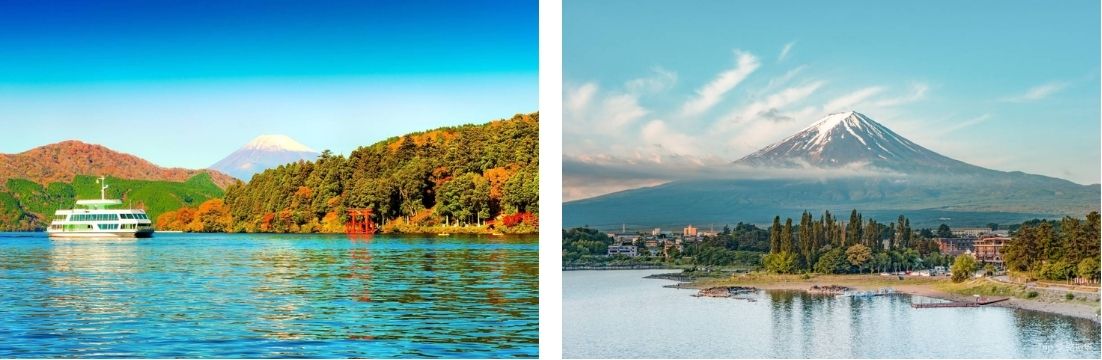
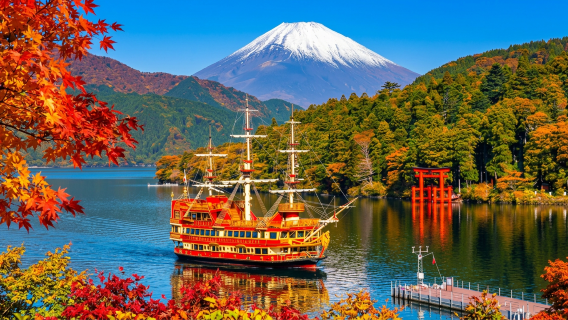
Lake Ashi (Ashinoko) is undoubtedly the symbol of Hakone. Bordered by wooded mountains, it offers, on clear days, a dreamy view of Mount Fuji silhouetted on the horizon.
The best activity near Lake Ashi? Its cruises! Weather permitting, plenty of cruises are on offer around the lake for a soothing experience with dreamy scenery.
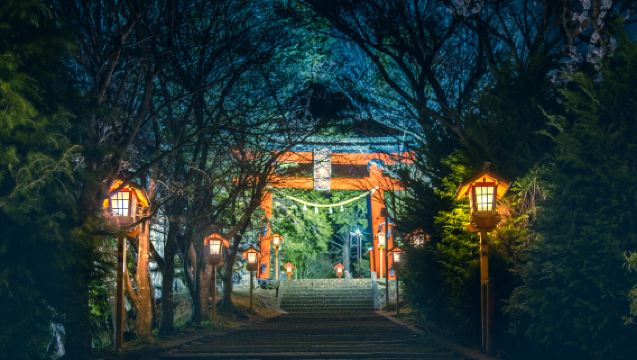
Along the lakeshore, don’t miss Hakone-jinja Shrine and its grand red torii planted in the water—one of the region’s most iconic photo spots. The shores also offer several short walks, cafés with a view, and viewpoints perfect for immortalising your stay.
📌 Tips : some boats are shaped like pirate ships, much to the delight of families and children!
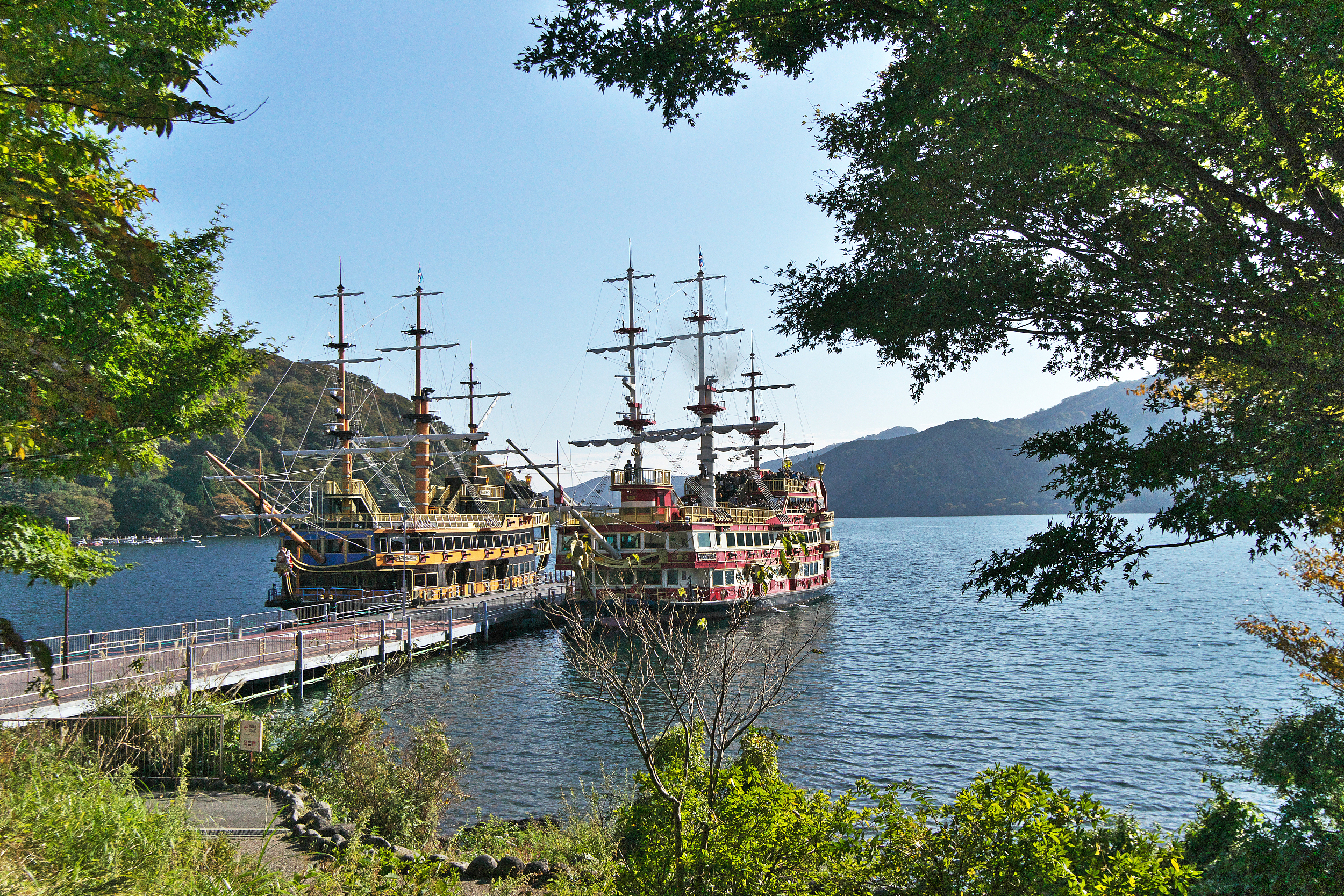
Lake Ashi Cruise
4.6/5
35 Reviews
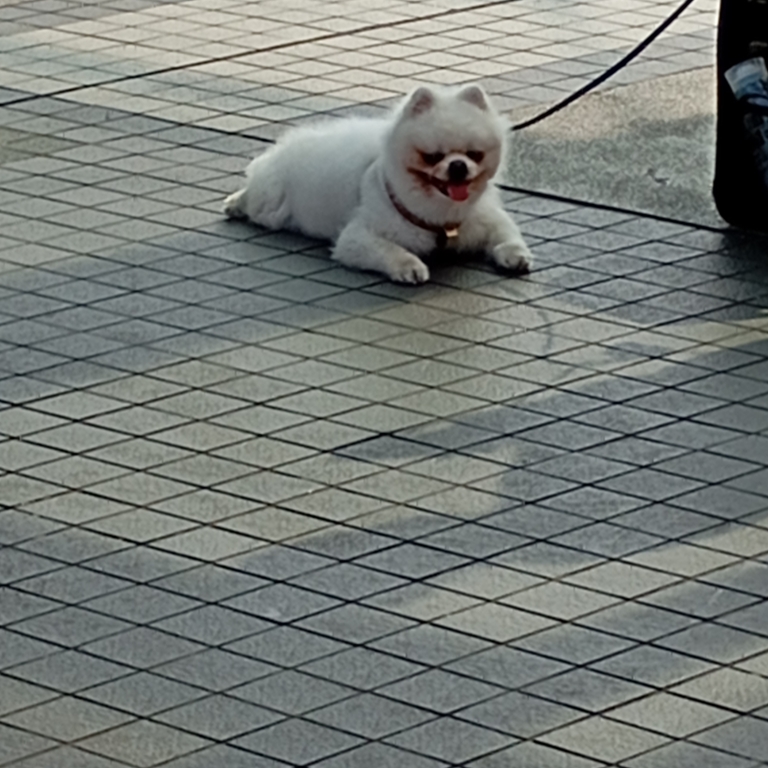 the pirate ship is nicely decorated full of the pirate ship experience haha , the ride is good , although the weather was a bit cloudy
MXN$199
Owakudani: the steaming valley of black eggs
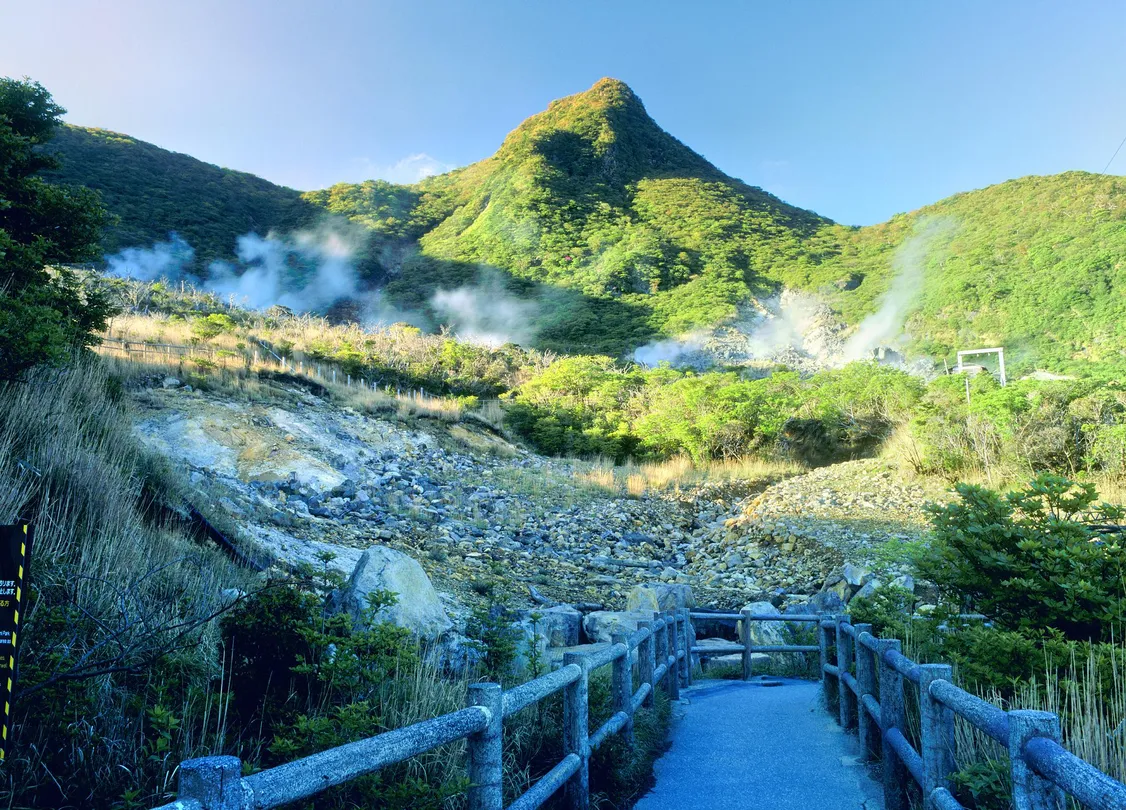
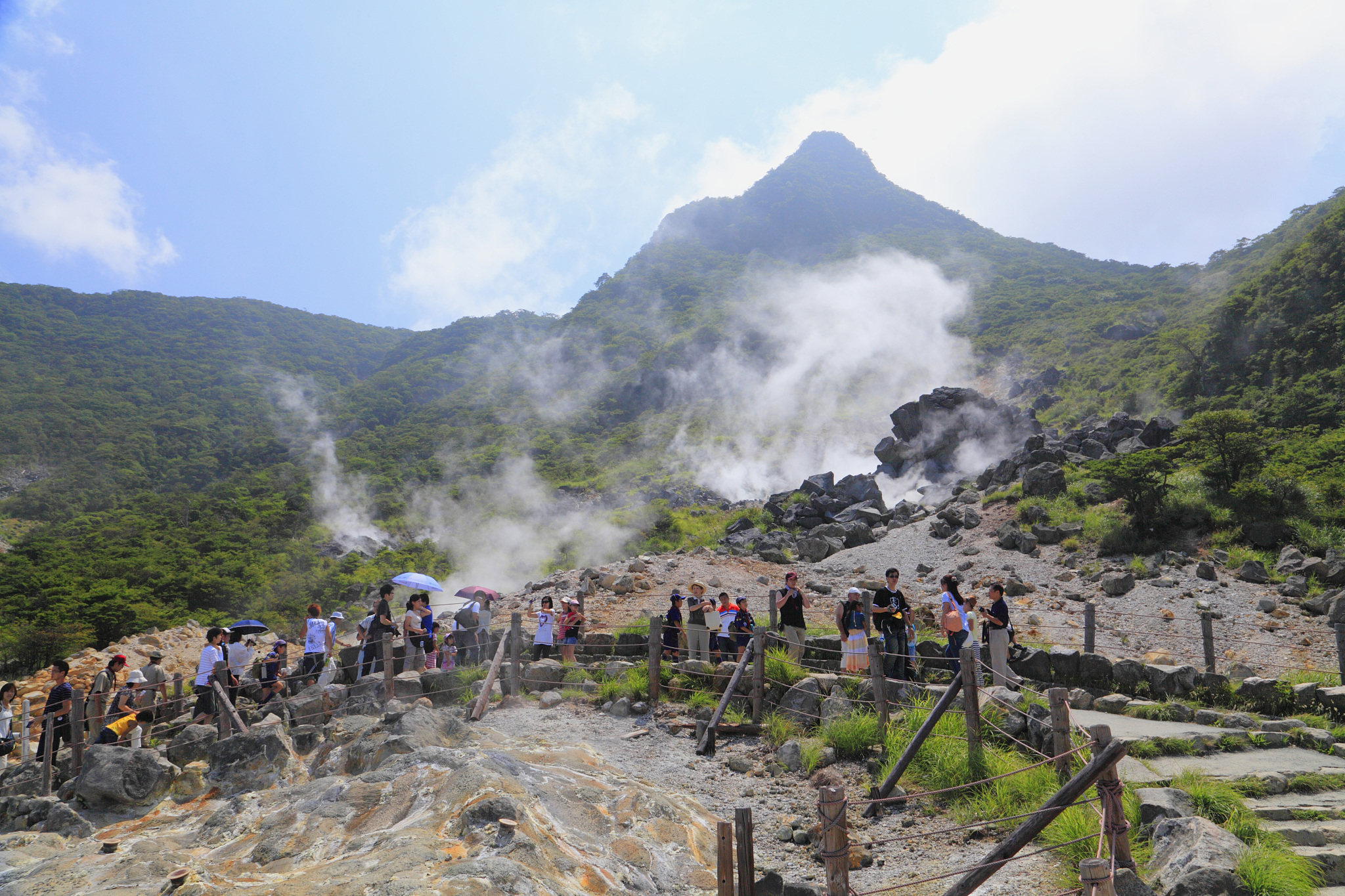
Second unmissable spot in Hakone: Owakudani! It’s actually an active volcanic valley, where you’ll almost certainly see sulphurous steam rising from the ground. The scenery is rocky, sometimes shrouded in steam, with the mountains as a backdrop and, on clear days, Mount Fuji (the view is spectacular!).
You’ll notice it straight away: the smell of sulphur is hard to miss as you approach the volcano, a vivid reminder that you’re on a volcanic site that’s very much alive. Specially built observation platforms let you stroll safely while admiring the fumaroles rising from the grey rocks. With a bit of luck and on a clear day, the contrast between Owakudani’s lunar landscape and the majestic Mount Fuji in the background is simply magical!
When you're there, make sure you don't miss the famous black eggs (kuro-tamago) cooked in the sulphurous hot springs. Rest assured, their black colour simply comes from the shell, which blackens on contact with the minerals, but the inside remains perfectly normal and delicious.
📌Fun fact: legend has it that eating a black egg adds seven years to your life… it’s up to you how many you take home!
Owakudani
4.6/5
324 Reviews
 Don't leave Hakone without visiting Owakudani
Walk through the smoky sulfur valley and try the famous Black Eggs, boiled in natural volcanic waters. Legend has it that eating one egg adds 7 years to your life so I definitely had to grab some.
Don't leave Hakone without visiting Owakudani
Walk through the smoky sulfur valley and try the famous Black Eggs, boiled in natural volcanic waters. Legend has it that eating one egg adds 7 years to your life so I definitely had to grab some.The Hakone Ropeway: the panoramic cable car
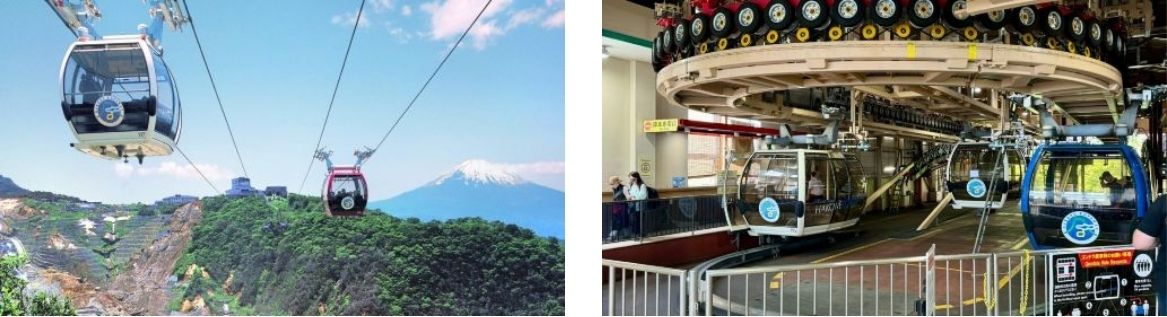
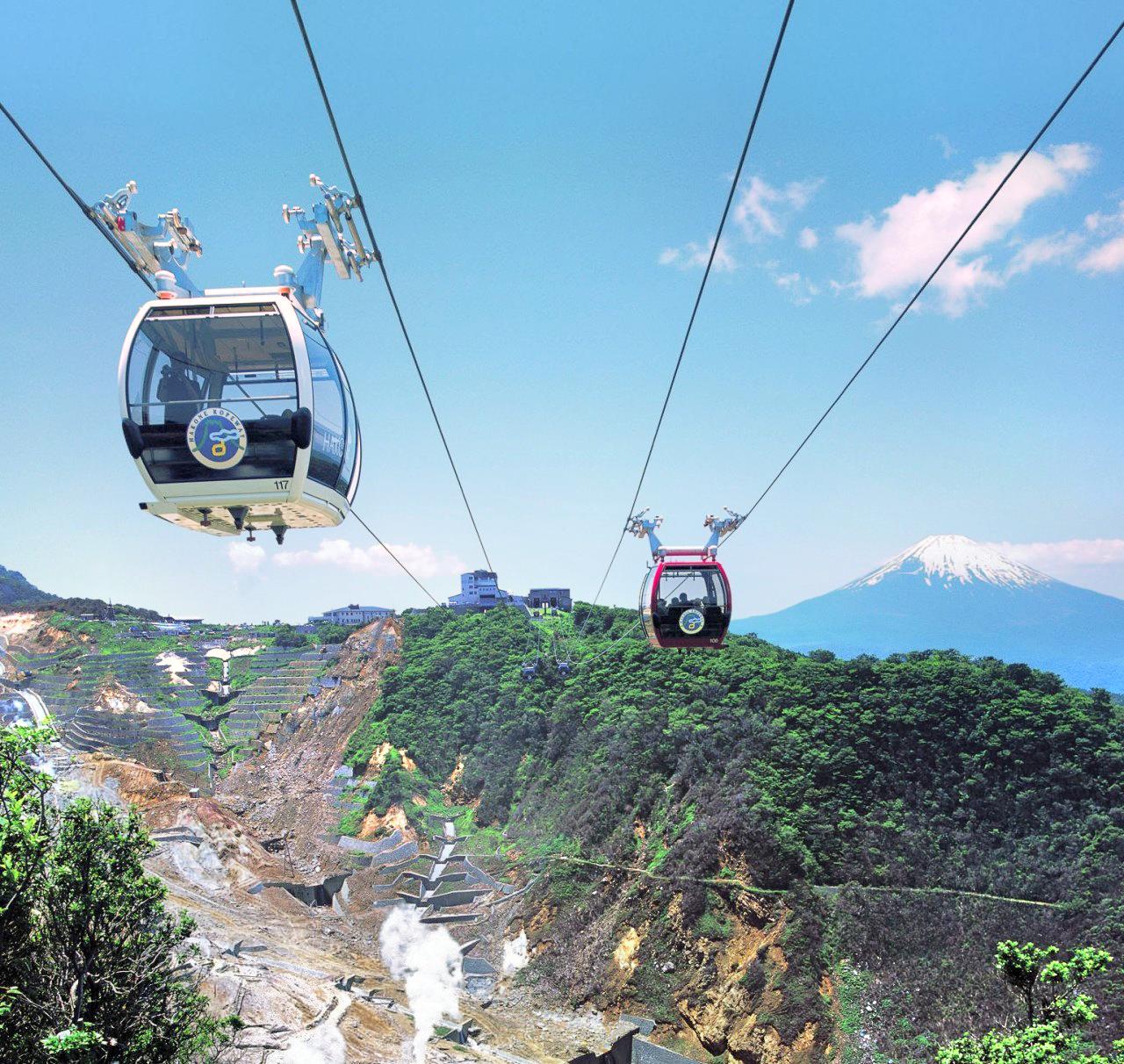
From the moment you arrive, the very first thing you’ll almost certainly want to do is hop aboard these charming traditional little cable cars! The Hakone Ropeway links several key spots in the region, including Lake Ashi, Owakudani and Sounzan. The cabins soar over forests, valleys and volcanic areas to offer one of Hakone’s most beautiful panoramas.
The full ride takes around 30 minutes and lets you soar above the mountain landscapes surrounding Hakone. The modern, all-glass cabins offer 360° views of the surrounding nature. A breathtaking view!
As you gradually ascend towards Owakudani, you’ll see fumaroles appear in the distance. And finally, on clear days, you’ll very likely catch sight of Mount Fuji, the surrounding mountains, and the changing colours of the seasons: delicate spring greens, flamboyant autumn hues, and sometimes a blanket of snow in winter. The journey is an integral part of the Hakone experience—both a way to get around and an activity in its own right!
Hakone Ropeway
4.7/5
30 Reviews
 The weather wasn't great, but the scenery was still fantastic.
MXN$234
The Hakone Open-Air Museum: art and the mountain
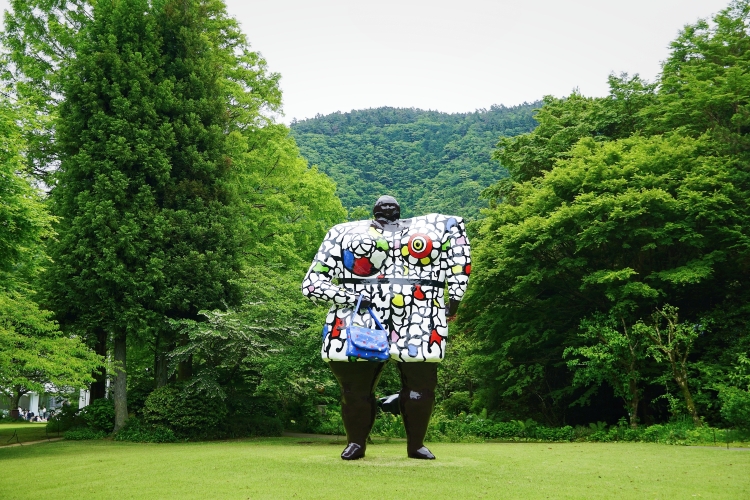
The Hakone Open-Air Museum (musée en plein air de Hakone) is often a delightful surprise for travellers. Relatively little-known, this one-of-a-kind museum will transport you out of time. Set in a large, rolling park, it showcases monumental outdoor sculptures that blend seamlessly into the landscape. You’ll also find indoor galleries, including a pavilion dedicated to Picasso (more than 300 pieces are on display!).
The way the artworks blend into the natural landscape creates a unique, soothing atmosphere. You wander between giant sculptures, artistic fountains and contemporary installations, all set against the backdrop of Hakone’s mountains. Some pieces invite interaction; others encourage contemplation. You’ll indeed see plenty of locals who sometimes come to meditate on site beside these masterpieces.
This visit is delightful in every season, whether you’re with family, travelling solo or as a couple. At the end of the route, you can enjoy a hot spring foot bath with mountain views. An ideal moment to unwind before getting back on the road.
The Hakone Open-Air Museum
4.8/5
104 Reviews
 I highly recommend the Sculpture Museum; it was so good. I stopped by on my way to the Pola Museum, and wow, I can't believe how amazing it is. Good weather is a prerequisite, but the garden is decorated breathtakingly. There are so many artworks, too. I give it a perfect 100 points. It is a treasure of Hakone.
MXN$210
Hakone Kowakien Yunessun: traditional and unique onsens
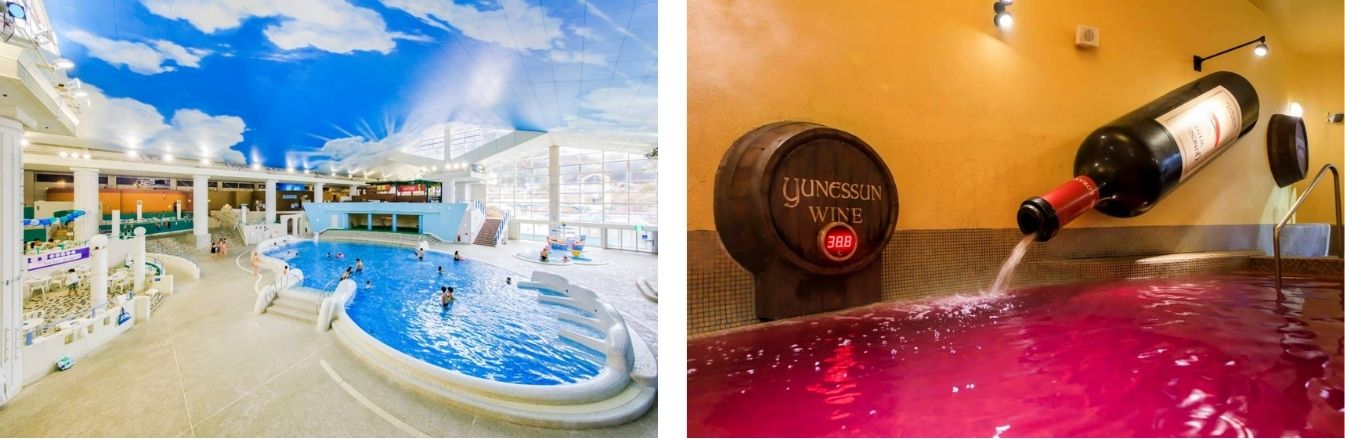
Fancy trying onsen without having to follow all the strict rules of traditional baths? Hakone Kowakien Yunessun is a hot-spring water park that blends a spa atmosphere with playful fun! You’ll find outdoor pools with mountain views, plus aromatised baths (wine, coffee, green tea…), water slides, and a covered indoor area.
It's the perfect spot for a relaxing day with family or friends, especially if you're travelling with people who are uneasy about the nudity in classic onsen. The complex also includes a more traditional section, separated by gender, so you can enjoy a more authentic Japanese experience.
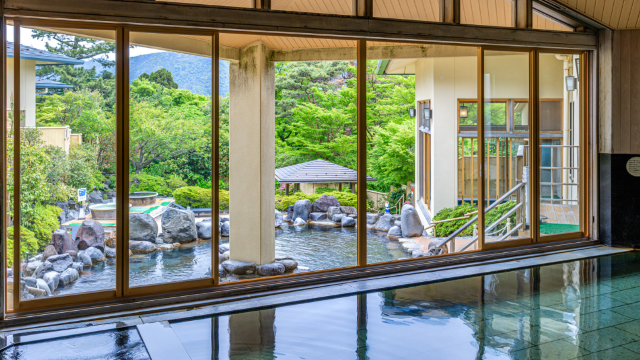
Hakone Kowakien Yunessun
4.6/5
16 Reviews
 Nice place, I liked open bath
MXN$152
Hotels: Save up to 10% (Book online or on Mobile)
Homes & Apts: Save up to £39 (App-only deal)
Our Top Picks for Hakone Hotels
5 star
Great605 Reviews
Gora/Sengokuhara Hakone|5.6km from city centre
The hotel is located near Gora Station, and they offer a shuttle service. We were on a self-driving trip, and navigating there required a bit of careful attention, but there's parking available right outside the hotel. I give very high marks for the hotel's ambiance, the staff's service attitude, and the comfort of the rooms. The room was spacious, and the single beds were also very wide. The toilet and bathroom were separate, and there was a private onsen on the balcony. We ordered breakfast at the hotel, which was a Japanese-Western selection, pretty similar to what you'd find at a typical Western buffet.FromMXN$6,772
Great891 Reviews
Kowakidani/Miyanoshita Hakone|5.7km from city centre
Our stay at Hakone Ten-yu was absolutely wonderful and definitely the most memorable part of our Japan trip. The hotel boasts a beautiful setting with stunning views of the Hakone mountains, making the entire stay incredibly relaxing.
The highlight for us was the hotel's onsen, especially ”Uki-Gumo no Yu.” The open-air infinity bath offered breathtaking views. Soaking in the hot springs while watching the sunrise in the morning truly made us feel embraced by nature. The room was also very comfortable, with a charming Japanese aesthetic. The staff were friendly and attentive, providing warm and exceptional hospitality.
Dinner was exquisite, and the entire dining experience felt very special. Staying here as a family, enjoying the onsen, wearing yukata, and savoring delicious food made for a truly comfortable Hakone getaway.
If you're planning a trip to Hakone, I highly recommend Ten-yu! The scenery, hot springs, service, and overall atmosphere are all fantastic. It's definitely worth another visit. ♨️✨FromMXN$11,856
Great244 Reviews
Kowakidani/Miyanoshita Hakone|4.55km from city centre
Every city's soul resides in a hotel.
The Peace Hotel in Shanghai, the Imperial Hotel in Tokyo, the Ritz Paris.
These masterpieces, born from local spirit, aesthetics, and a unique mission, are irreplaceable classics, forever one-of-a-kind.
They are undeniably the ultimate experiences to explore in these great cities.
In 1871, a 20-year-old Japanese man moved to America for work.
After saving enough money, he returned to Japan during the Meiji Restoration and enrolled at Keio University.
There, he was enlightened by Fukuzawa Yukichi, the father of modern Japan,
and first realized the importance of international tourism.
In the same year (1874), Emperor Guangxu was only 3 years old; the gears of history began to turn.
Fukuzawa's portrait is still on Japan's highest denomination banknote today.
The young man, Yamaguchi, realized that Japan didn't have a true hotel for foreigners.
So he picked up a blank piece of paper and began to draw the blueprint for Japan's future state guesthouse:
1. A place foreigners would love most.
2. Close to Tokyo, with beautiful scenery.
3. Must have natural hot springs.
The intersection of these three coordinates landed in the Miyanoshita area of Hakone.
In 1878, Japan's first resort hotel – Fujiya Hotel – was born.
However, fate was cruel; just 5 years later, a major fire engulfed the hotel,
along with all records since its opening, turning everything to ash.
The once eternal legacy became as thin as a wisp of smoke.
Fortunately, Yamaguchi resolutely chose to rebuild.
In 1891, the new building was completed and has been operating ever since.
The symmetrical facade and main entrance portico emphasize a solemn ”frontality.”
Inside, there are sofas, fireplaces, and radiators.
Even the height of the doorknobs and beds was customized to suit the stature of Westerners.
Yet, at the same time, the graceful curves of the Japanese roof, vermillion railings, and dragon wood carvings
constantly remind you – this is Japan.
No other hotel
can better interpret the four characters ”Wa-Yo setchū” (a blend of Japanese and Western styles) than Fujiya Hotel.
During the war, it interned over 70 European and Central/South American diplomats.
Over a hundred years, the countless celebrities, dignitaries, and royals it hosted are dazzling:
Charlie Chaplin, John Lennon, Albert Einstein, Yukio Mishima,
The King of Belgium, the Crown Prince of Sweden, the Duke of Windsor,
Emperor Hirohito, the Last Emperor Puyi, Chiang Kai-shek...
For nearly 150 years, Fujiya Hotel has witnessed the collapse of countless colossal powers.
How many kings and generals once stood by its west-facing windows,
witnessing the twilight of their empires?
I checked in during early summer, like pushing open a door to time.
The hustle and bustle had long faded,
but it still retained its former glory,
humbly yet proudly refusing to awaken.
Time stands still here,
leaving amber-like imprints,
as if nothing has ever truly left.FromMXN$4,613
Great106 Reviews
Gora/Sengokuhara Hakone|6.62km from city centre
This hotel is great for seniors; the hot springs are nice, and while the facilities are a bit old, they're clean.
Environment: There aren't many other hotels nearby.
Hygiene: It's good; the cleaning staff does a good job.FromMXN$6,440
Amazing81 Reviews
Kowakidani/Miyanoshita Hakone|5.43km from city centre
This time, I brought my parents for a vacation, and after looking at many hotels, we finally settled on Suishoen. It was absolutely the right choice! The room was very new and spacious, with a private onsen inside. A stream flowed just outside the balcony, and we enjoyed soaking in the hot spring while listening to the sound of the flowing water. The mini-bar offered a great variety of new drinks and snacks. My parents soaked in the onsen twice a day, and their skin improved noticeably.
On the first day, we chose the Kaiseki dinner, and every dish was impeccable. On the second day, we went for Teppanyaki, and my mom raved about it; it truly lived up to Michelin standards. There's a Lawson convenience store right outside the hotel, and a 7-Eleven about 500 meters away. We bought the Hakone Free Pass, and the hotel even dropped us off at the train station. We took the mountain train, the ropeway, and the pirate ship – we experienced it all! This Hakone trip was very satisfying!FromMXN$8,745
Great74 Reviews
Gora/Sengokuhara Hakone|8.8km from city centre
The hotel is located in a very secluded mountainous area. I stayed in an open-air hot spring villa with a large courtyard, and soaking in the hot spring was incredibly relaxing and wonderful, whether it was cloudy or sunny, day or night. The courtyard was beautiful on rainy days. The entire villa area was almost completely silent; aside from occasionally seeing people at mealtimes, I barely saw anyone else, which was very pleasant. The hot springs were also excellent, leaving my skin feeling smooth and moisturized. The room had a living room with a fireplace and a Bluetooth speaker, making it spacious and warm. This was the hotel's biggest draw.
However, some small details were lacking. Some villas don't have parking, like mine, and walking to the parking lot was quite a trek. The bathroom area wasn't well-heated; the shower and toilet rooms were very cold unless the door was left open. The hotel's toiletries need improvement; the cotton pads were unusable, of very poor quality, falling apart into shreds when I tried to wipe my face. The bedding was also quite mediocre, not comfortable at all, and the mattress felt saggy. However, the linens were very clean and fresh, which was good.
Cleanliness was so-so. Both the hot spring pool and the shower room, being made of wood, are prone to mold, and the hotel should clean them more thoroughly.
The Kaiseki dinner was very ordinary. The taste and ingredients were unremarkable, though the price was also reasonable. There's no need to eat the hotel's Kaiseki if you have other options.
The service was decent. They thoughtfully sent champagne for our anniversary, which was a nice touch. Check-in and check-out were handled in the room, and other services were quite proactive.FromMXN$13,599
Business travel
Great857 Reviews
Hakone yumoto Hakone|0.19km from city centre
The Hakone Fujiya Hotel is really conveniently located. You get off at Hakone Tozan Line's OH51 terminal, walk straight, turn left, take the direct elevator down, walk forward past the red railing bridge, turn right, and a little further on your left, there's an elevator leading up to the main entrance, which is also the parking lot.
The cold water from the tap in the room is drinkable. The hot springs are on the second floor, and the recliners in the lounge are very comfortable. They offer hot and cold tea, and you can buy milk and yogurt from vending machines if you have some small change. Breakfast on the first floor at 7 AM is super crowded.
Dinner at the hotel took over an hour. Dining at 8 PM on the second day was too late.
The original flavor dango from a street vendor near the entrance was very soft and reminded me of rice cakes grilled on a gas stove when I was a child. The rusks here are quite tasty, and there's also a visually appealing ice cream shop, but you have to eat your purchase inside the store. It was very crowded, so I didn't buy anything.
It rained for both nights we stayed, luckily we had a private car tour. Our first stop was the Hakone Open-Air Museum, which opens at 9 AM; it's more enjoyable to wander around when there are fewer people. We bought tickets for the pirate ship for 2500 yen, and with fewer people, we were prioritized for boarding – a smart move on a rainy day.FromMXN$3,036
Great162 Reviews
Hakone yumoto Hakone|1.39km from city centre
Yama No Chaya has its own beauty and serenity. I personally don’t find it hard to locate - 2 bus stops away from Hakone Yumoto station + a 5 minutes walk are worth the stay. (Bus service stopped for one of the days due to bad weather and we walked for 20 minutes to Hakone Yumoto Station - all good)
The team is very hospitable - they also have some English and Chinese speaking staff otherwise simple English is not an issue to communicate. Our butler - Sandip always carry a smile with him, and he ensured we are very well taken care of. Every morning, the team will prepare heat pack and umbrellas for us (it was raining and snowing). In the evening, they made tea and prepared snacks (vary from mochi to sushi) for us upon our returned.
The room we booked is Yamano Ichigo (main wing) - just nice for 2. The viewing platform was where we relaxed every evening and we soaked our tiredness away in our very own private onsen at the basement. Despite of having our own private onsen, I still went to visit 3 other public onsen within the Ryokan - you will not be disappointed.
Our room came with daily breakfast and we added on dinner for 1 night. I must say the chef and culinary team put in their passion and effort to prepare all the dishes. It’s not common for a visitor like me to taste Kaisekai cuisine which I enjoyed very much. You need to take time and an empty stomach to full experience it :) However, my partner and I weren’t used to heavy breakfast and our butler noticed it - we get to change to western style for the rest of the stay which was equally delicious. We are thankful that we minimised food wastage.
Overall, we felt pampered during our stay at Yama no Chaya :) I will return again in the future when I visit Hakone.FromMXN$11,025
Very Good242 Reviews
Hakone yumoto Hakone|1.19km from city centre
Our experience staying in Hakone was perfect! We stayed at the Tensein in Hakone-Yumoto, an easy location to take the bus, car or train to some popular tourist attractions in the area.
The check in itself was rather slow but the staff do their best to speak good English and discuss every detail about your stay with you. The room had everything we needed, the shampoo and conditioners provided was wonderful and there was a variety of products to use.
On check in, the private onsen was given at 50% discount at 1,100 Japanese yen per use, we got 2 vouchers so used it 2 times (as we have tattoos we could not go into the public onsen). On check in you have to collect your towel and your choice of Yukata (traditional Japanese robe) which you’re welcomed and encouraged to wear around the hotel and gardens.
The hotel is strictly no shoes, so upon arrival you leave your shoes in a locked box and keep the key. If you wish to walk around the beautiful gardens, there are slider type shoes available to slip on, as well as umbrellas to use if it’s raining. Outside they have a onsen for your feet to enjoy with a drink.
All of the food and drink (apart from breakfast which was included) was put on our bill at the end. There was a wide selection of drinks, nibbles and food available for dinner and lunches at the dining room and there was a large buffet dining room for buffet breakfast and dinner (if you booked it).
The hotel is just a short 10 minute walk to the town and 15 minute walk to the Hakone-Yumoto station. Visiting Mt Fuji is easy, with a bus ‘H’ running from stand 2 opposite the Hakone -Yumoto station. Get off at ‘Motohakone’. From there, you can take another bus and a train to get you to another town ‘Gora’ and surrounding attractions to enjoy.FromMXN$2,709
Great490 Reviews
Lake Ashi Hakone|9.95km from city centre
OMG, there were bugs everywhere in our room, and for the price we paid, it was extremely disappointing.
The buffet offered a wide variety of food options, which was a positive, but the sheer number of guests made the experience feel crowded, noisy, and far less premium than we expected from a hotel in this price range.
Another frustrating issue involved some items my family accidentally left behind. My brother left an Apple charger adapter, and my father left a dental kit in the room. After checking out, we asked our next hotel to call and notify the property. We then spent around 30 minutes traveling back to retrieve the items, only to be told by the front desk that nothing had been found. What was even more disappointing was being told that it was ”not possible” for us to have left the items there because they would have been found if they had been left behind.
Rather than helping investigate the situation, the staff seemed more interested in dismissing our concerns. Whether the items were misplaced, overlooked during housekeeping, or genuinely not found, being told that our account of events was impossible was both frustrating and unprofessional.
Overall, this stay fell well below our expectations, especially considering the price point. Unfortunately, the issues with room cleanliness, the crowded atmosphere, and the handling of our lost-property inquiry left us with a very negative impression.FromMXN$5,549
Very Good205 Reviews
Hakone yumoto Hakone|1km from city centre
It's about a 15-minute walk from the train station to the hotel. You cross the main street and then turn onto a street by the stream, where you'll see several hotels lined up along the bank. The hotel's policies, however, seem designed to be inconvenient. Check-in is at 3 PM, and check-out is at 10 AM. The hot spring appears to only be open for three or four hours in the evening. Breakfast is from 7 AM to 9 AM, with the last entry at 8:30 AM, and luggage storage is only available until 2 PM at the latest... Is this really designed for a vacation? The facilities are visibly older, but like most Japanese hotels, they are well-maintained and clean. The massage chairs in the common area, though, were a huge plus! Listening to white noise all night in Hakone during the rain was still quite relaxing. If you walk another five minutes uphill from the hotel, there are two soba restaurants and an outdoor sukiyaki place that are definitely worth checking out!FromMXN$3,570
Amazing397 Reviews
Lake Ashi Hakone|9.21km from city centre
Our Japan trip in July was made extra special by this hotel. We booked a family room, which was very spacious, and the view of the lake from the window was absolutely stunning. The hotel also has an onsen (hot spring) that was incredibly clean and comfortable. You can take lovely walks along the lake both in the morning and evening, and the water is very clean. There are many great restaurants nearby, so we opted not to eat at the hotel. Just remember that the restaurants are a bit of a walk away, so if you're taking a private car, make sure your driver doesn't leave early! We made that mistake and missed dinner 😭.
The hotel's ambiance is fantastic, and the hot spring is excellent. 👍 I'd love to visit again in winter.FromMXN$5,037
Family friendly
Very Good162 Reviews
Hakone yumoto Hakone|1.51km from city centre
My husband and I stayed at Hotel Okada for 2 nights for our honeymoon, and it was a truly wonderful experience.
• Honeymoon Surprise: The staff provided excellent service and even prepared a thoughtful welcome gift for our honeymoon, which made us feel very special.
• The Room & Amenities: Our room was spacious, spotless, and very quiet. The highlight was definitely the private open-air bath in the room—so relaxing and peaceful. We were also pleasantly surprised to find complimentary skincare sets and facial masks provided in the room. It shows great attention to detail.
• Dining: Both the breakfast and dinner buffets offered a wide variety of delicious options.
• Location: Getting to the train station is easy with the shuttle bus that runs on a reliable schedule. If you prefer to walk, it's a pleasant 19-minute walk.FromMXN$3,858
Very Good297 Reviews
Hakone yumoto Hakone|1.6km from city centre
This hotel is a bit far from the station, but thankfully, they offer a shuttle bus service every 20 minutes. Just make sure to check the schedule. The hotel itself is a bit old but kept very clean. The set dinner was decent, and the breakfast buffet was just average. If you're not too picky, it's a fine place to stay. The outdoor hot springs are fantastic, with five large and very comfortable pools. Next time, I might just come for a day trip to use the onsen, as that would be even better value for money.FromMXN$2,745
Great368 Reviews
Kowakidani/Miyanoshita Hakone|5.62km from city centre
This was a fantastic hotel we stayed at during our trip. It's very close to the train station and only about 200-300 meters from the Hakone Open-Air Museum. The hotel facilities are excellent, and they even offer complimentary drinks and snacks. Dinner is a semi-buffet, and it's incredibly diverse and delicious.FromMXN$1,411
Very Good15 Reviews
Kowakidani/Miyanoshita Hakone|4.8km from city centre
The hotel is near the bus station. There 3 bus route to ride to Hakone tourist spots.
Staff with good service and the room with private bath.
The meal is good and very traditional. There 3 private bath room for free. Love the hotel environment. Very relaxing and comfy. It’s very good and pleasant stay in this hotel. It’s good for family and friends to stay here. The room is spacious and comfy.FromMXN$4,541
Great387 Reviews
Hakone yumoto Hakone|0.61km from city centre
Great hotel! I like the environment and service. Their children's yukatas are very beautiful. I booked one night with two meals. The food was very good, beautiful and delicious. I ate a lot, but the wine and drinks need to be paid separately, but the price is reasonable. The plum wine is delicious. My parents like it very much. They said that staying for one night is too little. The room we stayed in was very large. We had 3 tatami mats for 3 adults and 2 children. There was also a small room with two beds for each of us to sleep separately without affecting each other. There was also a room dedicated to suitcases and yukatas, which was very convenient. There was an indoor hot spring in the room, which could be filled with water by itself like a bathtub. I think I could soak my feet at night, but there was no need. At first, when I booked the hotel, I thought it was a courtyard hot spring where I could take pictures. I was disappointed when I arrived at the hotel. It was actually an indoor bathtub. Fortunately, there was a public hot spring next to it, which was very convenient. It was just like taking a bath in the room. It was just a few steps away, but I couldn't take pictures. There was no scenery. This hot spring hotel is in the Japanese courtyard style. It looks good to take pictures. You can take beautiful pictures in your own room and courtyard. It's very photogenic! Although the language communication is all in Japanese, they will use their mobile phones to translate for you, so you can understand it better.Very Good169 Reviews
Hakone yumoto Hakone|0.53km from city centre
I took a video showing the private onsen room in one continuous shot, and the hot spring water runs 24/7, so you can always enjoy a soak whenever you want. The room is really spacious, with a large living room, a smaller lounge area, a pantry, and even a double vanity in the bathroom, plus a separate vanity room. When booked in advance for two people, including breakfast and dinner, it ranges from 2500-3200 per night. I hope Trip.com adds more package options, as the hotel actually offers upgraded dining experiences too. I also had a massage at the hotel; with the favorable Japanese exchange rate, the price was quite reasonable in RMB, and the technique was very comfortable.FromMXN$6,395
Breakfast
Great288 Reviews
Lake Ashi Hakone|8.68km from city centre
This Hakone hotel is a tranquil lakeside retreat. Despite being over 100 years old, it shows no signs of its age. The front desk staff were courteous and welcoming. The bedding and towels in the rooms were clean and tidy. Breakfast was a delightful experience, with fresh ingredients and a wide variety of both Japanese and Western dishes, ensuring a great start to the day. The hot spring bath, though not large, was clean and cozy. Stepping out of the side door of the restaurant, you're greeted by an open lawn, and directly ahead, the shimmering Lake Ashi, with its harbor full of sightseeing boats and small motorboats. Enjoying a rich coffee while sitting by the lake, feeling the cool breeze, was incredibly pleasant and relaxing. This stay left us with wonderful memories, and we've already promised ourselves a return visit.FromMXN$4,101
Great102 Reviews
Gora/Sengokuhara Hakone|10.6km from city centre
Hi everyone,
It was very beautiful place to stay, very peaceful, clean and comfortable. Large room, beautiful view and onsen was very good.
To those not travelling by car, you need to get a bus Hakone freepass to get around. You can purchase it online, this is a big help.
One of the biggest problem was when we arrived the bus station at bus stop no. 252 ( Sengoku-kogen), we called the hotel to arrange to be pick up from the bus station no. 252, we have terrible language problems. They don't understand where was bus stop 252. They don't recognise there is a coffee shop, Lawson and little police station. Finally we have to pull our luggageas all the way to the hotel. Majority of the road was uphill and very little lighting ... Near bus stop number 252, you can see Lawson, a coffee shop and little police station.
On the second day, the shuttle bus service took us out to the musuem. We walked back from the museums, it took about 90mins to walk back to the hotel. We were told the bus ticket have to purchase at the counter Tokendai. We were stucked in the hotel for two days, because we really don't know where to apply which bus tickets.
On the third day, the hotel shuttle took us to another musuem, we were very thankful a lady from a musuem inform us we can get the ticket Hakone free pass online.
On the fourth day, we just realised Tokendai ( cruise) very close to the hotel. Luckily we managed to get around for the last day of our stay.
Overall we enjoyed the stay. The receptionists were very polite and tried to help. We have communication breakdown, they were continually apologises.
Big thank you for the trip.com to solve the problem.FromMXN$3,216
Very Good103 Reviews
Gora/Sengokuhara Hakone|6.44km from city centre
The location was out of town so not so many shop around the hotel and you have to take a tram to town to get groceries etc. Buffet breakfast was nice so dont hae to stress. Private Onsen was great but need more instructions especially english. There was a shuttle service but no way to communicate with them unless you have a local sim. It was great stay but you need to be prepared for some logistics and walking or plan ahead with food/snacks etc.FromMXN$4,411
Great108 Reviews
Hakone yumoto Hakone|0.35km from city centre
The biggest advantage is probably its proximity to Yumoto Station. You don't even need to go upstairs from the second floor; just walk to the end, turn left, take the elevator down, walk forward, turn left, and you're there in two minutes.
1. I planned to explore Hakone during the day and knew I'd miss dinner, so I only booked breakfast instead of the half-board option. That turned out to be a great decision. I definitely got back to Yumoto after dinner service had ended. The breakfast looked beautiful in photos, but it was hard to eat. There wasn't really anything appealing; just a bunch of miscellaneous small dishes and pickles.
2. The private onsen needs to be booked in advance, but it was just okay.
3. If you have a lot of luggage, staying in Yumoto is more convenient for check-in, and there are other restaurants open at night. If you're traveling light in Hakone, I'd probably choose Gora, book dinner at the hotel, and explore the various museums around Gora. For a day trip, you don't need to see everything; just pick one or two places you like.FromMXN$4,920
Amazing475 Reviews
Lake Ashi Hakone|8.33km from city centre
Staying at Odakyu Hotel de Yama was the most wonderful experience of our trip to Tokyo and Hakone. This century-old hotel, built by the lake, boasts beautiful surroundings. It has its own pier, which is great for photos. From the hotel room, we could gaze out at Lake Ashi, occasionally spotting pirate ships sailing by and slowly disappearing into the distance. It was a serene and lovely feeling.
Breakfast offered both Western and Japanese options. For dinner, we upgraded from sukiyaki to Japanese kaiseki, which I thought was quite good, though my son seemed more envious of the sukiyaki at the next table. The hotel provides a shuttle bus to Moto-Hakone Port, and the schedule and vehicle type are shown in the picture. However, I chose to walk from Moto-Hakone Port to the hotel, which took about fifteen minutes, and I stopped to see the lakeside torii gate and the small Hakone Shrine along the way.
I was very satisfied with the hotel's service. After booking, I had some questions about transportation and dining, so I emailed the hotel through Ctrip, and they responded quickly. Check-in was smooth.FromMXN$2,723
Great130 Reviews
Hakone yumoto Hakone|0.86km from city centre
Is a very relaxing onsen hotel with a great companion of free parking, unlimited free flow of drinks and alcohol, free supper ramen and helpful front desk staff assist when check in.. the hotel is just located near to the train station and old town.. really highly recommended and worth it.FromMXN$3,813
Gym
Great52 Reviews
Gora/Sengokuhara Hakone|9.88km from city centre
The service was excellent, professional, and very attentive. The in-room amenities were premium and had a luxurious feel. The towels and hot spring attire were made from high-quality material and felt wonderful. It's an excellent choice for a hot spring inn.FromMXN$5,170
Great64 Reviews
Gora/Sengokuhara Hakone|5.2km from city centre
Very good service for an affordable price. I stayed two nights in female dormitory, the bed is spacious even the top one,I was provided with towels and a kimono-style robe, which was very comfortable. There are two private onsens in the inn, you can reserve any of them the day before. Also, there is a small kitchen with cooks, you can order a breakfast and a dinnir a la carte, which is very convenient. The only downside is that you have to bring the luggage uphill when checking in, but it is not a problem when checking out because there is a free transfer provided each morning to the Gora station.FromMXN$910
Amazing84 Reviews
Hakone yumoto Hakone|1.64km from city centre
The room is clean and the facilities are excellent. You must choose the double-board package. The breakfast is amazing and the dinner is pretty normal. In addition, this hotel is quite primitive and there will be some noise when you sleep at night.FromMXN$14,288
0 Reviews
Kowakidani/Miyanoshita Hakone|5.05km from city centre
1. Spanning approximately 14 hectares and surrounded by the majestic nature of Hakone, 'HOTEL THE MITSUI HAKONE' will open on December 15, 2026, in Kowakudani, a place steeped in the history of the Mitsui family. Reservations will start from July 15.2. All 126 guest rooms are equipped with natural hot springs and balconies/terraces, offering a high-quality stay that harmonizes with the seasons of Hakone.3. At the thermal springs facing Mount Asama, guests can enjoy a wellness experience in harmony with nature.4. A variety of dining options, including Japanese cuisine at 'Sankei,' offer culinary experiences that make the most of local ingredients.The hotel is located in Kowakudani, where the Mitsui family once had a cluster of villas, inheriting its historical background. This will be the second hotel under the HOTEL THE MITSUI brand, following 'HOTEL THE MITSUI KYOTO.' 'HOTEL THE MITSUI KYOTO' has earned high global recognition, including a Forbes Travel Guide Five-Star rating, three Michelin stars, and selection in the World’s Best 50 Hotels. This new hotel will also open as the Mitsui Fudosan Group's top-tier luxury property.The hotel offers a quiet and relaxing stay where guests can enjoy hot springs, food, and interaction with nature in a vast area with views of Mount Asama and surrounded by Hakone’s magnificent nature.Additionally, by partnering with Marriott International’s luxury brand, The Luxury Collection, which has members worldwide, the hotel aims to welcome many guests from both Japan and abroad.Great80 Reviews
Gora/Sengokuhara Hakone|5.76km from city centre
I was traveling alone, so I booked this hostel. I was a bit apprehensive because there weren't many reviews, but I was pleasantly surprised when I arrived.
The location is super convenient, right next to a station. The front desk staff asked what language I preferred, and I was able to communicate in English with Chinese check-in instructions, making for a smooth check-in.
It had just rained that day, and my shoes were wet, and I was feeling a bit chilly, so I used the hot spring they provided. It's a small pool, and the women's bath can accommodate a maximum of 6 people at a time, but usually, there are only 1-3 people using it, which was very relaxing.
The room was mixed-gender, but everyone was respectful and quietly stayed in their own bunks.
There are a few well-rated restaurants nearby, but be aware that they close at 8 PM, so you'll need to go early if you want to eat there, otherwise, only convenience stores will be open. The hostel's buffet breakfast was fantastic!FromMXN$672
Very Good49 Reviews
Hakone yumoto Hakone|0.61km from city centre
fabulous experience - food was interesting and delicious.
the room was lovely looking out to the Mountains with our Private bath...
the service was lovely....
I would recommend this as a Ryokan experience. Just use the luggage transfer service from arrival at the Station in Hakone to save you getting your bags up the hill.....
its easy to come down when leaving.FromMXN$7,442
🌸 Best Time to Visit Hakone
Hakone can be explored all year round, but the experiences vary greatly depending on the season:
Season | Weather | Highlights |
Spring (March–May) | Mild, pleasant | Cherry blossoms, rhododendrons in Gora Park, lush landscapes |
Summer (June–August) | Hot, but less stifling than in Tokyo. | Mountain hikes, refreshing Lake Ashi, summer festivals |
Autumn (Sep–Nov) | Pleasant temperatures, vibrant colours | Spectacular autumn foliage, excellent visibility of Mount Fuji |
Winter (Dec.–Feb.) | Cold, with occasional snow at higher altitudes | Onsen in the snow, often clear skies, crystal-clear views of Mount Fuji, |
Whatever time of year you visit, remember to pack a warm extra layer: evenings can be chilly at altitude, especially near the lake or at the top of the Ropeway!
Flights to Hakone
Hotels in Hakone
Japan eSIM
See all flights






🍱 Hakone’s Culinary Specialities
Who said a small town couldn’t have its own traditions and culinary specialities? Yes, Hakone can also be discovered through your taste buds, especially after a day spent between the lake, the mountains and the onsens!
Among the unmissable specialities, there are of course the kuro-tamago, Owakudani’s black eggs cooked in sulphur-rich hot springs. You’ll also find excellent soba, buckwheat noodles made with the local spring water, often served chilled with soy sauce or in a steaming soup.
At ryokan (traditional Japanese inns), kaiseki dinners showcase local produce such as:
- Fish from Lake Ashi (tempura or grilled),
- Tofu and yuba (soya skin),
- Vegetables from the mountains,
- Slow-cooked small dishes served in lovely ceramics.
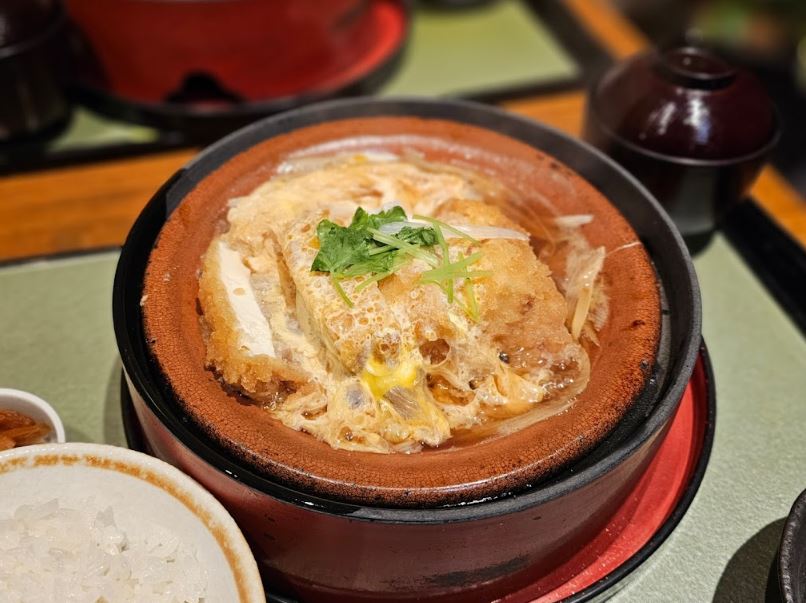
Tamura Ginkatsu-tei
4.8/542 Reviews
📍1300-739 Gora, Hakone, Ashigarashimo District, Kanagawa 250-0408, Japan
Average spend
MXN$300
Finally, for a sweet snack, let yourself be tempted by onsen manju—little buns steamed by the vapour from the hot springs and filled with red bean paste—which you can buy still warm in the streets of Hakone-Yumoto. An absolute delight!
💡 Practical Tips: Transport and Travel Passes in Hakone
Getting around Hakone is quite straightforward once you understand the idea of the tourist “loop”. From Tokyo (usually from Shinjuku Station), you arrive at Hakone-Yumoto. Then, for each activity, you’ll need to take:
- A mountain train up to Gora,
- A funicular from Gora to Sounzan,
- The Hakone Ropeway to Lake Ashi via Owakudani,
- A boat on Lake Ashi to reach another port,
- A return bus to Hakone-Yumoto or your accommodation
To make life easier, opt for the Hakone Free Pass, which bundles most of the transport for this loop and includes a return journey from Tokyo (depending on the option you choose). It’s a practical and often cost-effective choice if you’re staying for at least a full day!
Have a wonderful trip! ✨
👇Book Japan Train Tickets with Trip.com👇
Official JR partner · Wide coverage · Easy changes
❓ FAQ – Things to Do in Hakone
-
Can you visit Hakone in one day from Tokyo?
-
What can you do in Hakone in two days?
-
How many days are best for visiting Hakone?
-
Should you choose Hakone or another day trip from Tokyo?
-
What to do in Hakone when it rains?
🧩 Explore Hakone & Beyond
Top Things to Do in Kyoto: Best Activities & Must-Sees
Discover the best things to do in Kyoto: top activities, vibrant neighbourhoods, local culture, and must-see attractions to make the most of your stay.
October 15, 2026
Top Things to Do in Hiroshima: Best Activities & Must-Sees
Discover the best things to do in Hiroshima: top activities, vibrant neighbourhoods, local culture, and must-see attractions to make the most of your stay.
October 15, 2026
Top Things to Do in Hakone: Best Activities & Must-Sees
Discover the best things to do in Hakone: top activities, vibrant neighbourhoods, local culture, and must-see attractions to make the most of your stay.
October 15, 2026
Top Things to do in Tokyo: Best Activities & Must-Sees
Discover the best things to do in Tokyo: top activities, vibrant neighbourhoods, local culture, and must-see attractions to make the most of your stay.
October 15, 2026
Top Things to Do in Osaka: Best Activities & Must-Sees
Discover the best things to do in Osaka: top activities, vibrant neighbourhoods, local culture, and must-see attractions to make the most of your stay.
October 15, 2026
Top Things to Do in Nagoya: Best Activities & Must-Sees
Discover the best things to do in Nagoya: top activities, vibrant neighbourhoods, local culture, and must-see attractions to make the most of your stay.
October 15, 2026
Top Things to Do in Kobe: Best Activities & Must-Sees
Discover the best things to do in Kobe: top activities, vibrant neighbourhoods, local culture, and must-see attractions to make the most of your stay.
October 15, 2026
Top Things to Do in Yokohama: Best Activities & Must-Sees
Discover the best things to do in Yokohama: top activities, vibrant neighbourhoods, local culture, and must-see attractions to make the most of your stay.
October 15, 2026
Best eSIM for Japan from £0.37
Choose the best eSIM for Japan. Compare prices, providers & activation to stay connected with high-speed data during your trip - all on Trip.com.
October 15, 2026
Universal Studios Japan: Tickets & Guide
Plan your perfect visit to Universal Studios Japan! Book USJ tickets, check USJ opening hours, and get tips on the best rides, shows, and things to do at Universal Studios Japan.
October 15, 2026
Tokyo Disneyland: Tickets & Guide
Book cheaper Tokyo Disneyland tickets and get tips for your visit. Adult tickets from £45.77 for magical rides, shows, and a perfect family adventure in Japan!
October 15, 2026
Disclaimer: This article has been provided by an individual contributor or third party platform. If there is any discrepancy regarding the copyright, please contact us directly and we will delete the content immediately.
Trending Searches
-
Travel guides