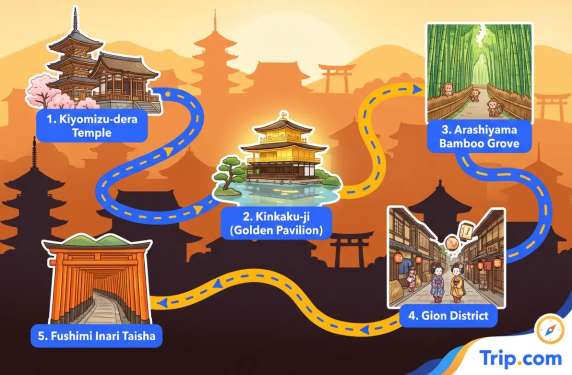
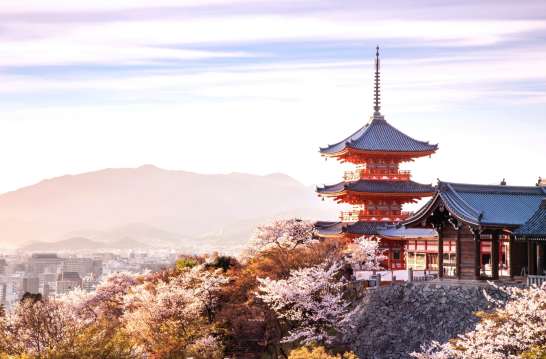
With millennia-old temples perched on the hills, cobbled lanes lined with wooden houses, and geisha on every street corner… Kyoto brings together everything you come to Japan for! A former imperial capital for more than a thousand years, the city has pulled off the remarkable feat of preserving much of its historical heritage despite the country’s rapid modernisation.
Are you planning a day trip or a short city break to one of Japan’s most iconic cities? You’re in the right place!
💰 Popular Kyoto Activities, Great Prices!
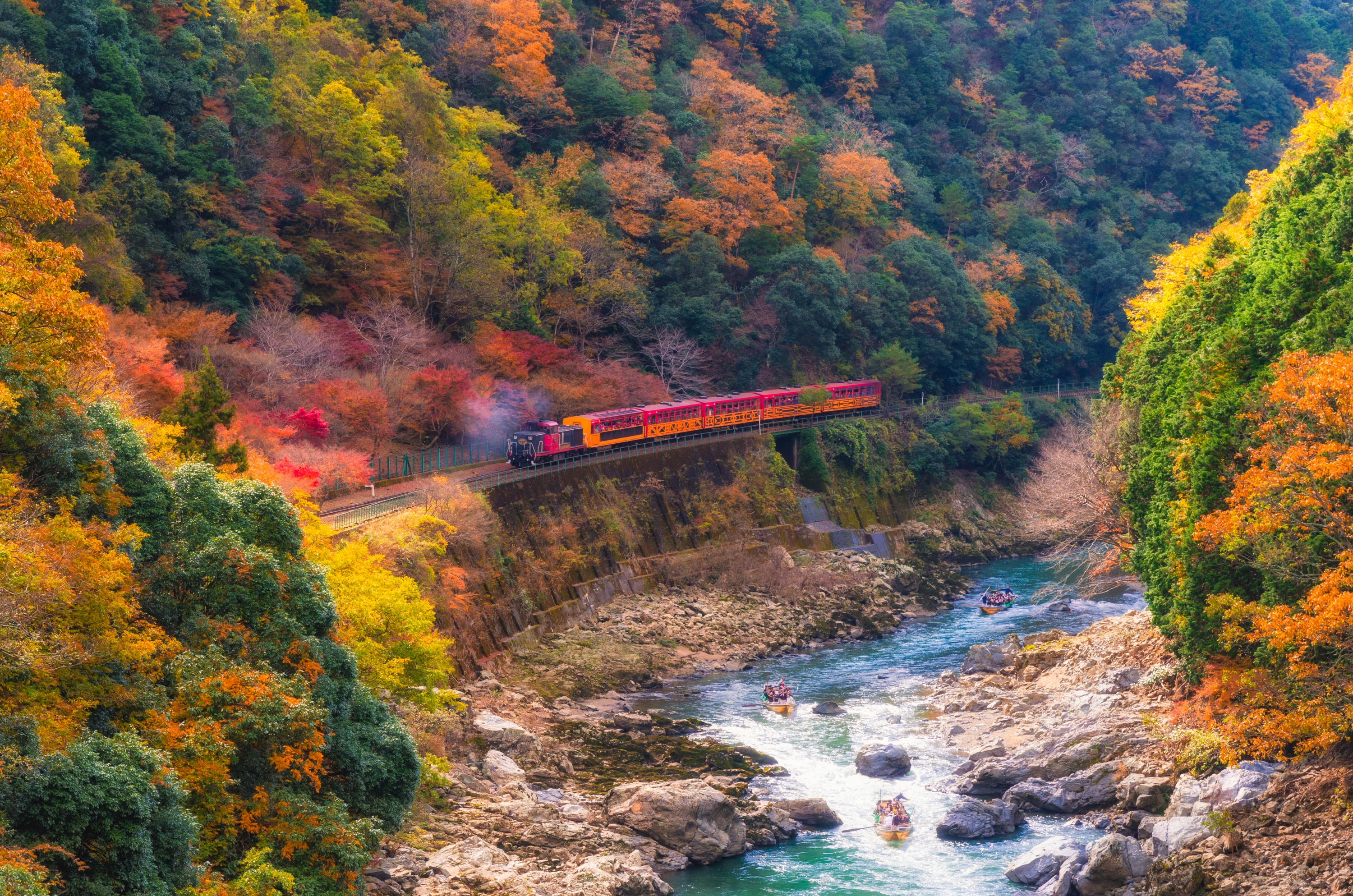
- 🚂 Arashiyama Sagano Romantic Train 🏞️ – From £4.23 – Scenic train through the gorges with spectacular mountain views
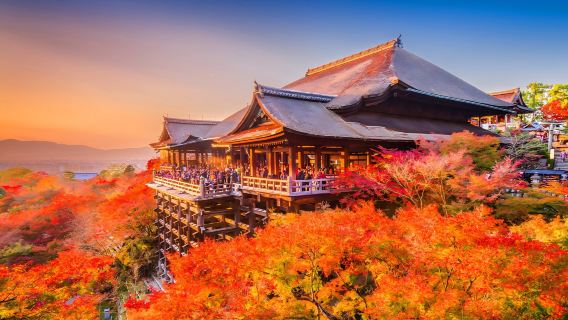
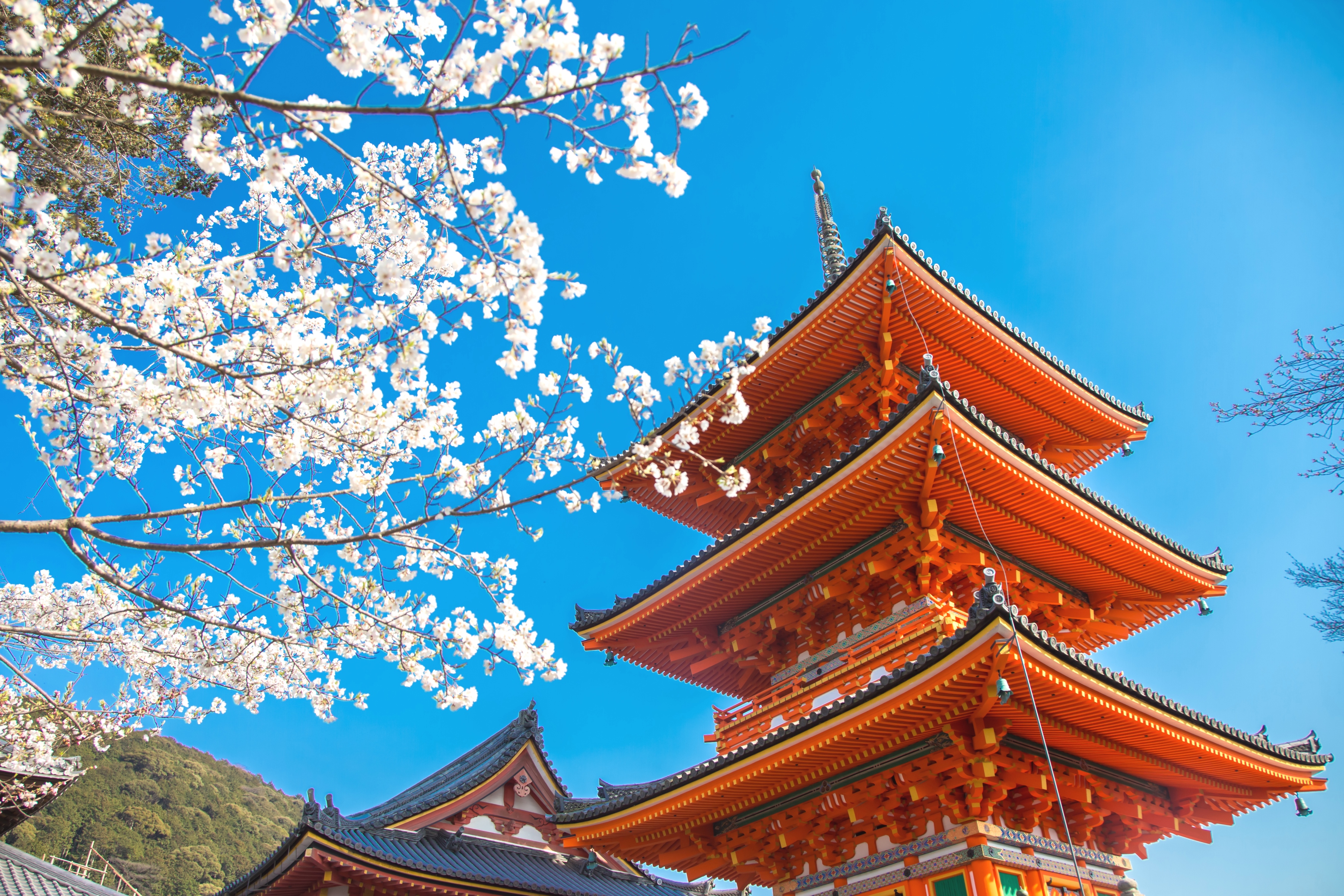
- ⛩️ Kiyomizu-dera Temple 🏯 – A temple on stilts with a wooden terrace and panoramic views over Kyoto
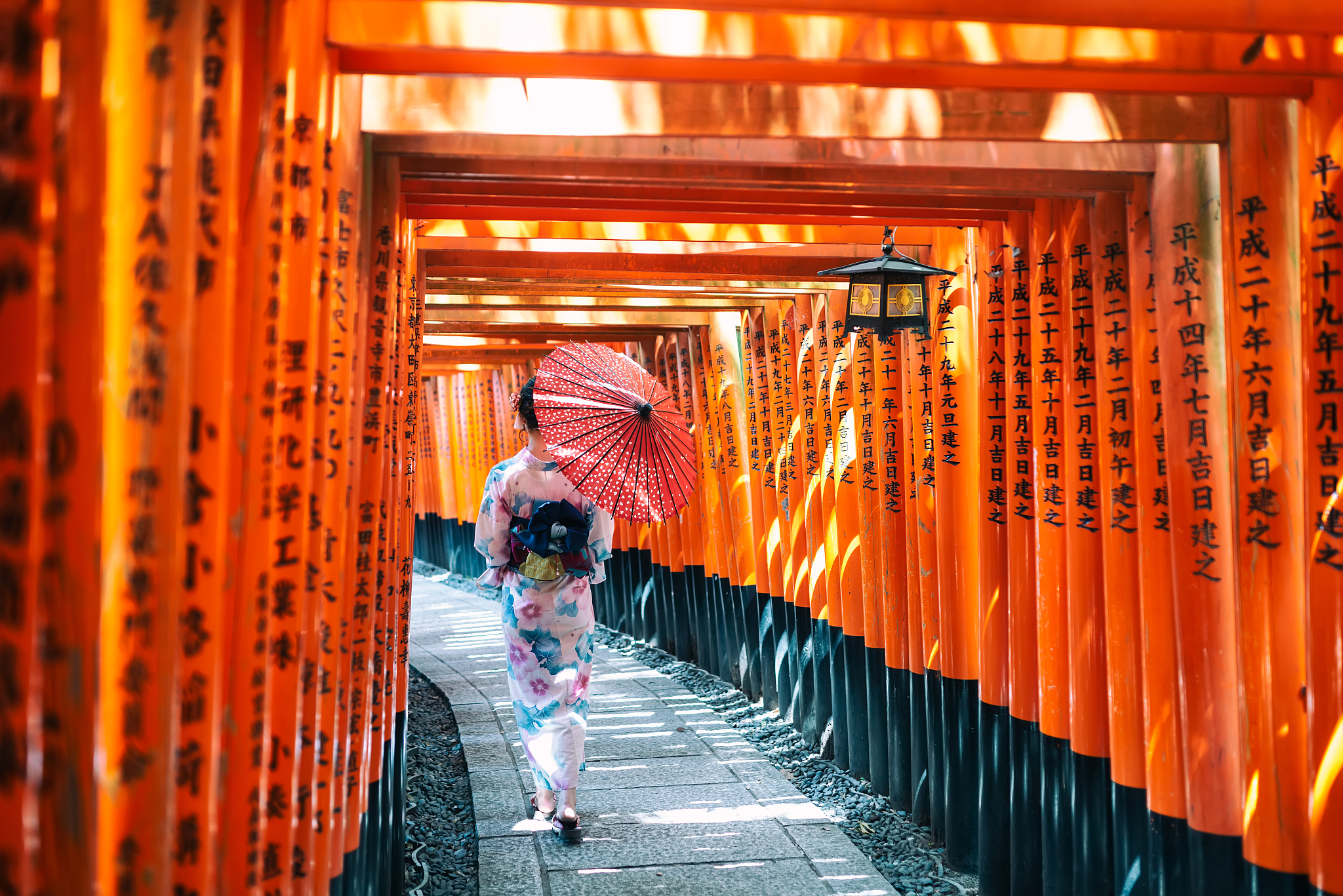
- 🦊 Fushimi Inari-taisha 🏮 – Free – Thousands of red torii gates forming tunnels up the mountain
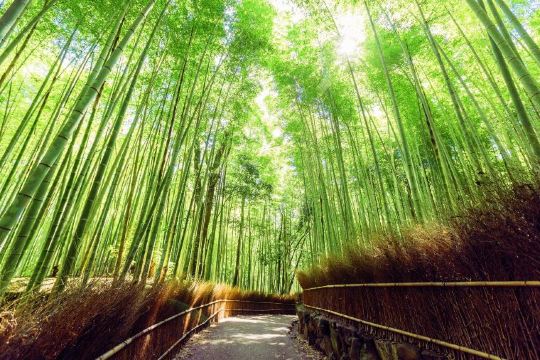
- 🎋 Arashiyama 🌿 – Free – Giant bamboo forest and UNESCO-listed temples
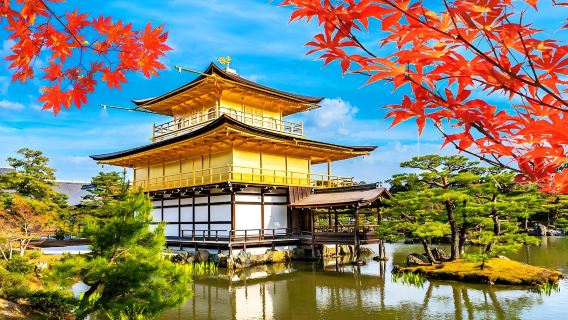
- ⛩️ Kinkaku-ji ✨ – Golden Pavilion covered in gold leaf, has been in the rankings for 2 years
📅 What to Do in Kyoto Based on Your Stay
How many days do you need to visit Kyoto and truly make the most of the city? As with any medium- or large city, it really depends on your pace and what you want to see. Travelling solo? With family? As a couple? Here are a few itinerary ideas based on the length and style of your trip:
Duration | Couple | Family | Friends | Solo |
1 day | Kiyomizu-dera + Gion + Fushimi Inari at sunset | Arashiyama (bamboo + train) + Kiyomizu-dera | Fushimi Inari in the morning + Gion + Pontocho in the evening | Golden Temple + Gion + Fushimi Inari |
2 days | Day 1: Higashiyama (temples) + Gion Day 2: Arashiyama + Imperial Palace | Day 1: Arashiyama Day 2: Kiyomizu-dera + Maruyama Park | Day 1: Eastern temples Day 2: Arashiyama + Pontocho | Day 1: Higashiyama Day 2: North (Golden Pavilion + Ryoan-ji) |
3 days | Days 1-2 + Day 3: Philosophers' Path + tea ceremony | Days 1-2 + Day 3: Manga Museum + Arashiyama Monkey Park | Days 1-2 + Day 3: Nara or less touristy neighbourhoods | Days 1-2 + Day 3: secondary temples + Nishiki Market |
4-5 days | Days 1-2-3 + Day 4-5: Nara excursion, craft workshops, Kurama onsen, hidden Zen gardens | Days 1-2-3 + Days 4-5: A day in Osaka, kimono workshops, seasonal strawberry farm, Maruyama Park | Days 1-2-3 + Day 4-5: Kiyamachi nightlife, rooftop bars, excursion to Osaka | Days 1-2-3 + Days 4-5: mountain temples (Kurama/Kibune), hidden cafés, writing/photography |
🎁 Get 5% off & save up to £2 on your first Kyoto Attractions & Tours booking! 👇
🏙️ Must-Visit Districts in Kyoto
The first thing that strikes you about Kyoto is its diversity. Each neighbourhood has its own identity, history and vibe. You could almost lose yourself here, there are so many neighbourhoods and they’re all so different from one another. To help you plan your stay, here are the ones you really shouldn’t miss.
Gion: Kyoto’s historic heart

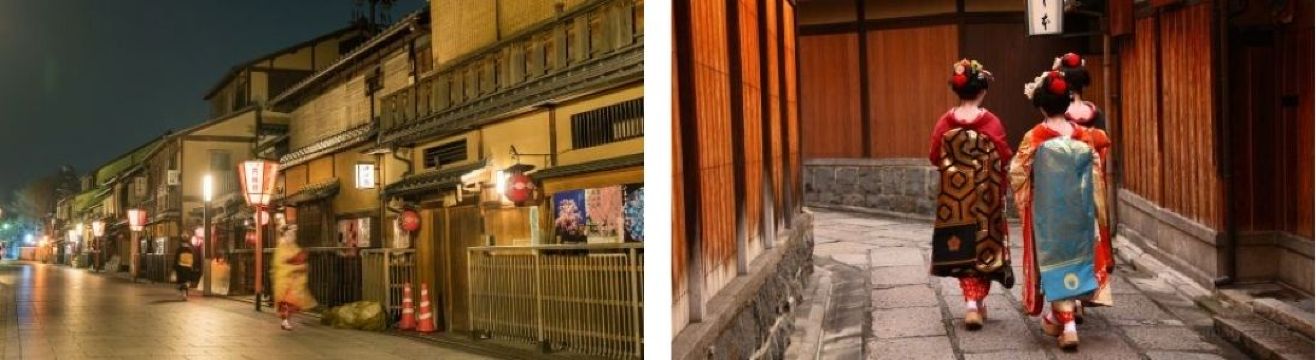
Gion is THE historic district of Kyoto you see everywhere—the one that captures all the magic of the geisha era (traditional Japanese singers and dancers). Here, traditional wooden townhouses (machiya) still house ochaya, tea houses where private banquets take place, brought to life by geishas and maikos (apprentice geishas). Take the time to stop for a relaxing break in a traditional setting that whisks you back in time!
In the late afternoon, with a bit of luck, you might catch a glimpse of a maiko in a hurry on her way to an appointment, dressed in her sumptuous kimono and traditional accessories.
📌 Tips: Gion is also home to the Gion Corner theatre, where you can catch performances of traditional dances, bunraku (puppet theatre), or a tea ceremony. It’s a great way to experience several traditional arts in one evening!
Higashiyama: temples, hills and old alleyways

The second must-see district is Higashiyama! It runs along the hills to the east of Kyoto and is home to several of the city’s most famous temples. Indeed, this is where you’ll find the famous Kiyomizu-dera temple, the cherry-blossom-lined Philosopher’s Path, and the Silver Pavilion, Ginkaku-ji.
But beyond the temples, Higashiyama is also a neighbourhood of utterly charming cobbled lanes. Among the must-see streets, Ninenzaka and Sannenzaka are the most visited. Here you’ll find artisan boutiques, traditional teahouses, and little museums…
If you’re looking for a well-preserved historic neighbourhood in Kyoto with a peaceful, authentic atmosphere, Higashiyama is the dream spot! Allow a full day to explore it at a leisurely pace.
Arashiyama: Kyoto’s green heart

Arashiyama lies to the west of Kyoto, at the foot of the mountains. It’s pretty much the unmissable nature escape when visiting Kyoto.
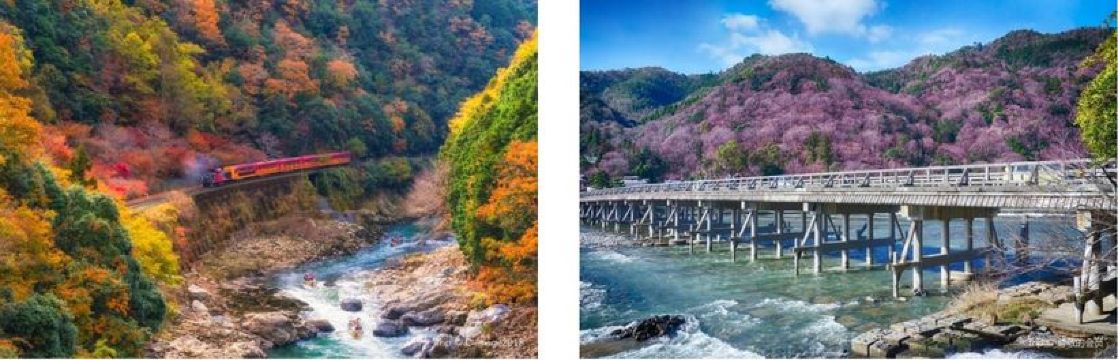
The star attraction of the neighbourhood is, of course, the giant bamboo forest (we’ll tell you more just below in the unmissable activities). Arashiyama also boasts the magnificent Tenryu-ji Temple (a UNESCO World Heritage site!) with its Zen gardens, the Togetsukyo Bridge that spans the river, and the Sagano Romantic Train tourist train that winds through the gorges with breathtaking scenery.
📌 Trip.com’s recommendation: if you have time, you can also climb up to the Iwatayama Monkey Temple or head over to Otagi Nenbutsu-ji Temple with its 1,200 amusing stone statues. Allow at least half a day, or even a full day if you want to take your time.
Pontocho: the alley of restaurants and nightlife

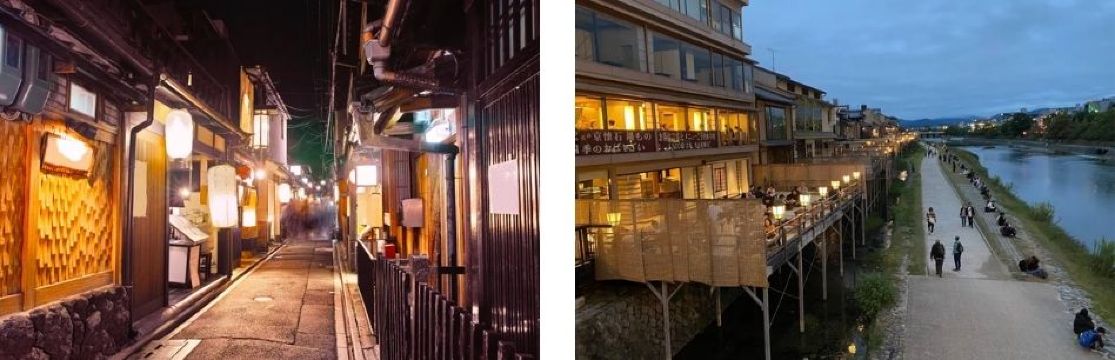
Pontocho is a tiny alleyway running parallel to the Kamo River, stretching between Shijo and Sanjo streets. By day, it keeps a low profile. But as night falls, Pontocho comes alive and reveals a whole different side: red lanterns hanging from the façades, little restaurants opening their sliding doors, terraces overlooking the river in summer…
It’s one of the favourite districts for tourists in Kyoto in the evening. You’ll find all kinds of restaurants: yakitori, kaiseki (refined Japanese cuisine), ramen, izakaya… The venues are often tiny, sometimes just 6 or 8 seats at the counter, with an intimate, local and convivial atmosphere guaranteed.
📌 Tips: In summer, some restaurants set up suspended terraces above the river (called "yuka"), a truly pleasant experience for dining in the cool.
Kyoto Station neighbourhood: modern and convenient

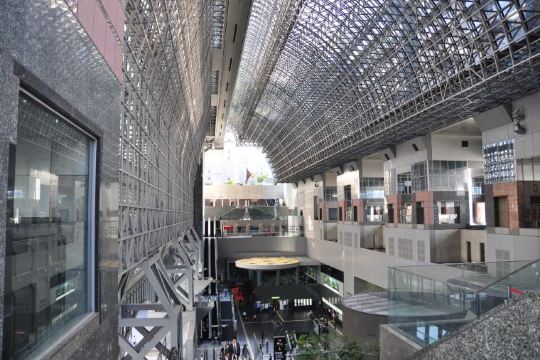
It’s an unusual neighbourhood to recommend—Kyoto Station! With its futuristic architecture by Hiroshi Hara, a grand staircase you can climb right up to the top floor, and a panoramic terrace with views over the city… it’s worth the detour!
Right next door is Kyoto Tower, which offers 360° views over the entire city and the surrounding mountains. The area around the station is also home to several large shopping centres (Kyoto Station Building with its shops and restaurants, Porta underground, Isetan for luxury…), making it one of the best places for concentrated shopping in Kyoto.
📌 Tips: it's also handy if you're arriving or departing by Shinkansen, or if you're looking for a spot to grab a quick lunch before heading to the temples.
Neighbourhoods for shopping, manga and local specialities

Where to go shopping in Kyoto and enjoy local specialities? Several areas stand out depending on what you're looking for:
- Shijo-Kawaramachi: the modern retail heart with department stores (Takashimaya, Marui…), fashion boutiques, cosmetics
- Teramachi and Shinkyogoku: two parallel covered shopping arcades brimming with manga/anime shops, figurines, souvenirs, vintage… It’s THE anime/geek district of Kyoto.
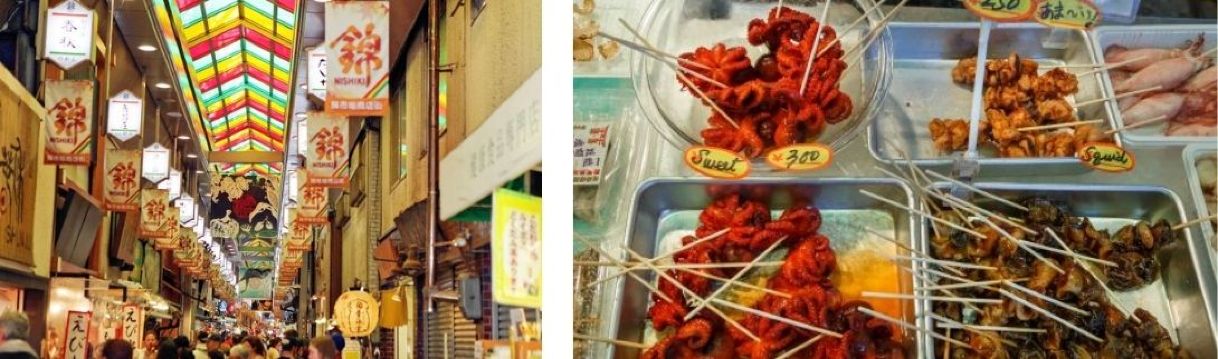
- Nishiki Market: the historic covered market, nicknamed "Kyoto’s kitchen", with fresh produce, local specialities, pickles, pastries…
- Fushimi: a sake district with several breweries to visit and specialist shops
Hotels: Save up to 10% (Book online or on H5)
Homes & Apts: Save up to £39 (App-only deal)
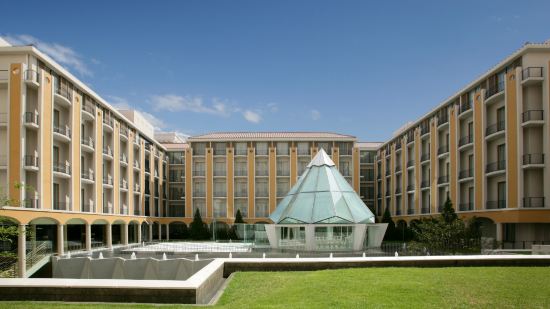
Our Top Picks for Kyoto Hotels
5 star
Business travel
Family friendly
Breakfast
Gym
🏯 Top 5 Activities and Landmarks in Kyoto
Now that we’ve covered the neighbourhoods, let’s dive into the city's must-see attractions. Here are five must-see attractions in Kyoto that you absolutely shouldn't miss:

Kinkaku-ji: the glittering Golden Pavilion

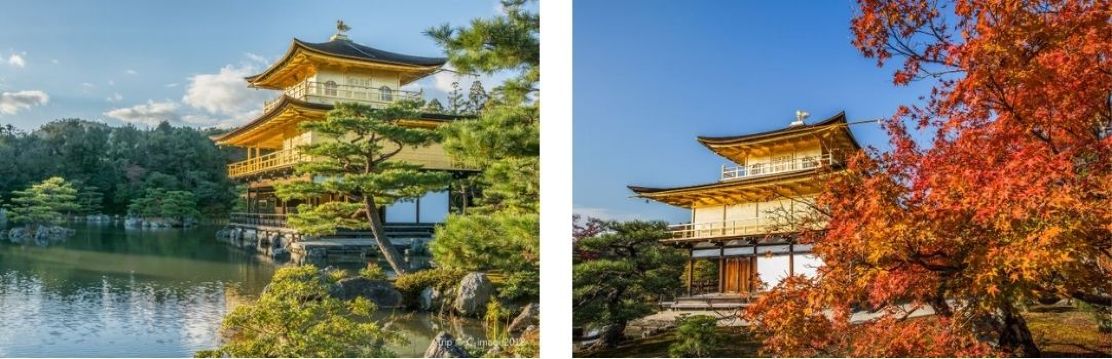
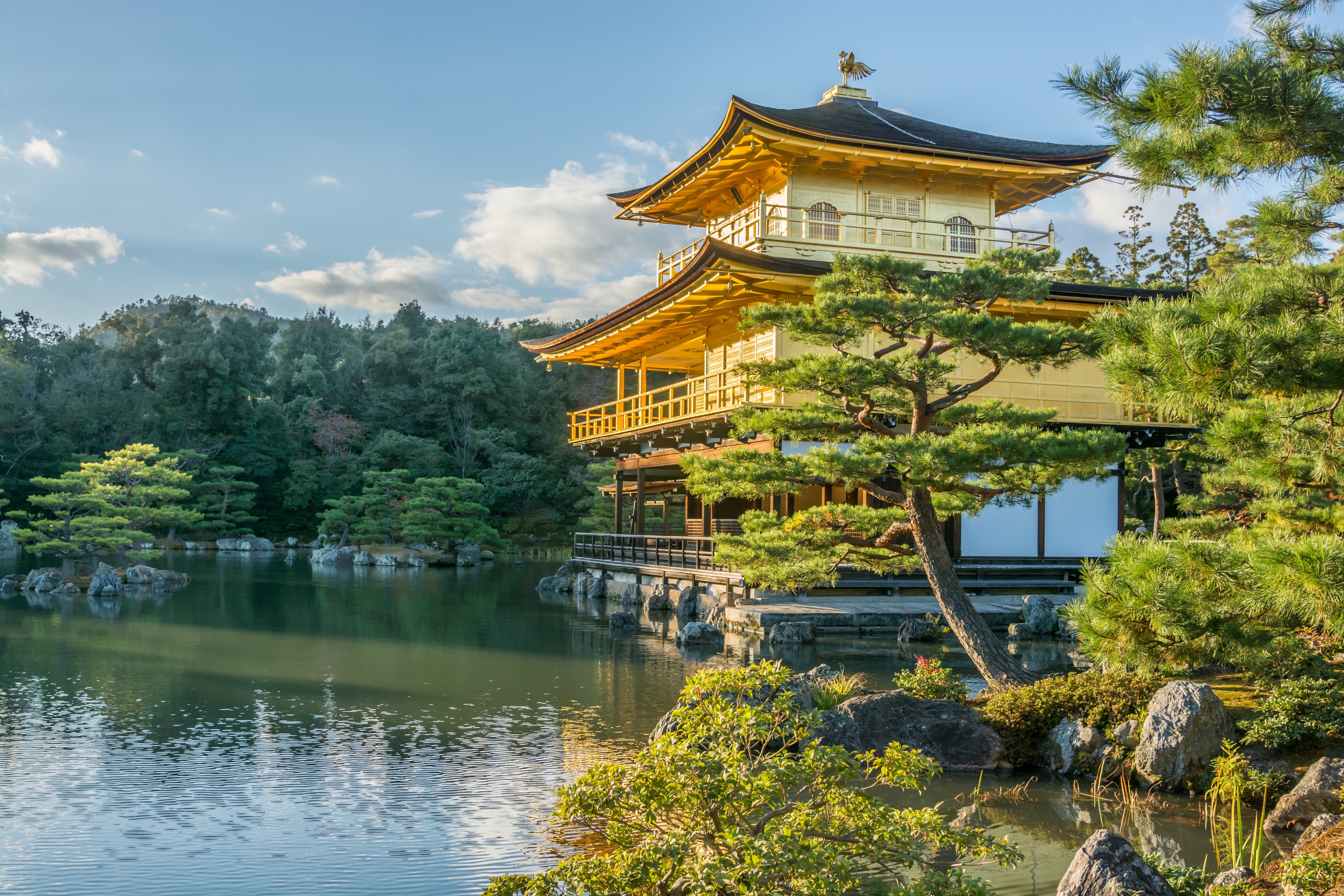
Kinkaku-ji (or the Golden Pavilion) is probably one of the most iconic monuments in all of Japan. This pavilion covered in gold leaf stands at the edge of a pond. On clear days, when the sunlight strikes the gold leaf, the effect is truly striking. You’ll almost certainly find plenty of photographers and artists there!
📌 Trip.com’s recommendation: please note, the place is always crowded, especially around midday. Try to go as soon as it opens (9 am) to enjoy a quieter atmosphere. The visit is one-way along a designated route — allow around 45 minutes to an hour to complete the full circuit.

Kiyomizu-dera Temple: the temple on the hill

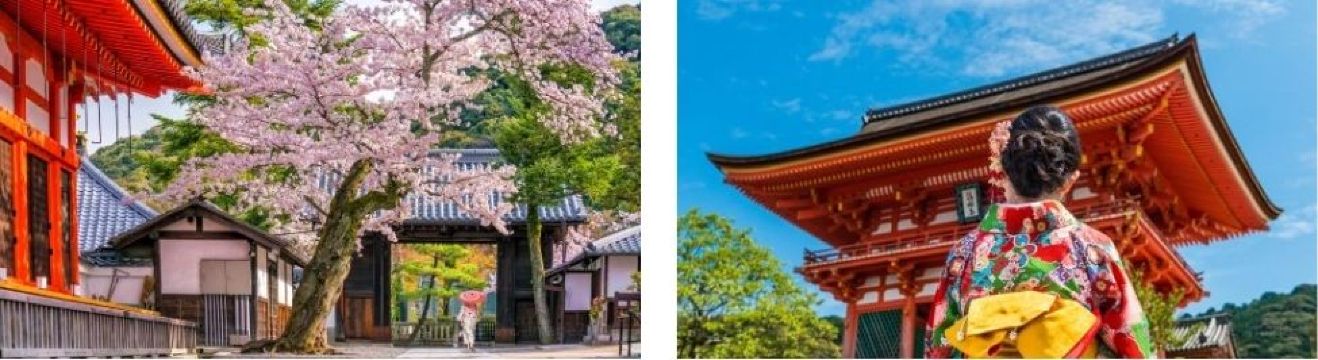
Kiyomizu-dera is probably Kyoto’s most iconic temple. Perched on a hill in the Higashiyama district, it offers a spectacular view over the city from its wooden terrace supported by towering pillars.
The temple is listed as a UNESCO World Heritage Site and attracts large crowds all year round. In the evenings, special illuminations are organised several times a year, creating a unique atmosphere.
💡Trip.com fun fact: The most impressive part? Not a single nail was used to build this terrace—an architectural feat dating back to the 17th century!

Fushimi Inari-taisha: the torii tunnels

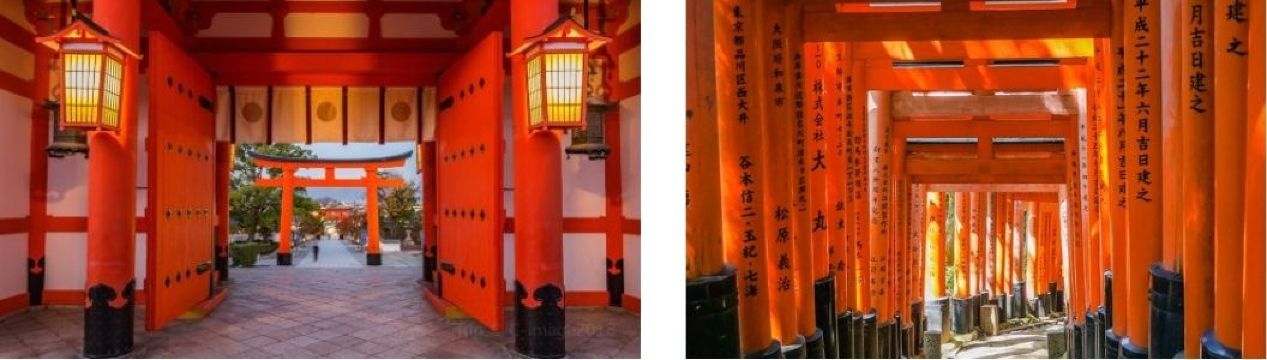
Fushimi Inari Shrine is without a doubt the most photographed spot in all of Kyoto. Thousands of vermilion-red torii (sacred gates) form tunnels that snake along the slopes of Mount Inari. The full walk to the summit takes two to three hours, but even just tackling the first part of the trail is already well worth it.
The site is free and open 24/7, making it a great option for an early-evening activity after 5 pm (or early in the morning to avoid the crowds!).
Along the way, you’ll come across dozens of small secondary shrines, fox statues (messengers of the god Inari), and viewpoints over Kyoto. If you make it all the way to the summit, you’ll almost certainly find yourself among only small groups: most tourists stop at the first third of the way!

Arashiyama: the famous bamboo forest

As we briefly mentioned earlier, the Arashiyama Bamboo Forest is one of the city’s must-see highlights. Picture towering bamboo stalks rising 20 to 30 metres high, packed so closely they form a green tunnel overhead. The whisper of the wind through the leaves, the dappled light, the feeling of being completely cut off from the world… it’s a truly special place you won’t want to miss!
The main walk takes around 15–20 minutes, but you can easily extend it by visiting the nearby temples: Tenryu-ji, the Okochi Sanso garden perched on the hillside, or the Iwatayama Monkey Temple if you love animals.
📌 Tips: it's best to head there early in the morning (around 7–8 am) or towards the end of the day to avoid the tourist groups.

Arashiyama Sagano Romantic Train: the city's iconic train

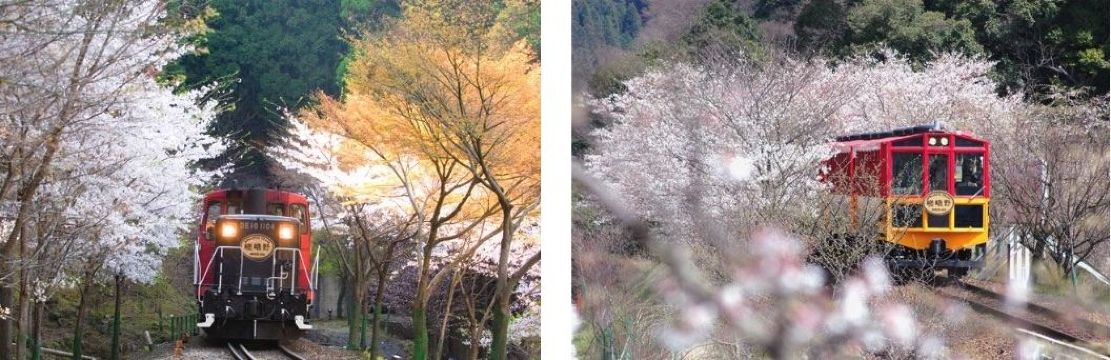
The Sagano Romantic Train links Arashiyama to Kameoka, tracing the Hozugawa River through spectacular gorges. The journey takes around 25 minutes, and the carriages (some open-air) offer breathtaking views of the mountains, forests and the river flowing below.
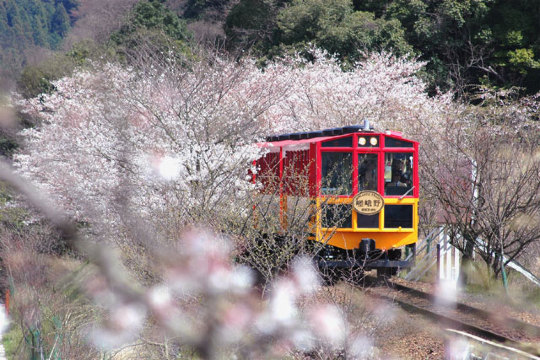
It's a perfect activity for families and couples alike, especially in autumn with the mix of colours, and in spring with the cherry blossoms in bloom. The train departs several times a day, but tickets sell out quickly, especially in peak season.

🌸 Best Time to Visit Kyoto
Kyoto is a joy to visit year-round, but as with everywhere in Japan, some seasons are undeniably more spectacular than others.
Season | Weather | Highlights |
Spring (March–May) | Mild, pleasant | Cherry blossoms (sakura), delicate foliage, ideal temperatures |
Summer (June–August) | Hot and humid | Summer festivals, yuka terraces by the river in Pontocho, fireworks |
Autumn (Sep–Nov) | Pleasant temperatures | Red foliage (momiji), clear skies, night-time illuminations in temples |
Winter (Dec.–Feb.) | Cold but dry | Fewer crowds, snow-covered temples, peaceful atmosphere |
🚄 Day Trips from Kyoto

Spending a few days in Kyoto and fancy straying a little off the beaten track? Great idea! Kyoto is perfectly placed for exploring authentic spots all around, far from the tourist crowds in the city centre.
Starting from Kyoto, Trip.com recommends three unmissable excursions:
🍵 Uji: The green tea capital
Uji is the undisputed home of Japanese green tea! If you love matcha, this is the place to come. Beyond tasting the country’s finest green teas (yes, really!), be sure to visit Byōdō-in Temple, whose Phoenix Hall is reflected in the pond. It’s also one of Japan’s most beautiful sights!
Journey time: 20-30 minutes by train (17 km to the south)
Transport: JR Nara Line train from Kyoto Station
Must-sees:
- Byōdō-in Temple (UNESCO-listed, on 10-yen coins)
- Matcha tasting and green tea pastries
- Stroll along the Uji River
- Fukujuen Tea Museum
🍜 Kibune: noodles by the river and fresh mountain air
Kibune is the summer retreat for Kyotoites. In July and August, when the city’s heat turns stifling, everyone heads up to Kibune to eat noodles on terraces set directly above the river.
The restaurants serve nagashi-sōmen (cold noodles that flow down bamboo channels filled with icy water). It’s refreshing, and the mountain atmosphere is truly soothing. In autumn, the red maples are stunning too!
Journey time: 30-40 minutes by train (15 km to the north)
Transport: Eizan Train from Demachiyanagi Station
Must-sees:
- Nagashi-sōmen (noodles served in flowing river water in summer)
- Kifune-jinja Shrine (romantic, for love wishes)
- Hiking in the forest
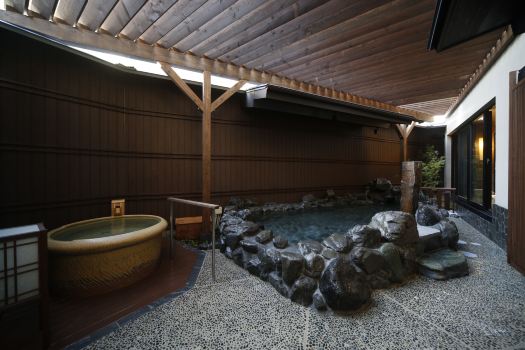
- Traditional onsen (hot springs)
🎣 Ine: The fishing village with floating houses
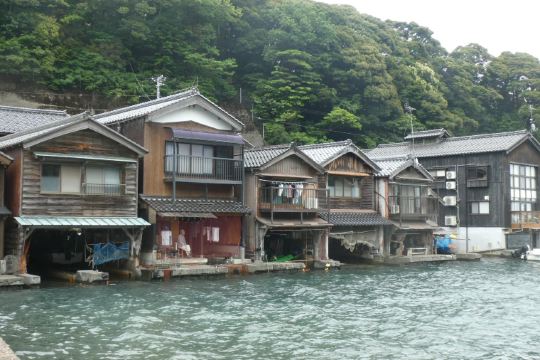
Finally, make sure to visit Ine. It’s a little hidden gem on the northern coast. This fishing village has preserved its funaya, houses built directly on the water with a boat garage downstairs and the living quarters above.
Ine Bay is calm and sheltered, and the village has preserved its authentic charm. Very few foreign tourists make it here — it’s truly off the beaten track. If you love quiet spots and maritime scenery, Ine is definitely worth the detour.
Journey time: 2–2.5 hours by train + bus (90 km north)
Transport: Limited Express train + local bus via Amanohashidate
Must-sees:
- Funaya (traditional fishermen’s houses on stilts)
- Boat trip in the bay
- Ultra-fresh seafood tasting
- Panoramic view from the Ine Bay viewpoint
👇Book Japan Train Tickets with Trip.com👇
Official JR partner · Wide coverage · Easy changes
Kyoto opens the doors to its more than a thousand years of history, its refined traditions, and its unforgettable experiences! With its majestic temples, Zen gardens, historic districts like Gion, and delicious Japanese specialities, the former imperial capital is sure to amaze you.
Start planning your incredible trip on Trip.com now to unlock the best deals!
Have a great trip to Kyoto! 🏯
❓ FAQ – Things to Do in Kyoto
What to do in Kyoto in 1 day?
Focus on Higashiyama. Visit Kiyomizu-dera in the morning, walk through Ninenzaka and Sannenzaka, explore Gion in the afternoon, and head to Fushimi Inari at sunset.How many days do you need in Kyoto?
Three days is ideal. Day one for Higashiyama and Gion, day two for Arashiyama and the north including the Golden Pavilion, and day three to explore more or take a day trip to Nara.Where is the best shopping in Kyoto?
Shijo Kawaramachi for major brands, Teramachi and Shinkyogoku for manga and anime, Nishiki Market for food, and Fushimi for sake shops.What to do in Kyoto in the evening after temples close?
Stroll around Gion and Pontocho, enjoy a traditional dinner, visit Fushimi Inari at night, or watch a cultural show at Gion Corner.What to do in Kyoto when it rains?
Kyoto is still beautiful in the rain. Visit zen temples like Ryoan-ji, explore the covered Nishiki Market, spend time at the Kyoto International Manga Museum, join a craft workshop, or relax in an onsen such as in Kurama.

5575 booked