Nanjing Airport: Transport, Services and Travel Tips

If you are planning to explore eastern China, Nanjing, the capital of Jiangsu Province, is a worthwhile stop on your journey. The city's main airport, Nanjing Lukou International Airport (NKG), is located around 35 km (22 miles) south of the city centre, unlike some Chinese airports that are much closer to their urban areas.
Arriving at a new airport can sometimes feel confusing: which terminal should you use, how can you reach the city centre quickly, what are the entry requirements for China, and what facilities are available at the airport?
Don't worry! To help you prepare for your arrival or departure, Trip.com has created a detailed guide to Nanjing Lukou International Airport, covering everything you need to know for a smoother journey.
Essential information about Nanjing Airport (NKG)
Opened in 1997, Nanjing Lukou International Airport underwent a major expansion in 2014, including the opening of Terminal 2 ahead of the Nanjing Youth Olympic Games. Today, it is one of China's major airports, handling around 31.4 million passengers in 2025.
The airport is an important gateway to Jiangsu Province and the Yangtze River Delta region. It also plays a key role in air cargo operations, particularly within the networks of China Post and China Postal Airlines.
- Location: Around 35 km south of central Nanjing, in Jiangning District.
- Terminals: Two active terminals, T1 and T2, connected by the airport transport hub.
- Runways: Two parallel 3,600-metre runways, suitable for large aircraft.
- Airline base: The main operating base for China Eastern Airlines Jiangsu and also a base for Shenzhen Airlines Jiangsu.
From London
From Edinburgh
From Manchester
See all flights


Nanjing Airport Terminal 1 or Terminal 2: Which one should you use?
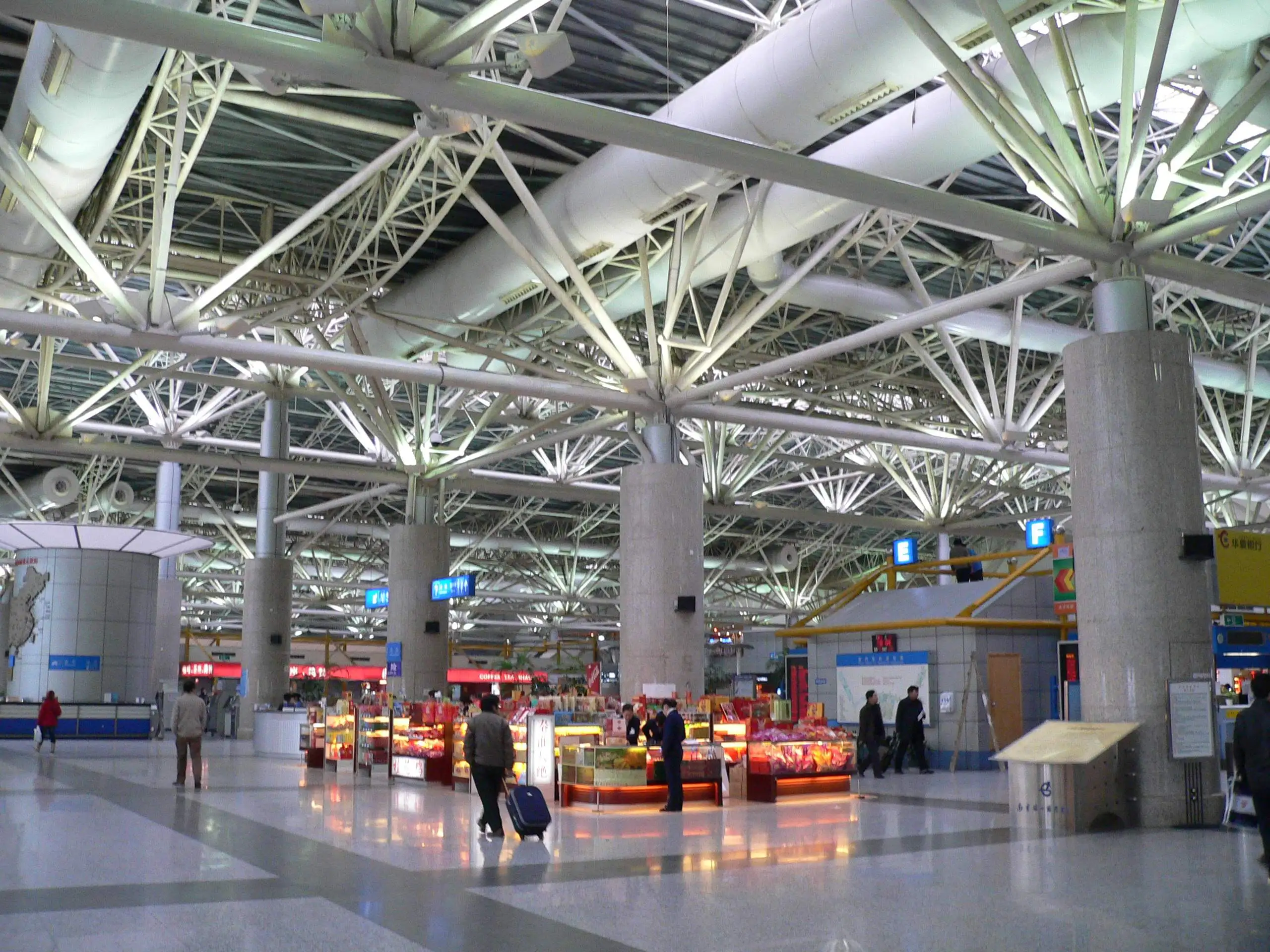
Nanjing Lukou International Airport (NKG) has two passenger terminals, and many travellers are still unsure which one to use. Some outdated information says that “Terminal 1 is closed and all flights operate from Terminal 2”, but this was only true during the renovation period from 2014 to 2020. Terminal 1 reopened in July 2020 and is now fully operational.
Here is a simple overview of the two terminals:
Terminal | Flights handled | Main airlines |
T2 | All international flights, plus domestic flights operated by China Eastern Airlines and Juneyao Airlines | China Eastern, Juneyao, and international airlines such as Air France, Lufthansa, Singapore Airlines and Korean Air |
T1 | Domestic flights operated by other Chinese airlines | Air China, China Southern Airlines, Shenzhen Airlines, Spring Airlines, Hainan Airlines and other Chinese carriers |
🚨 Important: There are currently no regular direct flights from London to Nanjing, and most journeys require a connection.
If you are travelling from London to Nanjing, you will arrive at Terminal 2 when taking the China Eastern Airlines service, as all international arrivals and departures use T2.
For connecting flights, always check your airline and flight details in advance, as some domestic connections may use Terminal 1 or Terminal 2 depending on the carrier.
How to transfer between T1 and T2 at Nanjing Airport
The two terminals are located close to each other, only a few hundred metres apart. Passengers can:
- Take the free shuttle bus on the public side (around 06:30–22:30).
- Walk between the terminals in around 10 minutes.
If you are transferring from an international flight at T2 to a domestic flight at T1, allow enough time for:
- Collecting your checked baggage
- Leaving the arrival area
- Moving to the other terminal
- Checking in again and passing security
A transfer time of at least 60–90 minutes is recommended.
🌐 Get a China eSIM for easy access to mobile data, maps and essential travel apps throughout your journey.
Transport to and from Nanjing Airport
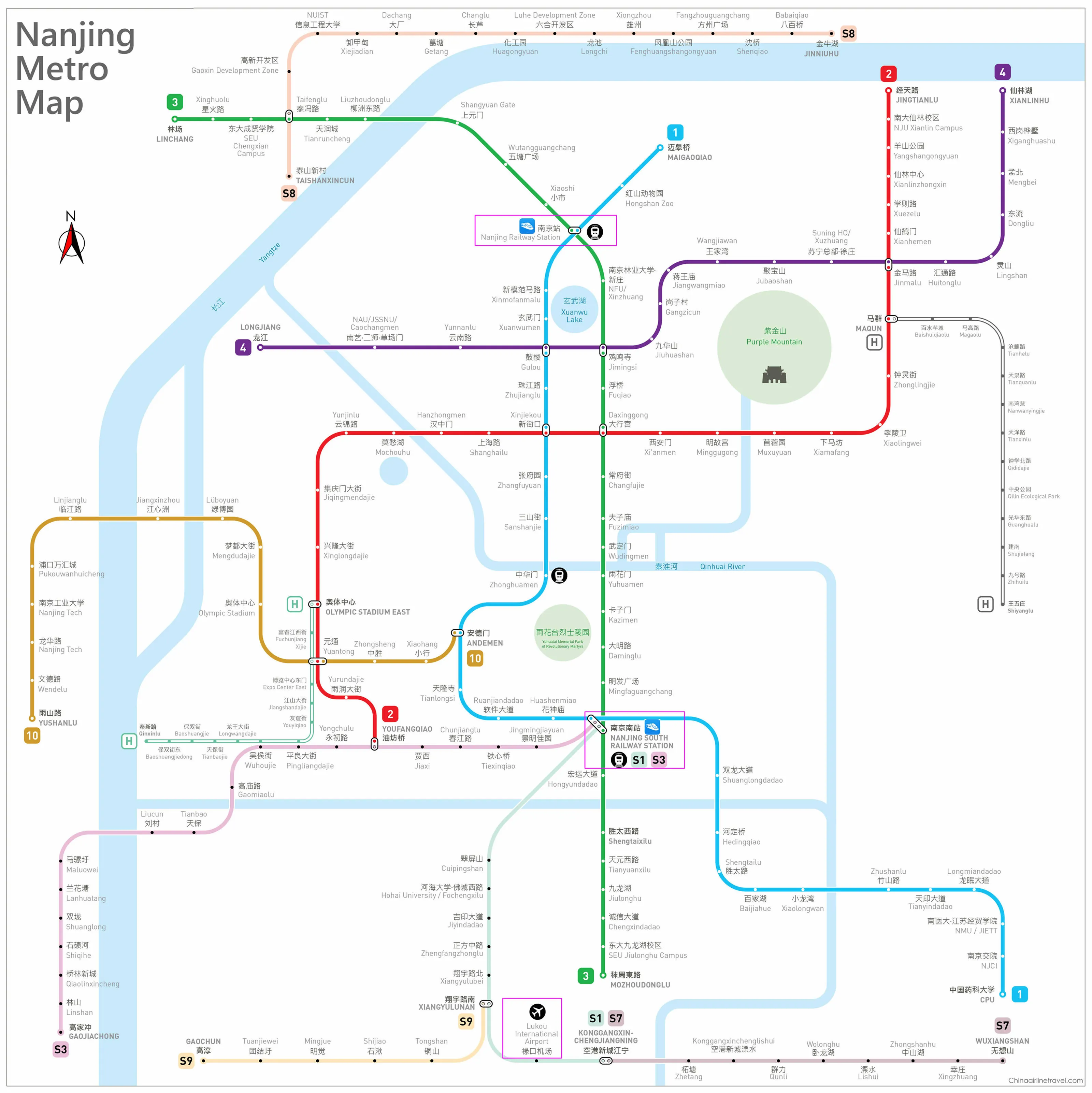
As mentioned, Nanjing Lukou International Airport is located some distance from the city centre. Depending on your chosen transport option and the time of day, the journey usually takes around 40 minutes to 1 hour. Here are the main ways to travel between the airport and Nanjing:
Option | Departure point at the airport | Cost | Journey time | Frequency |
Metro Line S1 | B1 of the Transport Centre (around 150 m from Terminal 2) | Around CNY 7 (£0.80) | 35–45 minutes to Nanjing South Railway Station | Every 8–10 minutes |
Airport shuttle bus | Arrival halls of Terminal 1 and Terminal 2 | Around CNY 20–30 (£2–£3) | 60–90 minutes | Depends on the route |
Arrival exit, Gate 3 | Around CNY 100–160 (£11–£18) | 45–60 minutes | Available 24/7 | |
Ride-hailing (Didi) | B1 of T2, P1 car park of T1 | Around CNY 100 (£11) | 45–60 minutes | Available 24/7 |
Private transfer | Advance booking required | From around £17 | 45–60 minutes | On demand |
Prices are approximate and may vary depending on traffic, demand and exchange rates.
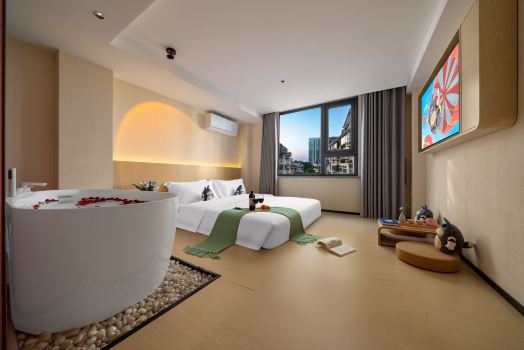
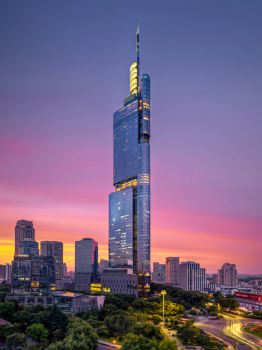
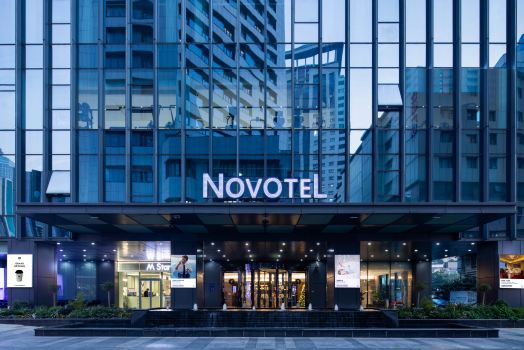
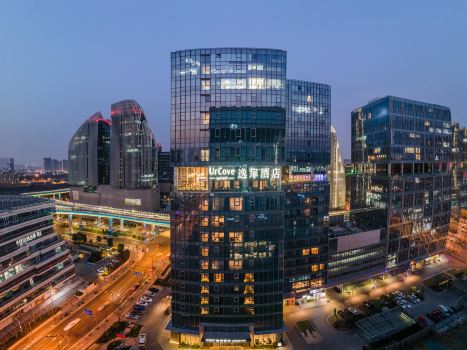
Hotels in Nanjing
eSIM China
See All Hotels
 NO.1
NO.1



Nanjing Airport arrivals and departures: practical tips
On arrival
- Immigration: Foreign travellers should follow the dedicated immigration lanes and complete an arrival form, which is often provided during the flight.
- Baggage claim: For international flights, baggage carousels are located on the ground floor of Terminal 2.
- Customs: Use the green channel if you have nothing to declare, or the red channel if you do. Customs checks on fresh food products and large amounts of cash can be strict.
- Leaving the airport: Follow the signs downstairs to access the metro and ride-hailing services, head to Gate 3 for taxis, or use the airport shuttle between terminals.
On departure
- Check-in: For international flights, check-in usually opens 3 hours before departure and closes around 60 minutes before take-off. For domestic flights, arrive around 2 hours early, as check-in normally closes 40 minutes before departure.
- Security checks: Allow extra time in the morning and late afternoon, when queues can be longer.
- Travel documents: Keep your passport easily accessible, as it may be checked several times, even on domestic flights.
Arrival requirements in Nanjing: visa and regulations
The good news is that entry requirements for Nanjing are now much simpler, just like the rest of mainland China. Since late 2023, China has introduced easier entry policies for many European travellers, and the current arrangement is available until 31 December 2026.
- Visa-free entry for 30 days: British citizens and most EU citizens can enter mainland China without a visa for stays of up to 30 days per entry. This applies to travel for tourism, business, family visits and transit, with no need to apply in advance.
- 240-hour visa-free transit: Nanjing is included in the 240-hour visa-free transit programme. However, most EU travellers will not need to use this option, as the 30-day visa-free entry policy offers more flexibility.
Entry requirements
- Your passport must be valid for at least 6 months from the date of entry.
- Your stay must not exceed 30 days per entry. The 30-day period starts again each time you make a new entry into mainland China.
- Your travel purpose must be permitted, such as tourism, business, family visits or transit. Work and study are not covered.
Find out more about entry requirements for China
Visa-Free Transit in China: Everything You Need to Know
Explore China Visa Free Transit for up to 10 days: requirements, eligible cities, recommended itineraries, and practical tips for a smooth journey.
October 14, 2026
China 2026 Entry Rules for UK: Visa-Free Policy & Process
Complete guide to China entry requirements 2026. Learn visa-free countries, required documents, and step-by-step entry process for foreign travellers.
October 14, 2026
China Arrival Card 2026: How to Fill It Online & On-Site
Learn how to complete the China Arrival Card with this step-by-step guide: who needs it, when & where to submit it, and the key info you must prepare.
October 14, 2026
Services and facilities at Nanjing Airport
Since its renovation, Nanjing Lukou International Airport has become a modern and well-maintained airport with everything you need for a comfortable wait. Most facilities are located in Terminal 2, the larger of the two terminals.
- Free Wi-Fi: Connect to the “Airport-FreeWiFi-NanJing” network using your phone number or a self-service kiosk.
- Lounges: Both terminals offer paid lounges, as well as airline lounges for eligible passengers.
- Food and drinks: Try local Nanjing specialities before leaving the airport, including salted duck (yanshuiya) and the famous duck blood vermicelli soup.
- Shopping: International travellers can visit duty-free shops, while local souvenirs include Yuhua tea, Yunjin brocade and beautiful Yuhua rain stones.
Airport lounges and premium lounges at Nanjing Airport
Lounge | Terminal | Access | Highlights |
First Class Lounge V7 | T2, International Departures (airside, after immigration) | Priority Pass, DragonPass, LoungeKey | The main international lounge, including for flights to Paris. Offers a buffet, bar and a maximum stay of 4 hours. Open approximately 6:00–23:00. |
CIP Lounge V6 | T2, Domestic Departures (opposite Gate 11) | Priority Pass, DragonPass, LoungeKey | Provides comfortable seating, drinks and screens. Massage chairs are available for an extra charge. Maximum stay: 2 hours. |
China Eastern / Shanghai Airlines Lounge | T2, Domestic Departures | Eligible China Eastern and Shanghai Airlines passengers | Managed by Plaza Premium. Open from around 5:30 until the last flight. |
First Class Lounge V8 (Air China) | T1, Domestic Departures (opposite Gate 115) | Eligible Air China passengers | Offers hot meals at selected times, luggage storage and a children's area. Open from 6:00 until the last flight. |
CIP Lounge | T1, Domestic Departures | Priority Pass, DragonPass | A convenient lounge option for domestic flights departing from Terminal 1. |
Restaurants and duty-free shops at Nanjing Airport
Type | Brands / Options | Terminal | What to try |
Nanjing local specialities | Airport restaurants and tea houses | T1 and T2 | Try local favourites such as salted duck (yánshuǐyā) and duck blood vermicelli soup, two signature dishes of Nanjing. |
International fast food | KFC, McDonald's, Burger King | T1 (McDonald's also available in T2 after security) | Reliable choices for a quick meal before your flight. |
Coffee | Starbucks | T1 and T2 | A convenient stop for coffee before boarding, especially in T1. |
Chinese food and noodles | Chinese restaurants and food courts | T1 and T2 | Enjoy noodles, fried rice, dumplings and other local-style dishes. Some areas also offer buffet options. |
Halal food | Designated halal restaurants | Departure area | Halal options are available; check opening hours at the airport. |
🌐 Get a China eSIM for easy access to mobile data, maps and essential travel apps throughout your journey.
What to do in Nanjing after landing?
Nanjing is worth more than just a short stopover. As the former capital of several Chinese dynasties, the city combines imperial history, impressive ancient walls and lively riverside neighbourhoods. Its famous local cuisine, especially Nanjing salted duck, is also well worth trying.
- Confucius Temple (Fuzimiao) and Qinhuai River: The lively centre of Nanjing's old town, with traditional streets, local street food and beautiful evening lights. It is easily accessible by Metro Line 3.
- Sun Yat-sen Mausoleum and Ming Xiaoling Mausoleum: Located on Purple Mountain, with Ming Xiaoling Mausoleum listed as a UNESCO World Heritage Site. Allow around half a day to explore the area.
- Ming City Wall and Zhonghua Gate: Among the largest ancient fortifications in the world, offering a fascinating glimpse into Nanjing's past.
- Xuanwu Lake: A peaceful lakeside park next to the city walls, perfect for a relaxing break.
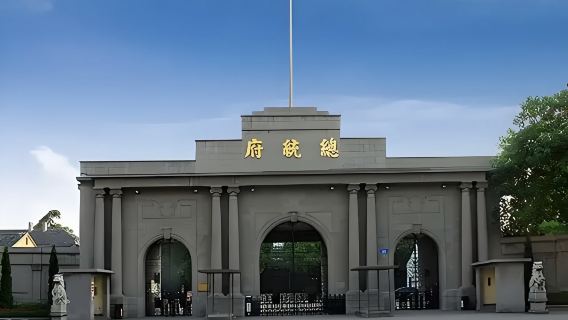
- Presidential Palace: A historic site that offers insight into China's political history during the 20th century.
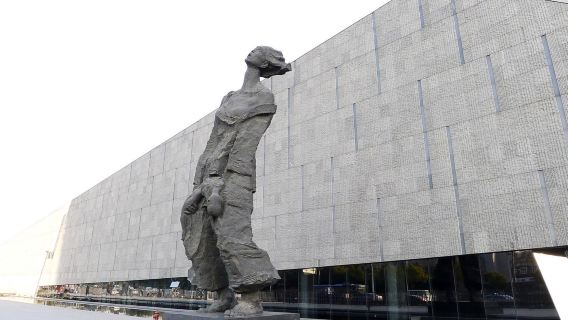
- Nanjing Massacre Memorial Hall: A solemn place of remembrance that helps visitors understand one of the darkest chapters in the city's history.
Discover interesting attractions in Nanjing
See all attractions





💡 Payment tip: In China, most payments are made by scanning QR codes with Alipay or WeChat Pay, from metro tickets to taxis. However, it is still useful to carry some cash. It can be helpful for single metro tickets or small purchases, as foreign bank cards are not always accepted for low-value payments.
FAQ – Nanjing Airport
-
How many terminals does Nanjing Airport have, and which one should I use?
-
How do I get from Nanjing Airport to the city centre?
-
Are there direct flights from London to Nanjing?
-
Do UK travellers need a visa for Nanjing?
-
What time does the last metro leave Nanjing Airport?
More travel guides
How to Book Trip.com Airport Transfer
Learn how to book a Trip.com airport transfer, check prices, track your driver, compare with taxis and see reviews, tips and cancellation rules.
October 14, 2026
Top Things to Do in Nanjing: Best Activities & Must-Sees
Discover the best things to do in Nanjing: top activities, vibrant neighbourhoods, local culture, and must-see attractions to make the most of your stay.
October 14, 2026
Where to Stay in Nanjing: Best Areas, Hotels & Attractions
Where to stay in Nanjing? Discover the best hotels, top areas, must-see attractions, and activities for your trip on Trip.com.
October 14, 2026
Nanjing Train Stations: Where and How to Take a Train?
Nanjing Train Stations: How to take a train from the city's 2 main stations. Metro, tickets & routes to top destinations. Travel smarter with Trip.com.
October 14, 2026
Best China eSIM (with VPN) from £0.44
Find the best China eSIM plans, compare providers, learn how eSIM works, where to buy, setup steps, traveller reviews, FAQs, and tips for using eSIM in China.
October 14, 2026
Beijing Airports: Transport, Services and Travel Tips
A complete Beijing Airport guide covering terminals, transport to the city, visa-free transit, lounges, facilities, food and duty-free shopping.
October 14, 2026
Guangzhou Airport: Transport, Services and Travel Tips
A complete guide to Guangzhou Airport covering transport to the city, visa-free transit, terminals, lounges, dining and duty-free shopping.
October 14, 2026
Shanghai Airports: Transport, Services and Travel Tips
A complete Shanghai Airport guide covering transport options, visa exemptions, lounges, WiFi, dining, duty-free shopping and practical travel tips.
October 14, 2026
Hangzhou Airport: Transport, Services and Travel tips
Complete guide to Hangzhou Xiaoshan Airport (HGH): terminals, transport to city centre, VIP lounges, hotels, duty-free & travel tips.
October 14, 2026
Chengdu Airports: Transport, Transfers between Shuangliu (CTU) and Tianfu (TFU) and Terminals
Compare Chengdu Airports (CTU and TFU), including transport options, transfers between airports and how to get to the city centre.
October 14, 2026
Disclaimer: This article has been provided by an individual contributor or third party platform. If there is any discrepancy regarding the copyright, please contact us directly and we will delete the content immediately.