Xi’an Travel Guide: Best Things To Do in Xi’an, China

Contents
- 1. Things to know if you're visiting Xi'an for the first time
- 2. Xi'an Xianyang International Airport - Xi'an Airport Guide (XIY)
- 3. Xi'an Transportation, Xi'an getting around
- 4. Best Time to Visit Xi'an
- 5. Things to See and Do in Xi'an
- 6. Food in Xi'an
- 7. Shopping in Xi'an
- 8. Local Customs in Xi'an
Show more

An ancient gathering place of cultures, religions, and commence, the city of Xi’an has a rich history of more than 3000 years and is today the provincial capital of Shaanxi Province. Amongst the city’s modern architecture and congested roads, there is still a plethora of ruins and historical monuments.
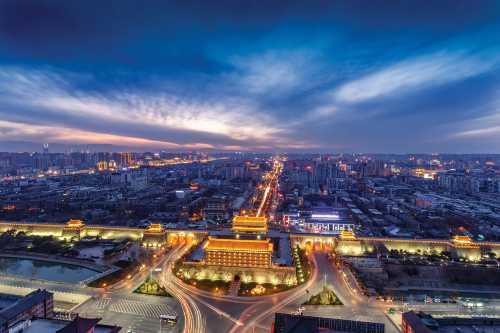
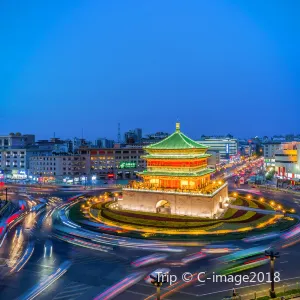
Located in the south-central part of the province, Xi’an has the Qinling Mountains to the South and the Weihe River to the North. There are 11 urban districts in total, with Beilin District being the city center where famous landmarks are located like the Bell Tower and the City Wall; to the west is Lianhu District, a residential and commercial area with luxury hotels and is popular amongst business travelers. Around the center districts, visitors can find Xincheng District with a quieter environment and many shopping options; and Yanta District where several universities are located together with another cluster of top attractions like the Giant Wild Goose Pagoda.
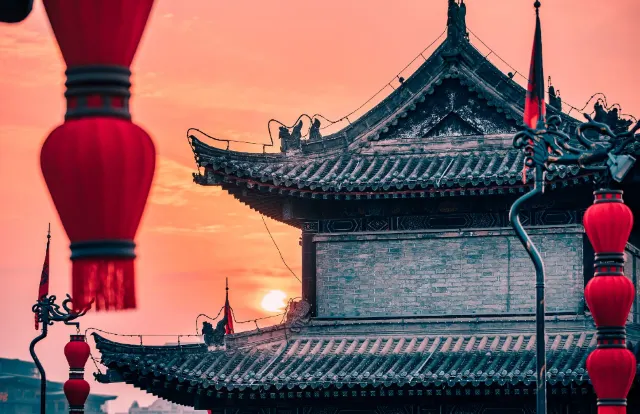
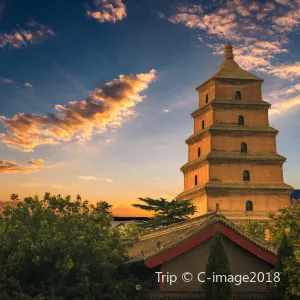
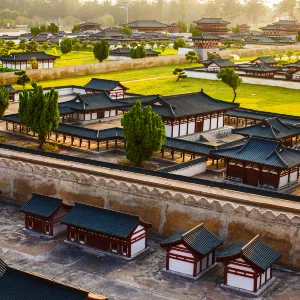
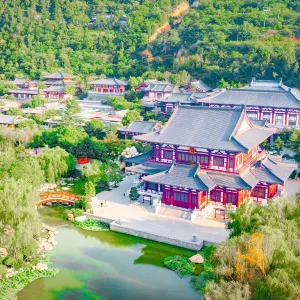
 Da Ci'en Temple is a famous temple where the Tang Dynasty monk Xuanzang served as abbot. The Big Wild Goose Pagoda, located within the temple grounds, is a landmark of Xi'an, offering panoramic views of the city. Nearby attractions include the Tang Paradise and the Tang Dynasty City Never Sleeps, where visitors can enjoy nighttime views or performances after their visit.
Formerly known as Changan, Xi’an has been the seat of the capital for 1200 years covering 13 dynasties. Since the Western Han Dynasty (206BC - 24AD), this ancient city was the starting point of the Silk Road, an intersection of cultural and economic exchange. It reached its heyday in the Tang Dynasty (618 to 907AD) when it became a booming metropolis as important as Rome. Today Xi’an’s long history can still be seen in its ancient monuments, centuries-old temples, and archeological treasures.
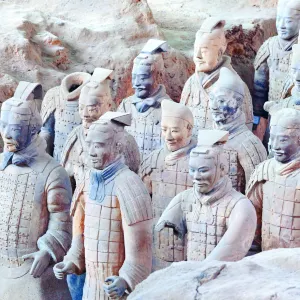
Xi'an has an astonishing 6 UNESCO World Heritage sites, among which is one of the world’s greatest archeological discoveries – the Army of Terracotta Warriors. But the list of visit-worthy attractions in this city is vast and diverse. Besides the Bell and Drum Towers, the ancient city wall, and the Daming palace site, Xi’an is also home to awe-inspiring natural wonders like Cuihua Mountain and Heihe National Park.


Getting to and around Xi’an is simple and convenient. In addition to the usual modes of public transportation like the metro, bus, train, and taxi, there are several special tourist bus lines and sightseeing hop on hop off buses to make it easier for visitors to explore the city. The most common ways to reach Xi’an are by air (Xianyang International Airport) and by train. In fact, riding the overnight trains from Beijing or Shanghai is a favorite travel experience for many foreign visitors.
Xi’an is an ancient yet vibrant and modern city with world-class attractions, diverse cuisines, and an energetic atmosphere. Xi’an’s most pleasant seasons are Spring (March to May) and Fall (September to November). The cool breezes and mild temperatures are most suitable for sightseeing. Tourist areas can get extremely busy, so avoid visiting on weekends or during national holiday periods like Labor Day or Chinese New Year.
Where to stay in the city? Choosing the right location for your trip can be a headache, especially for your first visit. Depending on the purpose of your visit, here are a few popular areas to consider. The busiest area in Xi’an is the City Center around the Bell Tower (Beilin District). Many first-time visitors tend to prefer this region as it has a cluster of top landmarks like the Ancient City Wall and Muslim Street. For business travelers, Lianhu District in the west of the city is filled with luxury hotels, commercial areas, and serene parks. Traveling with family? Xincheng District is comparatively quieter with many conveniences like Wanda Plaza and Xincheng Plaza for shopping and dining, as well as the Daming Palace National Heritage Park to keep the kids entertained.
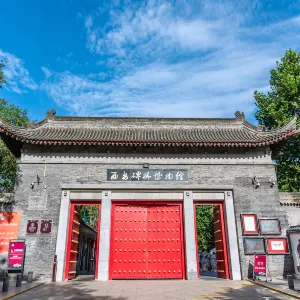

There are so many first-rate scenic spots on offer in Xi’an, it is impossible to see them all if you only have a few days. For first-timers, the famous must-see destinations are the Terracotta Army Museum, the Great Mosque, the Muslim Quarter, Ancient City Wall, and The Giant Wild Goose Pagoda.


Food in Xi’an is hearty, flavorful, and ethnically diverse. Be sure to savor local specialties dishes like cold noodles, flatbread in mutton soup, hot and sour soup dumplings, and biangbiang noodles. For shopping fans, the city is full of high-end retail centers (e.g., Century Ginwa Shopping Mall) and lively street markets (e.g., Huimin Street), providing excellent opportunities for visitors to top up on souvenirs, food products, and handicrafts.
Being the provincial capital of Shaanxi province and a major transportation hub in central China, Xi'an has excellent transportation options. Xi'an Xianyang International Airport (XIY) is the main airport serving the city and the largest in the northwestern part of China. Over 62 domestic and international airlines operate out of the airport, it is also the base for China Northwest Airlines, which runs daily flights to and from key cities in China like Beijing, Shanghai, Guangzhou, and Chongqing. Make sure to have extra time for the security check at the airport, as it can be very crowded during peak seasons. XIY offers a wide range of facilities, such as duty-free shops, eateries, free wireless internet, ATMs, currency exchanges, medical services, and luggage storage.
Situated about 40 km (25 miles) northwest of Xi'an's CBD, visitors have several transfer options including taxi service, metro, or shuttle service. The metro is one of the fastest options as it's not affected by traffic conditions. From Airport West Station (linked to T1/T2/T3), passengers can get on the Airport Metro Line or Line 14 to reach downtown in around 30 minutes. Fares range between 2-9 RMB.
For more destinations across the city, opt for the Airport Shuttle Service. For 25 RMB per person, passengers can choose from 13 lines. Tickets can be purchased at the 1st Floor of T2 and the Ground Transportation Center (GTC) of T3. Most buses operate from 8:00 to 20:00, departing every 20 to 40 minutes, and routes take 50 to 90 minutes.
For a hassle-free transfer, taxi service is available from T1-Arrival Hall, T2-outside Gate No.211 on 1F, and T3-Ground Transportation Center on 1F. Journeys typically take 40-60 minutes for 120-150 RMB.
One of the most cost-effective and convenient ways to travel around Xi’an is by metro. Presently there are 9 metro lines in operation, but further expansions are in the works. Single ride ticket starts at 2 RMB and will increase with distance traveled. If you plan to use public transport a lot, Xi'an Metro Pass has One-day and Three-day Pass options. All the signs of Xi'an metro system are in both English and Chinese. Tourists can easily reach top attractions by metro, such as Bell Tower, Shaanxi History Museum, and Giant Wild Goose Pagoda, along with major bus stations.

In addition to local public buses, Xi’an also offers several tourist bus lines which take visitors to major attractions in urban areas and further afield like Terracotta Army Museum (Tourist Bus Line 5 - No. 306). Line 5 can be very busy on the weekends as many locals and students use it too, so expect long queues. There are even more bus options available if you want to hit a few attractions in one day. Seven urban sightseeing bus lines, like the Imperial Sightseeing Bus, will stop at key scenic spots on each route, and visitors can hop on and hop off at their own convenience.

Taxis are plentiful and reasonably priced in Xi’an. Most taxis are green with a yellow stripe, some are bright yellow or blue with a white stripe, and the black taxis are for airport transfers only. Although taxis operate 24 hours a day, hailing a taxi can be difficult during peak hours. The standard fare starts at 8.5 RMB in the daytime and 10 RMB at night. As drivers don’t normally carry small change, it’s advisable to round up the fare. Also, taxi drivers rarely speak or read English, so it is best to prepare your destination name in Chinese or in Pinyin.
Located in central China and at 400 meters (1,300 feet) above sea level, Xi'an is known for its cold, dry winters and hot, humid summers. There are four distinct seasons, with the coldest months being December and January (average high temperature: 5 °C / 41 °F) and the hottest months are June and July (average high temperature: 32 °C / 90 °F). There is a rainy season with frequent showers from July to September. The most pleasant seasons are Spring (March to May) and Fall (mid-September to early November). The cool breezes, mild temperature, and sunny days are most suitable for outdoor activities.
As many people only visit Xi’an to see the Terracotta Army, it is worth noting the best time to view the site, not in terms of weather (indoor venues) but more for the crowd. If possible, avoid visiting on weekends and holidays, and get there early (8:30 am opening time) or go in the late afternoon when most tour groups have left.
Other peak times for Xi’an, on the whole, are national holiday periods when millions of domestic tourists tend to descend on the city. To avoid extreme crowds, pick your dates carefully. Major Chinese holidays are the Chinese Spring Festival (late-January or early-February), Labor Day (beginning of May), National Holiday (first week of October), and Student Summer Holiday (July to August).
With its ancient history, 6 UNESCO World Heritage Sites, and diverse local cultures, Xi’an is considered one of the top tourist destinations in China. While the list of visit-worthy attractions is vast, but here are three world-class sites that shouldn’t be missed.
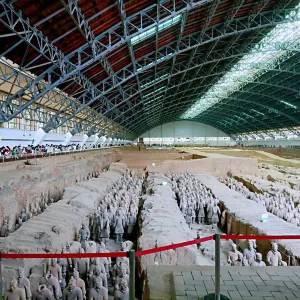
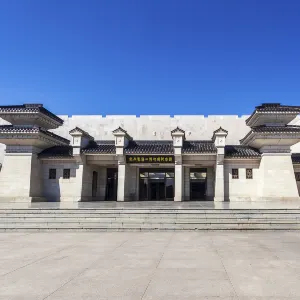
The Terracotta Amy was declared a UNESCO World Heritage site in 1987. One of the greatest archeological discoveries in the 20th century, the expansive burial complex of the first emperor of China was accidentally found by workers digging a well in 1974. Today, thousands of clay soldiers, horses, chariots, and other artifacts have been unearthed and restored. The Museum complex consists of three vaults and The Exhibition Hall of the Bronze Chariots, be sure to visit all of them as each has its unique exhibits. For example, in Vault 1, visitors can marvel at up to 2000 terracotta warriors and horses made back in 246–206 BC.


Considered to be the largest Islamic place of worship in China, the Great Mosque with its traditional Chinese and Islamic architectural styles is a visual representation of Xi'an's merging cultures. The Mosque complex has several courtyards, gardens, and buildings of significance, but it is also a working mosque and the only mosque in the country that is open to visitors. So please note that non-Muslim visitors will not be allowed to enter the main prayer hall.
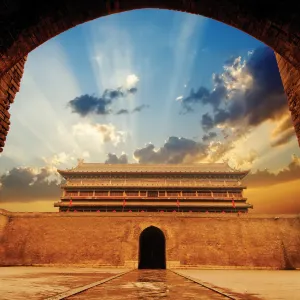
While everyone’s heard of China's Great Wall, Xi'an's city wall is also well worth exploring. China used to have walls around all its cities. Most have come down over time, but the one in Xi'an remains intact around the old town. The South Gate and North Gate are the two main entrances. One thing visitors like to do on the massive city wall is to rent a bike and cycle around it (walking around the wall will take about 4 hours).
While internationally people associate Xi’an with the Terracotta Army, in China the city is also famous for its unique local dishes. Once the starting point of the Silk Road, Xi’an has a long and rich culinary history. Also known as Shaanxi cuisine, the dishes are full of exotic flavors and are typically meat and carb-heavy.
Flatbread in mutton soup (Yangrou Paomo) is a much-loved local snack, ‘Paomo’ for short, this flavorful dish has a history dating back to the 11th century BC. The way to eat it is to tear up the pieces of flatbread then put them into a bowl of hearty meat stew (lamb or beef). Popular local vendors include Tongshengxiang Restaurant and Liuxin Niuyangrou Paomo.
Pita Bread Pork Sandwich or Xi’an Meat Burger (Roujiamo) is another favorite street food. There are two versions of this marinated grilled meat stuffed inside pita bread. Halal style made with beef by Muslims / Hui people, or with pork for Han people. Restaurant WangKui Lazhi Roujiamo opened in 1982 and serves bread fresh off the furnace.
Xi’an can feel like a furnace in the summer, that’s why a bowl of cold noodles (Liangpi) is a welcoming treat. Originated in Shaanxi province, the thinly sliced cooked rice noodles can be made spicy or sweet and sour, then topped with diced garlic, bean sprouts, and sliced cucumber.
In Xi’an, great shopping opportunities are clustered in a few locations around town. First up are the areas around the Bell and Drum Towers. For your typical big department stores and supermarkets, head to the Bell Tower Commercial Area which is the largest shopping area in the city. Nearby is the famous tourist spot, Muslim Street, where you can top up on souvenirs, food, and handicrafts. Other large upscale malls and one-stop shops include Kai Yuan Shopping Mall, Century Ginwa Shopping Mall, and Minsheng Departmental Store.
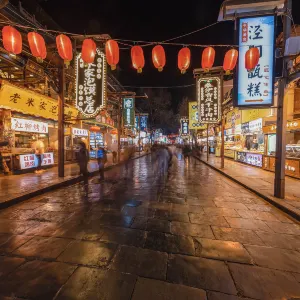

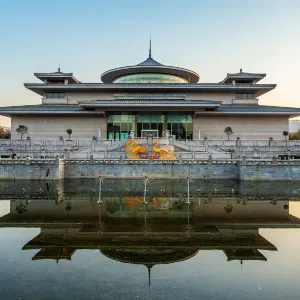
Another cluster of retail activity is around the Goose Pagodas and Shaanxi History Museum. The ancient architecture in this area makes it a promising shopping destination as well as a sightseeing location. Visitors can browse through the stores in Xi’an Antique Market (Zhuque Antiques Market). Curio collectors can easily spend a day looking for small coins, pottery, and jade articles. Great Tang All Day Mall and SAGA Shopping Mall are two large luxury retail centers that can cater to your every need.

Not sure what to bring home as a souvenir? Here are a few popular and typical items from Xi’an: terracotta warrior replicas, calligraphy rubbings, paper-cuts, peasant paintings, Tang tri-color porcelain replicas, dry-cured beef, and dried persimmon, walnut & Shaanxi jujube.
In terms of public safety, Xi’an is relatively safe overall for tourists. But due to the high number of domestic and foreign visitors in the city, many locations like scenic spots, trains stations, and food streets can be very crowded. Of course, this will lead to an increase in petty crimes such as pickpocketing, so be careful with your valuables.
The official currency used in China is Renminbi (RMB) which is also known as Yuan. While tipping is not customary in China, it is acceptable to leave a gratuity for guides, drivers, and hotel porters.