Hotels: Save up to 10% (Book online or on Mobile)
Homes & Apts: Save up to £39 (App-only deal)

By Tina
October 9, 2026
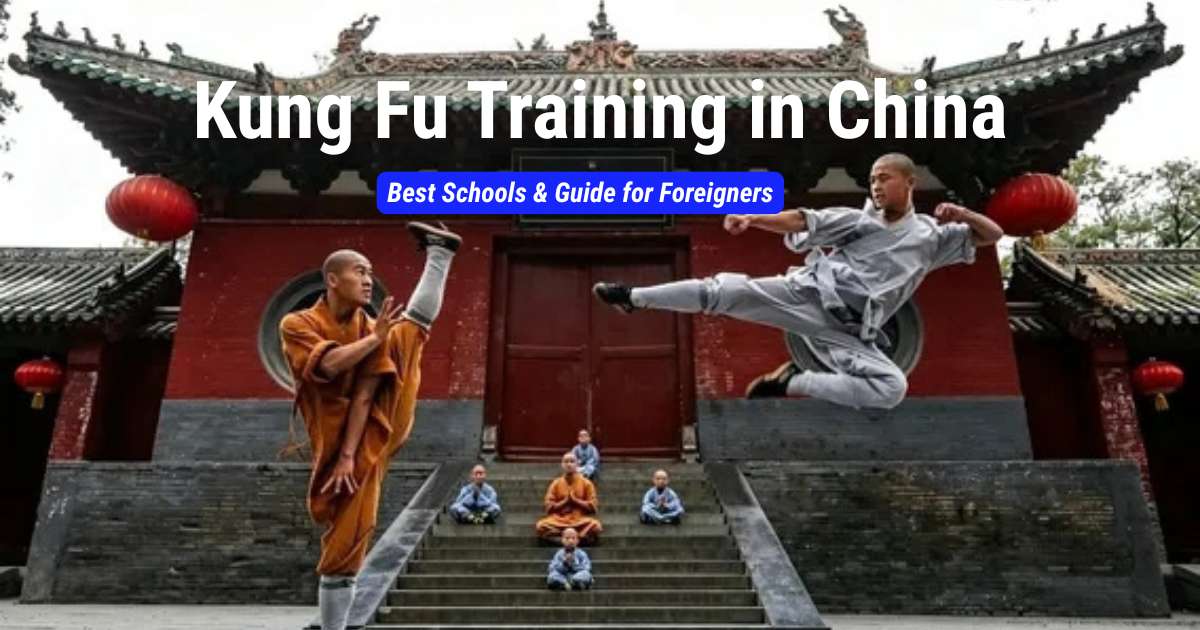
Training in kung fu in China is possible, even if you're a foreigner and have no prior experience. There are schools with programmes lasting a few weeks or several months that usually include training, accommodation, and food. And it's not all about Shaolin. Wudang and other areas offer very different styles and experiences, so choosing wisely matters.
In this guide, we'll look at the best options, how much they cost, and what it's like to live and train at a kung fu school in China.
The main places to train kung fu in China are Dengfeng, Wudang, and the schools in the Kunyu Mountain area, although you will also find modern wushu academies and traditional schools scattered throughout the country.
The best option depends on the type of training you're looking for:
If your goal is... | The best school | What to expect |
🏯 Living the authentic Shaolin experience | Dengfeng Schools | Training near the Shaolin Temple, with an intense routine and a traditional focus. |
☯️ Combining martial arts and philosophy | Wudang Schools | Taiji, Qigong and internal kung fu in a peaceful setting surrounded by mountains. |
🌲 Unplug and train full-time | Kunyu Mountain Schools | Residential programmes, small groups, and total immersion in academy life. |
🤸 Improve your technique or compete | Modern wushu academies | Physical training, acrobatics and preparation for exhibitions or competition. |
👊 Learning a specific style with a master | Traditional schools | Specialised training in styles such as Wing Chun, Hung Gar or Baji Quan. |
Choosing between the best kung fu schools in China doesn't just depend on the style you want to learn. Some operate almost like a full immersion, with accommodation, meals, and several hours of practice a day; others place much more emphasis on technique, tradition, or internal arts.
School | 📍 Location | Style | Best for |
Shaolin Yongzhi | Dengfeng | Shaolin | Small groups |
Shaolin Xinyiba | Dengfeng | Traditional Shaolin | Technique and tradition |
Wudang | Wudang Mountains | Taiji, Qigong and Wudang kung fu | Internal arts |
Kunyu Mountain Academy | Shandong | Shaolin, Sanda, Wing Chun and more | Long stays |
Shaolin Tagou | Dengfeng | Shaolin, Sanda, Taiji | Intensive training |
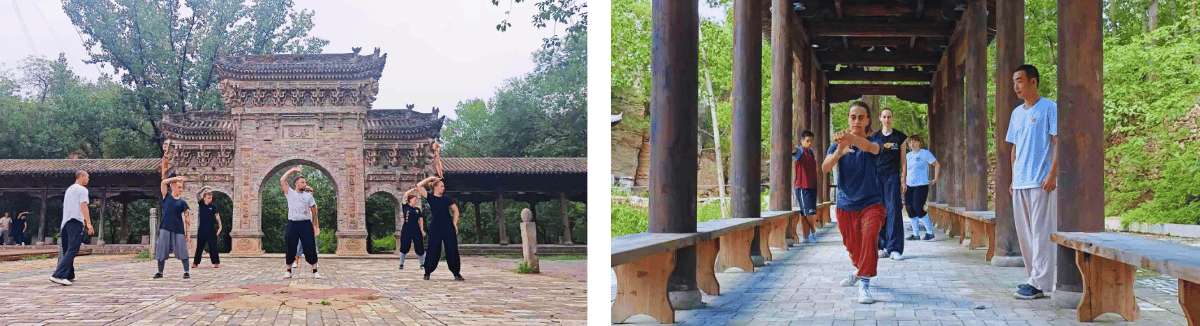
Shaolin Yongzhi is in Dengfeng and offers a smaller, more intimate experience than the large academies in the area. Plus, you don't need to arrive knowing kung fu: it welcomes different levels and you can live at the school itself while you train.
Therefore, the pace isn't exactly a holiday either. You train in the morning and the afternoon, but you still have time between sessions to rest and recover.
Best for: small groups and Shaolin in Dengfeng.
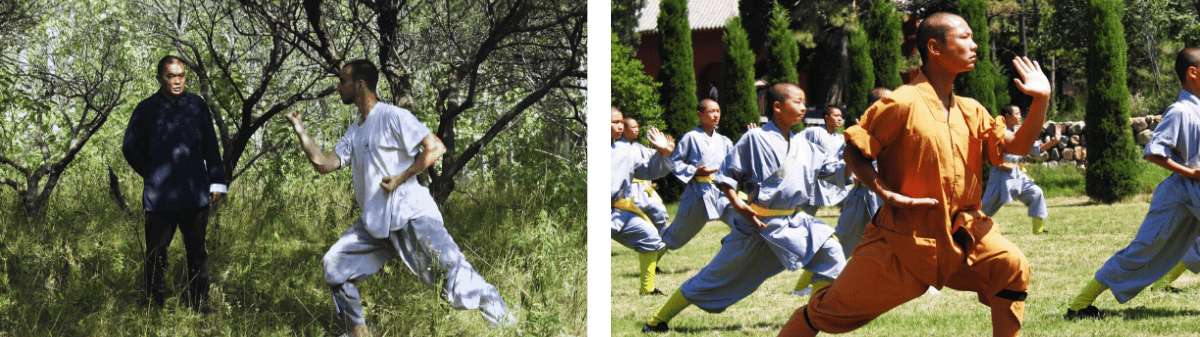
The atmosphere changes quite a bit with Shaolin Xinyiba. Hu Zhengsheng's school is near Dengfeng and places a lot of emphasis on traditional Shaolin, the fundamentals, and the Xinyiba method. Here, polishing a stance or repeating a form correctly matters more than accumulating techniques at full speed.
The schedule has an interesting quirk. After the morning session, there's quite a long gap until the evening training, so you can rest, explore Dengfeng, or even take the opportunity to study Mandarin.
Best for: technique and tradition over a camp-style experience.
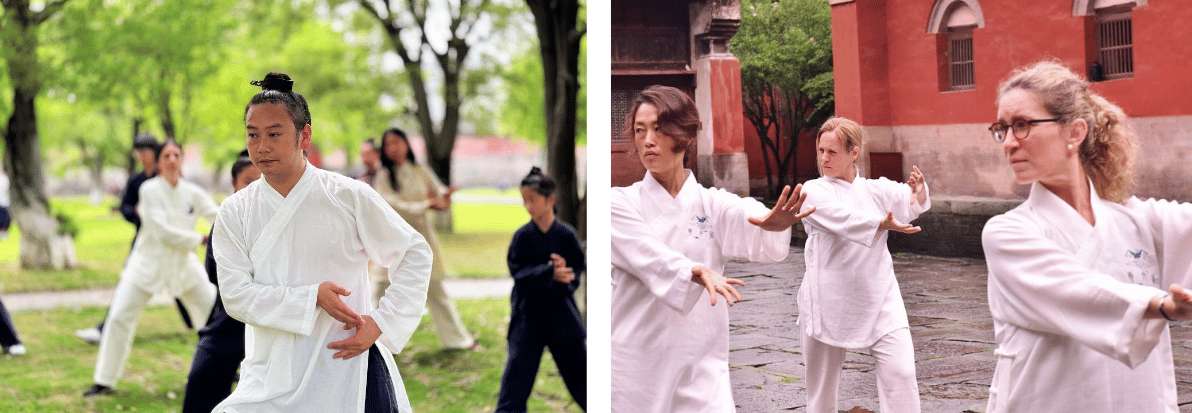
Training in Wudang is a different story. This school is located at Nanyan Temple, within the Wudang Mountains area, and welcomes both beginners and those who have been practising martial arts for some time.
And that’s a huge part of the appeal. You’re not just going to learn taiji or qigong for a couple of hours and head back to the hotel. You can live at the school itself and plan pretty much your entire stay around the classes.
Nor should you confuse Wudang with a quiet retreat where everything consists of breathing and meditating. There is kung fu, forms, and physical work. Furthermore, there is quite a lot of flexibility regarding duration. You can try the experience for a few weeks or dive right in with programmes lasting several months.
Best for: taiji, qigong and internal arts.
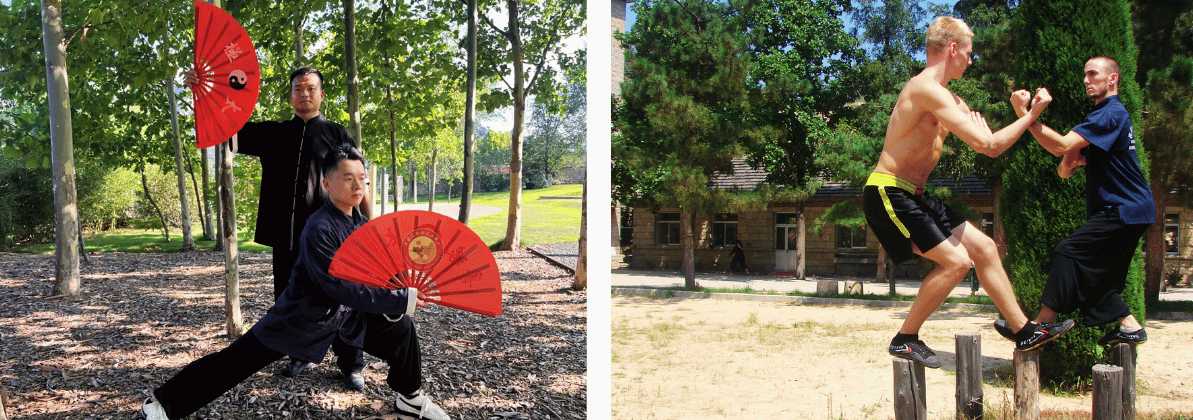
Kunyu Mountain Academy, in Shandong, makes sense if you are looking for a longer immersion. Here, you don't have to commit to a single style either, because their programme covers several martial arts.
And the language barrier is more important than it seems. Some shifus speak little English, so having translators during classes saves you from ending up trying to decipher a technical correction through gestures.
Plus, life here revolves around the academy: training, eating, resting, and training again. If you want to disappear for a few weeks or months from the pace of a big city, it’s got a certain charm.
Best for: long immersion and trying out various styles.
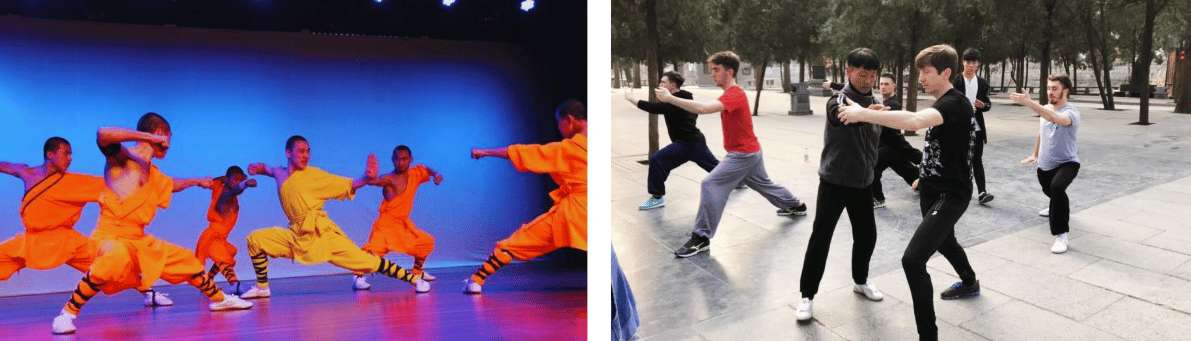
And then there's Shaolin Tagou, also in Dengfeng. We're talking about a huge academy here, so the experience is different to that of Yongzhi or Xinyiba.
You lose some of that small-school feel, of course, but you gain a variety of training options and facilities designed to accommodate a huge number of students.
Best for: intensive training at a large academy.
You have two options: live at the school or book a hotel in Dengfeng. For a long stay, staying at the academy is usually the most practical choice. Many include accommodation and meals, so practically your whole day revolves around training.
A hotel makes more sense if you want some privacy, to rest better after classes, or simply to separate your training from your free time. There are quite a few hotels in Dengfeng, as well as options near Songshan and the Shaolin area.
📍 Try not to stray too far from the academy. After several hours of training, you'll be grateful not to have to cross half the city.
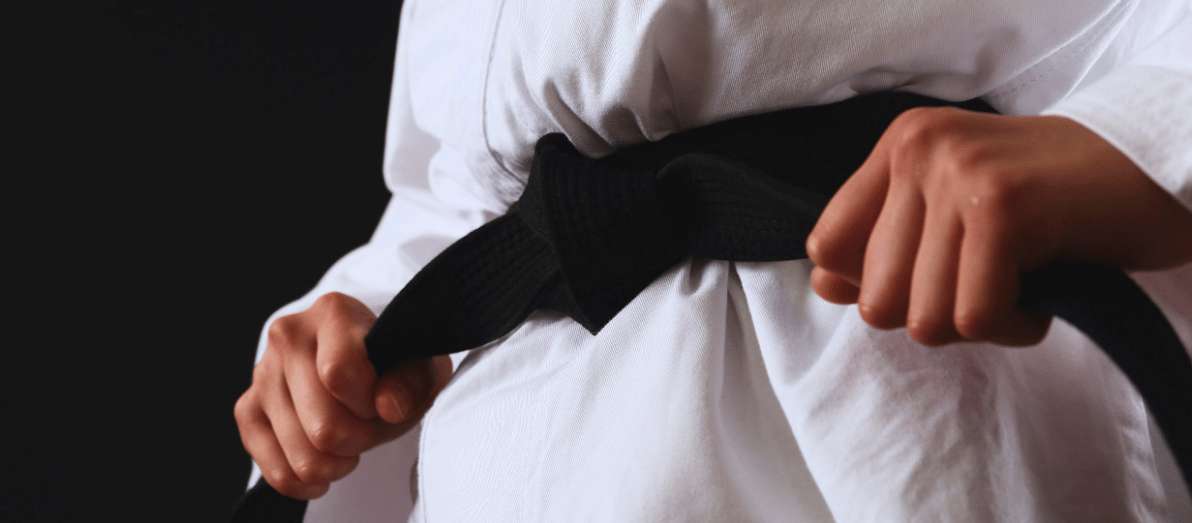
You don't need to have practised martial arts before. Many kung fu schools in China accept beginners and adapt part of the training to the student's level. So, no one expects you to arrive in Dengfeng knowing how to handle a sword or perform impossible kicks.
Mind you, it’s worth checking the requirements for each programme. An international academy accustomed to welcoming foreigners is usually more accessible for beginners than a small school focused on traditional methods.

You don't need to be an athlete, but a decent level of fitness will save you from some memorable muscle soreness. Just think, you could be spending several hours training a day, five days a week, and repeating that routine for weeks on end. What you'll appreciate most is having some stamina, mobility, and basic leg strength. The rest will come with the classes.
The price of a kung fu school in China can be around £850–£1,700 per month for many residential programmes for foreigners. However, comparing schools solely by the monthly price can be tricky, because some include practically your entire stay while others charge various extras separately.
Expense | Approximate price |
Residential programme | £850–£1,700/month |
Accommodation | It's usually included |
Dining | Often included |
Registration fee | It depends on the school |
Transfer | May be charged separately |
Additional expenses | Uniform, excursions, private lessons, laundry, etc. |
What's more, longer stays usually work out cheaper. At Shaolin Yongzhi, for example, the published rates for 2026 are 12,600 CNY (≈ £1,420) for one month, 24,000 CNY (≈ £2,700) for two, and 34,200 CNY (≈ £3,850) for three. The difference really starts to add up as you add more months.
Typically, at a residential kung fu school, the package covers a good portion of your daily life.
Before paying, ask the school to confirm in writing exactly what is included in the fee. It might seem silly, but between pick-ups, uniforms, and other extras, two programmes with a similar price can end up costing different amounts.
📌 And since you're going to be spending some time in the country, it's a good idea to get your payments sorted before you land. You can check out our guide on Alipay or WeChat Pay and learn how to use WeChat Pay with a foreign card. That way, you'll have your day-to-day expenses covered when you're out and about away from the school.

You don't need to speak Mandarin Chinese to train at many kung fu schools geared towards foreigners. Some have teachers who can get by in English, and others have translators who accompany students during classes.
That said, you have to put that “English available” into context a little. It might mean the shifu speaks English, but it could also mean they know a few basic instructions or that there’s someone else in charge of translating. For learning a simple posture, it might not matter. When it comes to explaining a technical correction, though, you notice it more.
At schools like Kunyu Mountain, for example, there are translators to help during sessions. Smaller, traditional academies can be a different story and have less support in English.
Even so, learning some basic Mandarin before you travel is well worth it. You don't need to hold a conversation about Chinese philosophy, but a few words for greeting people, saying thank you, understanding numbers or ordering something will make your life easier both inside and outside of school.
Choosing a kung fu school in China isn't as simple as looking at the price... It's worth bearing other things in mind:
Look for who is actually going to teach you, what style they practise, and what their experience is. Lineage can be relevant in traditional schools, but don't just get hung up on an endless list of titles either. What matters most is what that master teaches and how much contact you will have with them.
Five students with one shifu don't get the same attention as thirty. Ask about the usual group size and, if you're going in high season, how many people they expect to have during your dates.
“Daily training” doesn’t say much. What’s interesting to know is how many hours of training you’ll have, how many days a week, and how they’re split up. For example, four hours divided between morning and afternoon leaves time to recover. Six or eight hours completely change the experience.
Not the ones from the brochure five years ago. Ask for recent photos of the room, the bathroom, and the common areas. It’s also worth asking about heating, air conditioning, hot water, Wi-Fi, laundry facilities, and how many people share a room. You’re going to be spending weeks there, so these details stop seeming small very quickly.
Ask how much you are actually going to pay for the entire stay and what it includes. This should cover training, accommodation, meals, and tuition, as well as any transfers, uniforms, or activities that are charged separately. If a school costs £850 per month, but then adds tuition, pick-up, uniforms, and extra classes, it might not be as cheap as it first seemed.
The climate in China varies hugely depending on the region and the time of year. And when you're going to be spending several hours training, you really notice it. Dengfeng can have quite hot summers and cold winters, while in Wudang, humidity and rain also come into play.
Before choosing your dates, check the best time to travel to China and ask the school how much training takes place outdoors. Your kung fu suitcase in July might be quite different from the one you'd pack in January.
And finally, get off the official website. Search for the academy's name on Reddit, YouTube and Google, and pay special attention to recent experiences from former students. Long-form videos are often revealing. That's where you can see what the rooms are really like, how many people train together, or what a normal day looks like when there isn't a promotional camera in front of it.

Search for kung fu in China on TikTok or Instagram and everything looks like it's straight out of a movie: there are students doing splits between two rocks, sword forms in front of a waterfall, sunrise training sessions, sticks breaking in hard qigong demonstrations, and mountains in the background with a Shaolin monk wandering past.
And of course, it’s only natural that you’d want to pack your bags.
But if you're going to train kung fu in China for real, it's best to arrive with more grounded expectations. The spectacular side exists, yes, but it's usually just the tip of the iceberg.
Reality is usually less cinematic, but far more interesting. You’re going to repeat a posture many times. They’ll correct your foot, then your hip, then your foot again. You’ll do physical conditioning, practise the same technique until it starts to click, and you’ll end up tired more than once.
And the next day, back to the start.
That doesn't make the experience any worse. In fact, that's where a good part of the learning happens. Spectacular demonstrations come after a huge amount of repetition, technique, discipline, and corrections that rarely fit into a 20-second video.
It’s also worth getting another idea out of your head: a commercial school isn’t automatically a fake school. Many academies are set up to welcome foreigners, offering accommodation, meals, translators, and programmes that are easier to organise. They can even be a good gateway to later meeting local masters, styles, and martial arts communities.
✈️ Book your flight + hotel to China at the best price on Trip.com
 NO.1