China or Japan: Which one is best for a holiday?

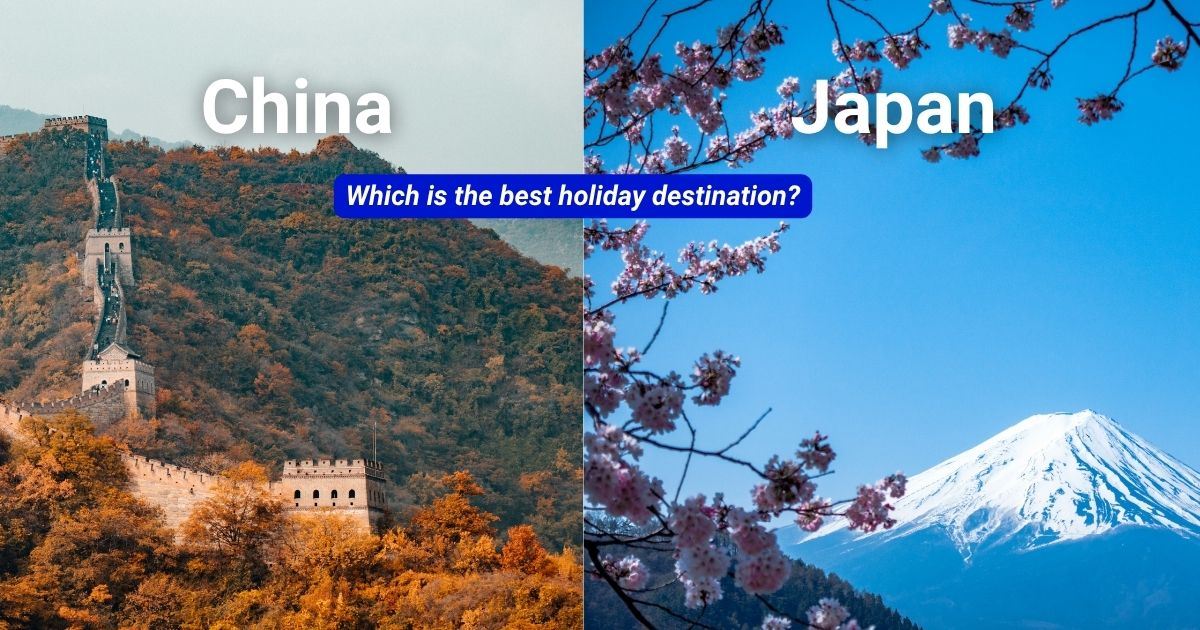
Planning a trip to East Asia from the UK is exciting, but choosing where to go first can be challenging. With long flights, careful planning, and a significant budget involved, deciding between China and Japan isn’t always easy.
So, which destination is better for your holiday? At Trip.com, we’re here to help! We’ve put together a guide to help you decide which one best suits your budget, travel preferences, and interests. So, let’s begin!
✈️ China vs Japan: Key travel differences
When deciding whether to visit China or Japan first, there are several key differences UK travellers should be aware of. The impact of these will all depend on your interests, how you like to travel, your budget, and the sort of experiences you’re looking for.
We’ve put together a comparison table of what to expect when visiting either country to help you decide which country to prioritise.
Category | China | Japan |
Entry requirements | Visa-free for UK travellers: up to 30 days | Visa-free for UK travellers: up to 90 days |
Flight time from UK | ✈️ 10–13 hrs (direct) | ✈️ 12–15 hrs (direct) |
2-week budget (average) | 💰 Budget: £1,200–£1,800 | 💰 Budget: £1,500–£2,200 |
Payment methods | 📱 Mobile payments dominate (WeChat Pay, Alipay) | 💴 Cash is still widely used |
Public transport | 🚄 Excellent high-speed rail and metro networks | 🚄 World-class trains, including Shinkansen bullet trains |
Internet access | 🌐 Many Western sites are blocked (e.g. Google, WhatsApp, Instagram) | 🌐 Easy connectivity with a digital eSIM—no physical SIM needed |
English spoken | 🗣️ Limited in daily life | 🗣️ More common in tourist areas like Tokyo, Kyoto and Osaka |
Safety | ✅ Very safe for visitors | ✅ One of the world’s safest destinations |
Vegetarian options | 🥬 Best in major cities | 🥬 More options in cities |
Best time to visit | 🌸 Spring (Apr–May) | 🌸 Spring (Mar–May) |
Best city breaks | 🏙️ Shanghai, Beijing, Chengdu, Chongqing | 🏙️ Tokyo, Kyoto, Osaka |
Best nature spots | 🏔️ Zhangjiajie, Yangshuo, Yunnan | 🏔️ Mount Fuji, Okinawa, Hokkaido |
Best for | 🌏 Fantastic variety, regional flavours, great value, a sense of adventure! | 🍣 Easy travel, incredible food, tradition meets modernity, peace of mind |
Flights to top cities in China & Japan
to Beijing
to Shanghai
to Guangzhou
to Tokyo
to Osaka
to Okinawa
See all flights


China vs Japan: Which destination is cheaper?
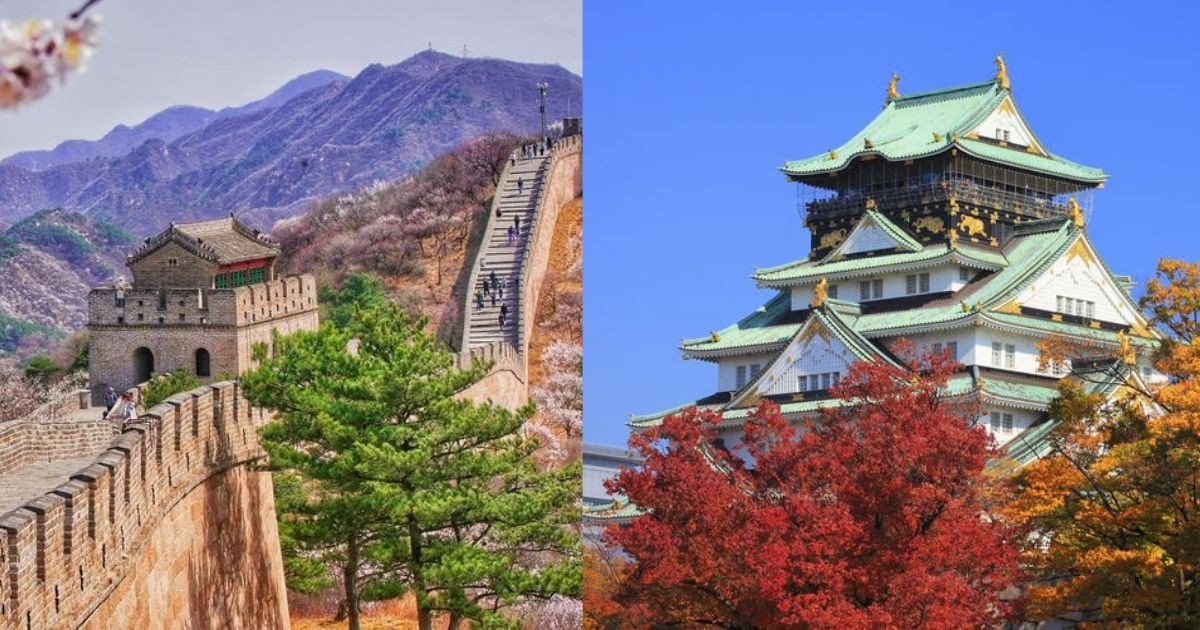
Overall, China is cheaper than Japan. However, how much you spend on your trip to either country all depends on the types of experiences you want. As a rule of thumb, food, public transportation, and taxis are generally lower-priced in China than in Japan. This is not to say that Japan is expensive, though. In fact, compared with many European cities, Japan offers far more wallet-friendly experiences.
Check out our comparison table below for a rough idea of what to budget for a trip to either China or Japan.
Travel Expenses | China | Japan |
Economy Flight from the UK | £500 – £900 return | £650 – £1,100 return |
Business Flight from the UK | £2,000 – £4,500 return | £2,300 – £5,000 return |
Budget Hotel price | £15 – £45 per night | £25 – £70 per night |
Luxury Hotel price | £120 – £450 per night | £200 – £800+ per night |
Daily expenses | Budget: £30 – £60 pp Moderate: £60 – £120 pp Luxury: £120 – £250+ pp Average: £30 – £150 per person, per day | Budget: £60 – £110 pp Moderate: £110 – £200 pp Luxury: £200 – £400+ pp Average: £60 – £250+ per person, per day |
Top hotels in China & Japan
Beijing
Shanghai
Guangzhou
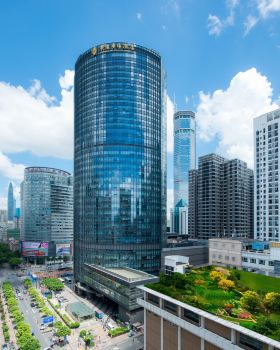
Shenzhen
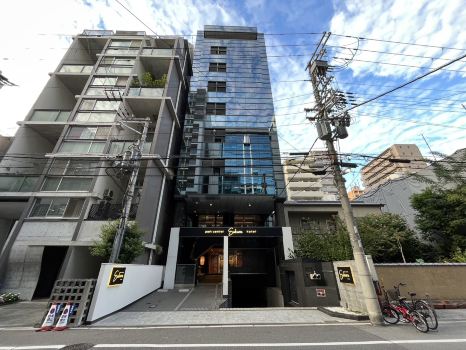
Tokyo
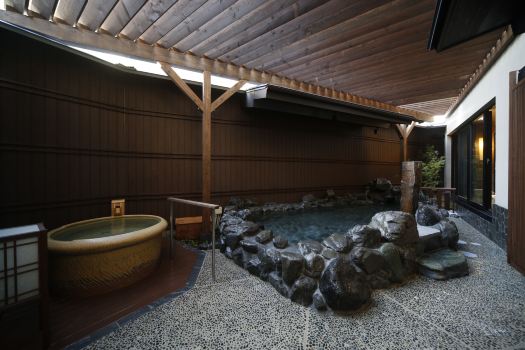
Osaka
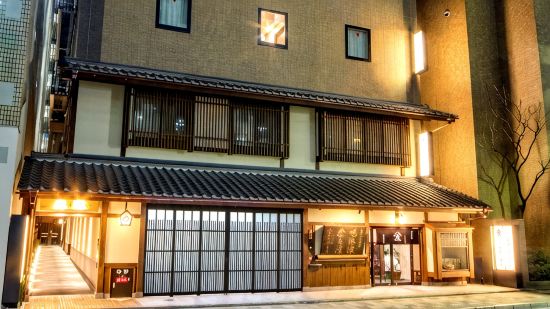
Kyoto
Fukuoka
See All Hotels
 NO.1
NO.1


























































🎯 China or Japan: Which is the better fit for your personal travel style?
🍜 China or Japan for food lovers: Which has the best cuisine?
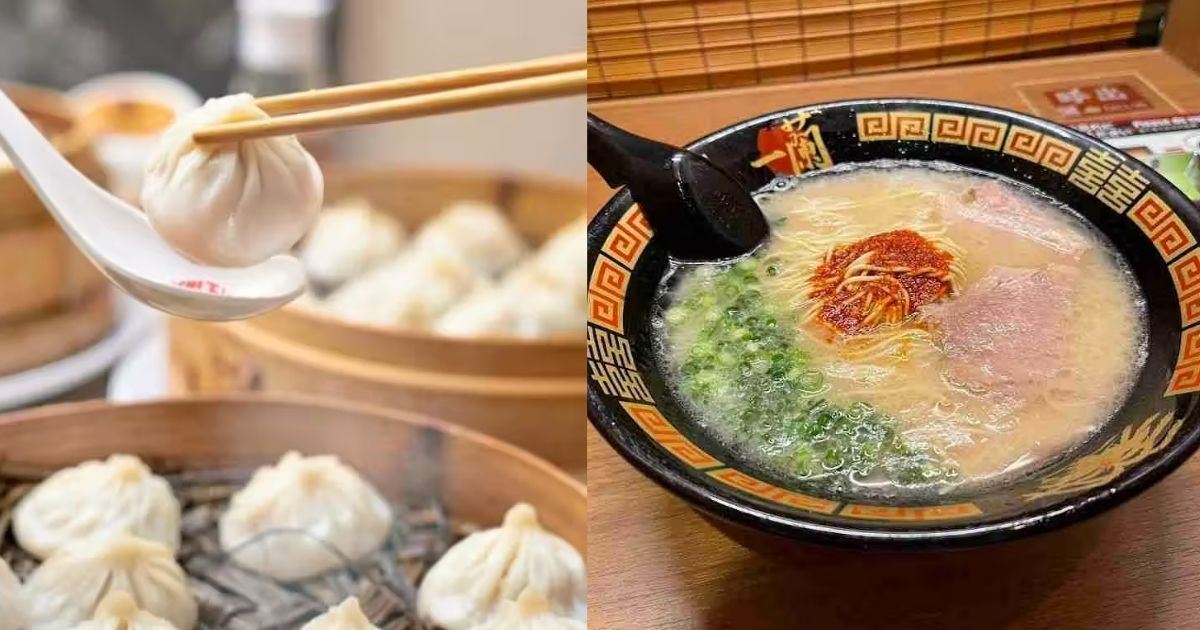
Food is arguably one of the best things about travel. From unique flavour profiles to regional dishes you won’t find anywhere else, planning what and where you’re going to eat when on holiday is all part of the fun.
So, between Japan and China, which has the best food culture? Well, this is a bit like comparing apples with oranges. It all depends on what flavours and textures you enjoy. Chinese food is typically bold, spicy and rich, with a huge amount of regional variety. Japanese food, on the other hand, is more subtle, with a strong focus on umami flavours.
To whet your appetite, we’ve listed a selection of both countries’ most popular regional dishes to give you an idea of what’s in store! We’re hungry just thinking about these…
Best food to try in China
- Peking duck (Beijing): This wood-fired, roasted duck dish is famed for its incredibly crispy skin, and is frequently served in pancakes and stir-fries.
- Xiaolongbao (Shanghai): These scrumptious soup-filled steamed dumplings are commonly filled with minced pork and, you guessed it, hot broth soup. Yum!
- Hot pot (Sichuan/Chongqing): Social and interactive, hot pot is a fun shared cooking experience that you won’t want to miss. Sitting around a pot of boiling broth, you simply order your ingredients and cook them yourself in the broth! There are lots of different varieties of hot pots, from super spicy to a little milder.
- Biang biang noodles (Shaanxi / Xi’an): Thick, chewy and spicy, biang biang noodles are hand-kneaded, stretched, and utterly satisfying. Typically served with chilli oil and in big, hearty portions.
Best food to try in Japan
- Takoyaki (Osaka): An iconic street food, these skewered battered balls of octopus are served with okonomiyaki sauce and ‘dancing’ bonito flakes. Easy to eat on the go, and usually not that expensive.
- Kaisendon (Hakodate): Clean, simple, and light, kaisendon is a warm rice bowl filled with fresh and high-quality raw seafood. Think sushi meets a poke bowl, but elevated! You’ll often find crab, sashimi, and sea urchin.
- Sapporo-style ramen (Hokkaido): The perfect dish for chilly winter days, it's like a warm hug. Each bowl contains a soy-sauce broth, sweetcorn, pork, and sometimes a little knob of butter.
- Okonomiyaki (Hiroshima): A delicious, savoury sort of pancake, okonomiyaki is made with many layers of grilled ingredients, built on a crepe-style batter base. These can include cabbage, meat, egg, sauce, and sometimes noodles. Super filling!
🌆 China or Japan for city breaks: Which is the most exciting?

The breadth and variety of cities in China and Japan are extensive; no two places are alike, and each offers distinct experiences. If you’re looking to spend a lot of time in the cities in either country, you’re not short on options. Choosing which to go to all depends on the vibe you’re after.
Chinese cities are known for their ‘wow-factor’ - skyscrapers next to historical architecture, and megacities that look like they’re from the future. Japanese cities are, by comparison, a little easier to navigate and still offer that contrasting blend of tradition and modernity.
Best cities to visit in China
- Beijing: Ancient landmarks sit next to sprawling, modern skyscrapers in China’s historic capital. Beijing really is an awe-inspiring city.
- Shanghai: Sat on the banks of the Huangpu River, Shanghai looks like it was plucked from the future. Glittering contemporary architecture and historic neighbourhoods await your exploration.
- Guangzhou: This former ancient port has all the hustle and bustle of a modern-day city, with a stunning skyline and a thriving food scene.
- Shenzhen: Once a fishing village, Shenzhen is a megacity bursting with shopping and entertainment options.
Best cities to visit in Japan
- Tokyo: From historic temples to vibrant and exciting neighbourhoods, there’s nowhere on Earth quite like Tokyo. It has to be visited to be truly experienced.
- Osaka: If you’re a foodie, you’ll want to head here. With a thriving street food scene, not to mention plenty of shopping, Osaka is not to be missed.
- Kyoto: The country’s cultural heart, the former capital Kyoto, is where to soak up Japan’s traditions, history and heritage. Get lost in a tranquil garden and unwind.
- Yokohama: This coastal city is best known for its waterfront skyline and chilled atmosphere. Ideal for travellers seeking a quieter alternative to busier cities.
🌿 China or Japan for nature lovers: Which has the best landscapes?
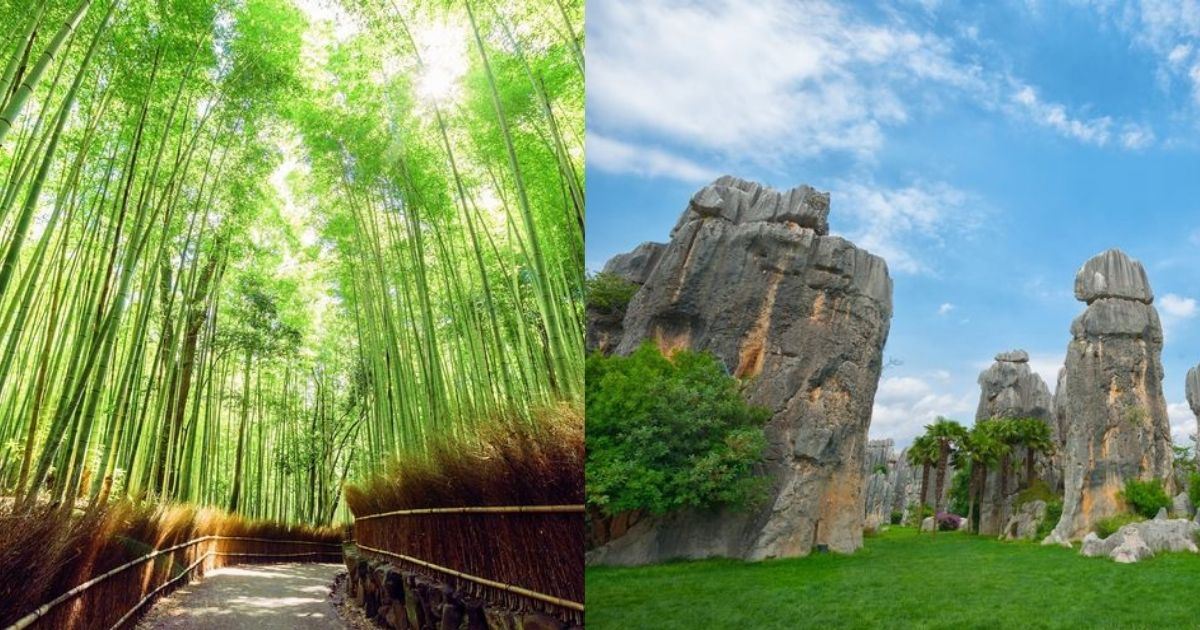
It’s hard to compare the nature in China and Japan; both offer absolutely stunning scenery. What will likely move the needle for you will depend on the sorts of landscapes you enjoy: dramatic, almost otherworldly vistas or perfectly maintained parks and gardens where you can unwind.
Here are some of each country’s best nature spots to help you decide.
Best nature spots in China
- Zhangjiajie National Forest Park: Famous for its sandstone pillars and misty mountains, Zhangjiajie is like stepping into the world of Pandora from the Avatar films.
- Guilin Scenic Area: From limestone karsts to winding rivers, Guilin is best explored by boat to truly immerse yourself in its beauty.
- Jiuzhaigou Valley National Park: Explore crystal-clear turquoise lakes, waterfalls, and densely forested valleys in this picture-perfect nature reserve.
Best nature spots in Japan
- Arashiyama Bamboo Forest: Listening to the bamboo sway in the gentle wind whilst visiting is pretty much guaranteed to lower your blood pressure. Calm, peaceful, and serene.
- Hakone: Escape the city and into one of Hakone’s glorious hot springs. You’re also in spitting distance of Mount Fuji!
- Okinawa Islands: Go tropical with a visit to Okinawa. Relax on turquoise beaches, take in the coral reefs, and enjoy a vibe very different from the mainland.
🧑🧑🧒🧒 China or Japan for families: Which is more kid-friendly?

If you’re travelling as far as East Asia with children, it’s important to factor in activities that’ll keep even the youngest adventurer happy. With this in mind, which is more kid-friendly: China or Japan?
The good news is that both countries have plenty to keep the little ones entertained and engaged. From a practical standpoint, Japan is much easier for international tourists to navigate, and this applies to travelling families as well. If you’re navigating public transportation with little ones in tow, Japan is the simpler option.
But whichever country you choose, here are some kid-friendly attractions to add to your to-do list.
Kid-friendly activities in China
- Shanghai Disneyland: Home of the world’s biggest Disney castle and a fantastic line-up of rides, shows, and characters, Shanghai Disneyland is a sure-fire hit for the entire family.
- Universal Beijing Resort: Featuring state-of-the-art rides inspired by fan-favourite movies, a trip to Universal Beijing will delight everyone.
- Chengdu Research Base of Giant Panda Breeding: A fantastic opportunity to see adorable giant pandas up close whilst learning all about them. A must for animal-lovers of all ages!
Kid-friendly activities in Japan
- Ghibli Park: A theme park with a difference, Ghibli Park has only one ride. Instead, it lets you and your family be transported to the imaginative world of Ghibli films, with immersive locations taken straight from the movies, all set in the heart of a beautiful park.
- Sanrio Puroland: If you and your family love Hello Kitty, Pompom Purin and the gang, make a beeline to Sanrio Puroland. Dance along to shows, meet your favourite characters, and have lots of fun!
- Tokyo Disney Resort: The jewel in the Disney Parks' crown, Tokyo Disney Resort’s two parks are unlike any other theme parks in the world. Expect incredible immersion, shows to rival Broadway, and more delicious snacks than you can shake a stick at (Pro tip: look out for the popcorn stands!)
🕐 What to visit in China or Japan, depending on how long you’re travelling for
Now that we’ve done a little bit of comparison, let’s talk planning tactics. With so much to do across both China and Japan, where on earth do you start with deciding what to do?
We’ve created itinerary outlines for each country based on the time you have, for inspiration. Use these as a jumping-off point or as the basis for your upcoming trip.
Trip length | China | Japan |
1–2 weeks | Classic highlights: • Beijing – Forbidden City, Great Wall, imperial history • Xi’an – Terracotta Warriors, ancient Silk Road heritage • Zhangjiajie – dramatic sandstone peaks and nature • Shanghai – futuristic skyline and riverside views | First-time favourites: • Tokyo – city lights, food markets, modern culture • Hakone – Mount Fuji views and hot springs • Kyoto & Nara – temples, gardens, geisha districts, deer parks • Osaka – street food, nightlife and castles |
2–3 weeks | A deeper cultural journey: • Add Pingyao – historic walled town and old China charm • Chengdu – pandas and Sichuan cuisine • Guilin & Yangshuo – karst mountains, rivers and countryside • Shanghai – modern city life and architecture | A more complete Japan experience: • Add Nikko – shrines and forest trails • Hiroshima & Miyajima – peace history and island scenery • Kanazawa & Takayama – samurai culture and traditional towns • More time for food, temples and regional experiences |
3 weeks–1 month | For slow travellers and explorers: • Explore Yunnan – ancient towns, mountain scenery and diverse cultures • Discover more nature – rice terraces, rivers and landscapes • Experience China’s variety, from imperial cities to rural villages | A full Japan adventure: • Add Fukuoka – ramen culture and Kyushu flavours • Koyasan – mountain temples and spiritual stays • Explore alpine villages, coastal towns and quieter regions • Balance big cities with traditional Japan |
Top things to do in China and Japan
To do in China
To do in Japan
eSIM China
eSIM Japan
See all attractions

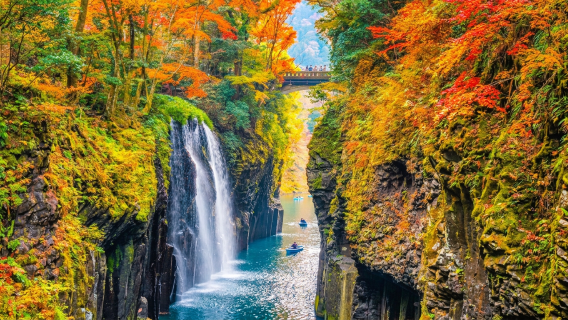
![Lijiang Jade Dragon Snow Mountain Cableway + Blue Moon Valley + Impression Lijiang + Sunrise over Golden Snow Mountain Day Trip [Guaranteed Ticket]](https://ak-d.tripcdn.com/images/0353f12000mv99k2m00B0_C_568_320.jpg)






![1-day tour in northern Okinawa with Cape Manzamo, aquarium and Kouri island [optional bilingual guide, optional admission ticket]](https://ak-d.tripcdn.com/images/0356g12000frephkt038A_C_568_320.png)

![[Free admission ticket to Panoramic Flower Gardens Shikisai-no-oka] Hokkaido Biei Furano 1-day tour: Farm Tomita & Shirogane Blue Pond (Aoiike)](https://ak-d.tripcdn.com/images/0352c12000jsllbex95B0_C_568_320.png)
![[Can be departed from Kyoto or Osaka] A day trip to Amanohashidate in Kyoto, Chion-ji Temple, and Ine Funaya.](https://ak-d.tripcdn.com/images/0350s12000sbchqup02A9_C_568_320.jpg)













🌤️ Best time to visit China and Japan
Choosing when to visit China or Japan depends on the activities you want to do and your budget. The cheapest time to visit China is late November and early March (skipping Lunar New Year), with the odd week in early June and September, and late January to February, and select dates in June and July for Japan.
However, as you’d expect with winter-based trips, the weather may not always be on your side, especially if you want to spend time outside. Here’s what to expect weather-wise when booking a trip to either country.
🇨🇳 When to visit China
It’s generally agreed that the best time to visit China is during the spring (April-May) and autumn (September-October). Most of the country is mild during these months, so you can skip the extreme heat, monsoon season, and chillier climates. Much better for sightseeing!
Season | Average temperature | What to expect |
🌸 Spring (Mar–May) | Mild to warm (10°C to 25°C) | Starting a little cooler in the north than the south, with relatively low rainfall. |
⛱️ Summer (June–August) | Warm to hot (25°C to 35°C) | Increasing humidity in the east and south, the start of the monsoon season in central and south, but staying relatively dry in the north. The western highland regions are the coolest and most comfortable. |
🍂 Autumn (Sep–Nov) | Mild to warm (10°C to 25°C) | The whole country is starting to cool down and become less humid. |
❄️ Winter (Dec–Feb) | Cool to cold (-10°C to 10°C) | Cold spells everywhere, although the south is a little warmer and damper. |
🇯🇵 When to visit Japan
Many folks recommend heading to Japan when the weather is at its mildest: spring (March–May) and autumn (September–November). Not only is the weather less humid, making it easier to get out and about, but travellers can also enjoy cherry blossom season and autumn colours at their best.
Season | Average temperature | What to expect |
🌸 Spring (Mar–May) | Mild to warm (10°C to 20°C) | A few spring showers here and there, but generally dry and comfortable. |
⛱️ Summer (June–August) | Hot (25°C to 33°C) | Humid and rainy, with the occasional typhoons. |
🍂 Autumn (Sep–Nov) | Mild to warm (12°C to 24°C) | Dry and comfortable with much cooler temperatures. |
❄️ Winter (Dec–Feb) | Chilly (0°C to 10°C) | The temperatures may have dropped, but it’s usually dry and bright. Expect snow in the north. |
For great deals on hotels, transportation, attractions and more, we’ve got it all covered.
❓ FAQ - Should you visit China or Japan?
-
Is China or Japan cheaper?
-
Is China or Japan easier for first-time visitors?
-
Is China or Japan better for solo travellers?
-
Who is more technologically advanced?
-
Are pandas from China or Japan?
🧩 More travel guides
Best China eSIM (with VPN) from £0.44
Find the best China eSIM plans, compare providers, learn how eSIM works, where to buy, setup steps, traveller reviews, FAQs, and tips for using eSIM in China.
October 15, 2026
China 2026 Entry Rules for UK: Visa-Free Policy & Process
Complete guide to China entry requirements 2026. Learn visa-free countries, required documents, and step-by-step entry process for foreign travellers.
October 15, 2026
Top Things to do in China: Best Activities & Must-Sees
Discover the best things to do in China: top activities, vibrant neighbourhoods, local culture, and must-see attractions to make the most of your stay.
October 15, 2026
How to Book Hotels in China as a Foreigner: Step-by-Step Guide
Learn how to book hotels in China with Trip.com. Step-by-step guide, payment tips, popular hotels, and practical advice for foreign travellers.
October 15, 2026
Best Cities to Visit in China: Top Places to Explore
Discover the best cities to visit in China, from iconic destinations to hidden gems. Plan your itinerary with tips, travel ideas and must-see places.
October 15, 2026
Best eSIM for Japan from £0.37
Choose the best eSIM for Japan. Compare prices, providers & activation to stay connected with high-speed data during your trip - all on Trip.com.
October 15, 2026
Japan entry requirements for UK travellers: What visa or documents do you need?
Japan entry requirements for 2026: visa, passport, documents & Visit Japan Web. Learn what you need to enter Japan from the UK or other countries.
October 15, 2026
Top Things to do Japan: Best Activities & Must-Sees
Discover what to do in Japan: top activities, must-see sights, local culture and neighbourhoods to make the most of your trip.
October 15, 2026
Where to Stay in Tokyo: Best Areas, Hotels & Attractions
Where to stay in Tokyo, Japan: A first-time visitor's guide to the best neighbourhoods, budget hostels, and areas near top attractions.
October 15, 2026
How to Get from Haneda Airport to Tokyo City
Compare transport options from Haneda Airport to Tokyo city, including train, taxi, bus, and private transfer, with distance, fares and late-night transport.
October 15, 2026
Disclaimer: This article has been provided by an individual contributor or third party platform. If there is any discrepancy regarding the copyright, please contact us directly and we will delete the content immediately.